Leveraging Nursing Informatics to Optimize Patient Education and Improve Outcomes

by Bronte Page, RPN
Team Lead, Beacon Program, BioScript Solutions
Citation: Page, B. (2025). Leveraging nursing informatics to optimize patient education and improve outcomes. Canadian Journal of Nursing Informatics, 20(3). https://cjni.net/journal/?p=15325
Background
Nursing informatics integrates nursing science with information and communication technologies to improve the health of individuals and communities. In this role, nurses deliver education and care that is timely, personalized, and data informed.
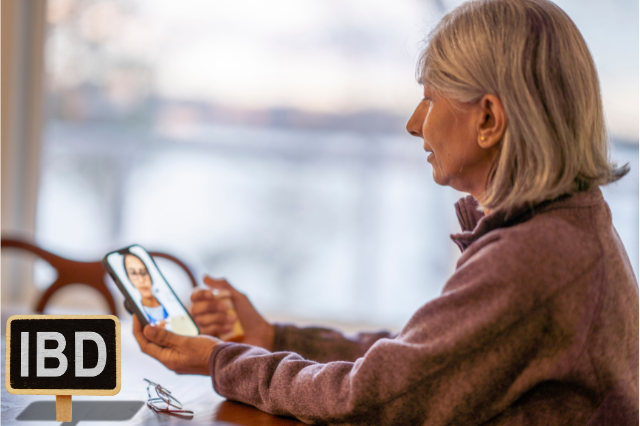
As an Inflammatory Bowel Disease (IBD) nurse educator, I have spent countless hours with patients on the telephone or connected virtually via secure communication platforms. My role is simple; provide patients with the information they need to feel comfortable and confident making decisions about their disease management plan with their physician.
Using evidence-based education materials, the information presented during appointments is customized based off an assessment prior to the appointment. This modular design ensures that the education the patient receives is tailored to their needs for each appointment.
While the amount of time I spend with these patients can vary between a short conversation or a lengthy discussion, the impact remains large. Patients feel more comfortable and confident to be actively involved in their own care and decision-making once they have been given the support and information they need to do so. The best part? Patients receive support at a time and place that is convenient for them. No travel, flexible timing, and a comfortable environment where they feel safe discussing their health and asking questions.
The role of the IBD Nurse Educator
My role as a nurse educator was initially developed because of a consensus amongst gastroenterologists that there was a gap in patient education and it was felt that health care providers and IBD patients could benefit from extra support from an IBD nurse educator. I provide education regarding the diagnosis and treatment options to patients with the ultimate goal of filling this “gap” and complementing the care that patients are receiving from their health provider. Family members and caregivers are welcome to attend or join the call at the patient’s request, and there is no limit on the number of appointments that can be arranged.
Survey Results
As of May 26, 2025, more than 200 patients had completed an appointment with either myself or another IBD nurse educator, and the survey results were as follows (Table 1).
Table 1
Patient Survey Results

Patient Feedback
Direct feedback from patients included feelings of confidence in making decisions regarding medications and what next steps will look like in their disease management plan, feelings of reassurance during a difficult period of trying to navigate a new diagnosis, and clarity around concerns and questions.
Conclusion
These results show that IBD nurse educators, supported by nursing informatics principles, can deliver personalized education, monitor patient progress, and collaborate with physicians in real time through secure virtual platforms – empowering patients to make informed decisions about their care.
By leveraging technology to overcome geographic and logistical barriers, and using data to support program design, this model demonstrates how nursing informatics can be leveraged not only in IBD care, but also across other chronic conditions, supporting scalable, patient-centered education programs.


Recent articles
- Index of volume 21 number 321 Sep 2026
- Cyber Security Awareness Month in the Age of AI21 Sep 2026
- Are we supporting the next generation of nurses to be AI proficient or AI dependent?21 Sep 2026
- Designing What AI Makes Possible in Healthcare21 Sep 2026
- Cybersecurity Threats to Hospital Information Systems: A Narrative Review of Risks, Patient-Safety Impacts, and Defensive Strategies with Implications for the United States21 Sep 2026