
Wearable Health Technologies for Nurse-Led Early Detection of Anxiety and Depression: A Scoping Review from a Nursing Informatics Perspective

By Faustinus Chukwuma Onyima, BSN student, MSc DTE¹,
Emmanuella Munachi Onyima, BSN student, MBA2
Emmanuel Arinze Onuorah, BSN student¹
¹ Vilnius University, Faculty of Medicine, Vilnius, Lithuania
2 Klaipeda Valstybine Kolegija, Klaipeda, Lithuania
Citation: Onyima, F. C., Onyima, E. M. & Onuorah, E. A. (2026). Wearable health technologies for nurse-led early detection of anxiety and Depression: A scoping review from a nursing informatics perspective. Canadian Journal of Nursing Informatics, 21(3). https://cjni.net/journal/?p=17363
Abstract
Background: The burden of anxiety and depression has been on an upward trend since the COVID-19 pandemic. Wearable devices promise to improve precision medicine in mental health through early detection of relevant biodata. Integration with nurse informatics can improve evidence-based care, patient-centered care, collaboration, and clinical decision-making.
Aim: The scoping review aimed to 1) establish the wearable devices used for the early detection of anxiety and depression, 2) determine the biomarkers they track, 3) assess the implications for nursing and nursing informatics, 4) identify barriers and facilitators, and 5) acknowledge gaps and areas of future research.
Methods: A scoping review of original research papers was done in line with a standardized structure as prescribed in the Preferred Reporting Items for Systematic Reviews and Meta-Analyses extension for Scoping Reviews (PRISMA-ScR) protocol. Databases consulted included PubMed, CINAHL, MEDLINE, Scopus, PsycINFO, IEEE Xplore, and Web of Science using the Population, Concept, Context (PCC) framework.
Results: 22 research papers were reviewed. The main types of wearables were wrist wears, including Actiwatch®, Apple Watch®, Fitbit®, smartwatches, smart bracelets, Garmin VivoSmart®, and Oura Ring®. The primary biomarkers were sleep, physical activity, mood, movement, heart rate, and heart rate variability. Nursing roles remained largely undefined, and this continued to show an important gap.
Conclusion: Evidence shows that wearable data can be used for early detection of anxiety and depression. Proper integration with clinical informatics, i.e., electronic medical records and dashboard, will improve evidence-based and patient-centered care. Nursing education should focus more on data interpretation and integration into clinical decision-making.
Keywords: Wearable data, wearable devices, nursing, nursing informatics, biomarkers, depression, anxiety
Background
Burden of Anxiety and Depression
Anxiety and depression are two of the most highly prevalent mental health illnesses in the world. One study estimated that the prevalence of depression in Europe is approximately 6.4%, with a wide variability, with countries like the Czech Republic at 2.6% and Iceland at 10.3% (Arias-de la Torre et al., 2023). For its part, anxiety is estimated to have a prevalence of about 14%, affecting up to 70 million Europeans (Neurotorium, 2026). The two mental health illnesses have debilitating effects on the psychological and mental well-being of individuals. For example, both anxiety and depression have been linked to chronic illnesses, such as cardiovascular disease (Bobo et al., 2022). Therefore, considering the high prevalence and the potential negative consequences, clinicians, particularly nurses, should lead to establish frameworks for early detection, especially for hospitalized patients.
Limitations of Traditional Detection Methods
Currently, anxiety and depression are detected using standardized instruments. For example, depression is often screened using the Patient Health Questionnaire (PHQ-9), which consists of 9 items that the patient responds to (Beswick et al., 2022). For its part, anxiety can be monitored or screened using the 7-item or 2-item Generalized Anxiety Disorder (GAD-7 or GAD-2) (Aktürk et al., 2025). Despite their well-established validity and reliability, the traditional standardized methods of psychological assessment have some shortcomings. Firstly, the patient is likely to provide inaccurate feedback during the assessment process, leading to ineffective screening and diagnosis. This is particularly driven by mental health-related stigma, where the patient is likely to underreport their symptoms for fear that they may be judged harshly. Secondly, these tools can only be used periodically and, as such, cannot be applied as the basis for early detection. Furthermore, the instruments cannot be utilized to evaluate the psychological well-being of chronically ill patients who can hardly speak or coherently express themselves.
Rise of Consumer and Medical Wearables
Currently, the world is experiencing the fourth technological revolution, often labeled as Industry 4.0. One of the hallmarks of this transformation is the emergence of the Internet of Things (IoT), which is comprised of software, hardware, and network systems that enable the collection and exchange of data. It is through this technology that consumer and medical wearables have emerged. The health wearables can be attached or embedded on different parts of the body, including the head, chest, and wrist, and can provide patient-centered data on specific physiological or biological metrics (Piwek et al., 2016). The personal analytics derived from the devices can promote health, assist in disease management, and facilitate preventive care. Some of the most commonly used wearable technologies include smartwatches, such as the Apple Watch® and Fitbit®, smart rings (Oura Ring®), clinical biosensors, and so on.
Nursing Role in Mental Health Care
Globally, the demand for mental health services has increased, especially during the pandemic and post-pandemic eras. With the increasing shortage of mental health professionals, advanced psychiatric nurses (APNs) have experienced expanded roles and responsibilities, which include screening, diagnosis, and patient management, owing to their specialized knowledge. For their part, registered nurses (RNs) have expanded roles in care coordination due to the integral part they hold within the multidisciplinary care team (Duyilemi & Mabunda, 2025). More importantly, nurses work closely with hospitalized inpatients, most of whom are likely to develop psychological problems due to exposure to acute or chronic illness. Combined, all these factors emphasize the significance of nurses in the early diagnosis and treatment of mental health problems.
Nursing Informatics Perspective
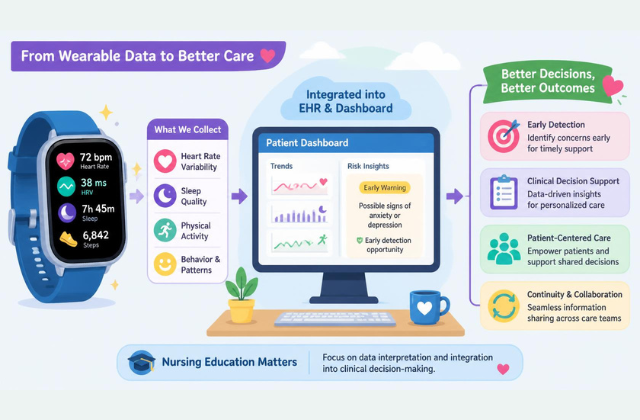
Nursing informatics is an area in nursing that combines nursing science with information technology concepts, such as information management and communication technologies, to improve patient care and overall well-being (Nashwan et al., 2025). Wearable devices like smartwatches are able to collect physiological and behavioral information, including heart rate variability, sleep quality, and physical activity, which can help in identifying psychological problems at an early stage. This information can be converted into useful data that supports clinical decision-making and helps in planning preventive and health promotion interventions. In addition, wearable data can be integrated into electronic health records (EHRs), which supports patient-centered care, continuity of care, patient monitoring, and collaboration among healthcare professionals. However, the continuous use of wearable data may also raise concerns related to privacy and data security, which can potentially conflict with regulations such as the General Data Protection Regulation (GDPR) in Europe (Davey et al., 2022).
Rationale for a Scoping Review
Prior to understanding the relevance of a scoping review for this research, it is important to appreciate the relevance of this methodology. According to Mak and Thomas (2022), a scoping review exemplifies a type of knowledge synthesis that maps current or developing literature on a specific subject. Its primary role is to map the “extent, range, and nature” of the evidence while also acknowledging gaps in the area (Mak & Thomas, 2022, p. 565). The application of wearable data in detecting mental health illnesses, such as depression and anxiety, is still in its infancy. For this reason, there is a need to gather the existing evidence, synthesize it, and identify areas that need further work.
Research Questions
The scoping review will seek to answer the following research questions:
- What wearable technologies are used for the early detection of anxiety and depression?
- What physiological and behavioral markers are commonly monitored by these technologies?
- How are wearable technologies applied in nursing practice and nursing informatics?
- What barriers and challenges affect the use of wearable technologies in mental healthcare?
- What gaps exist in the current literature on wearable technologies for anxiety and depression detection?
Methods
This section identifies the methodological and analytical processes that were followed to answer the identified research questions. It acknowledges the standardized processes associated with a scoping review, including the systematic identification and selection of evidence-based sources. The section concludes with an explanation of the data retrieval and analytical phase, which relies on a qualitative thematic narrative review.
Design
This study utilized a scoping review, which is an appropriate design for mapping the current evidence on the use of wearable technologies for the early detection of anxiety and depression. The design followed a standardized structure as prescribed in Arksey and O’Malley’s (2005) framework, together with the Joanna Briggs Institute (JBI) methodology for scoping reviews. The Preferred Reporting Items for Systematic Reviews and Meta-Analyses extension for Scoping Reviews (PRISMA-ScR) checklist guided the reporting phase of the review (Appendix A).
Eligibility Criteria
Population
Regarding the population, the scoping review considered studies involving adults aged 18 years and above. Both general and clinical populations were considered during the sampling process. Research papers involving nurses or healthcare professionals in general were also included.
Concept
There are numerous wearable technologies in the healthcare setting. However, this scoping review was confined to those wearable technologies that specifically monitor physiological or behavioural aspects that can predict anxiety or depression. This includes devices that collect data such as sleep, heart rate, and physical activity.
Context
The scoping review considered various studies conducted in diverse settings. Priority was given to healthcare, community, and digital health contexts. Relevance of the studies to nursing practice or nursing informatics remained a key consideration.
Inclusion/Exclusion Criteria
The basis of selecting the right sources with the required evidence begins with well-developed inclusion/exclusion criteria. For a study to be included in the review, it had to be from a scholarly, peer-reviewed source. Only sources between 2015 and 2026 were included to enhance a balance between contemporary studies and the inclusion of sufficient relevant evidence on the subject matter. Above all, it had to be relevant to the subject matter and have the required population of persons aged 18 years and above. The studies needed to have been written in English. The content of the source needed to be adequate, extending beyond the abstract. Priority was given to European-related studies.
With regards to design, incorporated studies were empirical, observational, or experimental in nature. Excluded sources included editorials, commentaries, and systematic reviews of literature as the focus was on original studies. Studies involving non-wearable tools were also excluded. A source was also rejected if it was not related to depression, anxiety, stress, or depression-related relapse monitoring. Likewise, any non-English source was excluded. Abstract-only sources were not considered. Papers that focused mainly on the management of severe, already-diagnosed psychiatric illness were not prioritized because the review focused on early detection and screening rather than treatment management. However, some recent depression monitoring studies were retained where they gave clear wearable data that could support early warning, relapse detection, or nurse-led screening in future practice.
Information Sources and Search Strategy
The first step in the search strategy was to identify the electronic databases. Searches were conducted between January and March 2026, with an additional update search completed to identify newer studies published between 2023 and 2025. Key databases consulted were PubMed, CINAHL, MEDLINE, Scopus, PsycINFO, IEEE Xplore, and Web of Science. The search terms comprised the keywords and Boolean operators (and/or) related to wearable technologies, anxiety, and depression. Some of the keywords used included “wearable technology,” “smartwatch,” “biosensor,” “anxiety,” “depression,” “nursing,” and “nursing informatics.” The full search strategy for one of the databases is included in Appendix B.
Study Selection and Data Charting
Upon retrieval from the respective databases, two independent reviewers screened the title and the abstract as a first step to confirm eligibility. A comprehensive full-text review then followed. Disagreements were resolved through discussion and rechecking the eligibility criteria rather than through a calculated Cohen’s Kappa value, because inter-rater reliability was not statistically computed during the actual review process. This approach protected the honesty of the method and avoided reporting a value that was not produced by the review team.
After the review process, the data extraction process began. Data was collected systematically, focusing on the key elements within the source. The data included the author and the year, country, study design, sample size, type of wearable device, biomarkers measured, and main findings. The nursing or informatics relevance and the study limitations were also acknowledged during the charting process.
Synthesis of Results
The findings were analyzed using a thematic narrative synthesis method. A meta-analysis was not performed because the included studies used different devices, biomarkers, outcome measures, and model-reporting methods. These differences made statistical pooling inappropriate. The results were grouped into themes developed from the research study questions, including wearable technologies, physiological and behavioral indicators, accuracy of detection, nursing informatics applications, barriers, ethical issues, and clinical implementation gaps.
Quality Considerations
Since this is a scoping review, formal quality scoring of individual studies was not done. Nonetheless, it was essential to critique the quality of the evidence used to answer the research questions. For this reason, the study discussed the strengths and limitations of the sources and information utilized in the review.
Summary
The section sets the basis for data collection and analysis. The criteria for selection set the boundaries on what studies may be incorporated and those to be excluded. Through a thematic narrative synthesis approach, pre-determined themes were drawn from the research questions and used as the basis for analysis.
Results
Selection of Sources
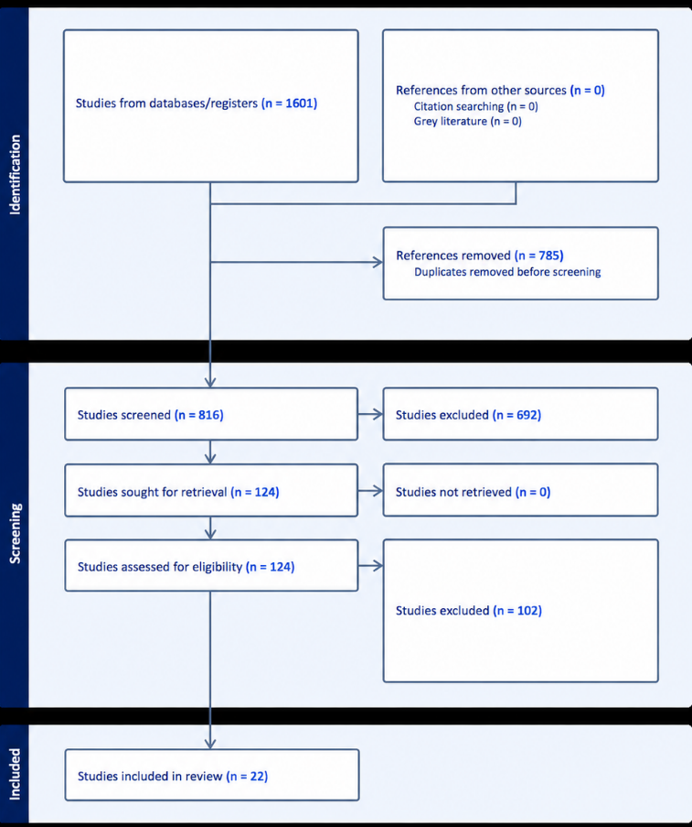
To ensure transparent reporting of evidence identification and screening, the selection process adhered to tenets of the PRISMA-ScR template (Appendix A). The databases consulted, i.e., PubMed, CINAHL, MEDLINE, Scopus, PsycINFO, IEEE Xplore, and Web of Science, generated a total of 1601 citations as illustrated in Figure 1. During screening, 785 duplicates were eliminated, leaving 816 sources with unique titles and abstracts. After further screening the titles and abstracts, 692 sources were excluded, leaving 124 sources. With the full text screening focusing on the eligibility criteria already established, 102 sources were excluded, leaving 22 sources for the scoping review. As part of the full text screening, sources were primarily excluded due to irrelevance (non-wearable interventions or lack of anxiety/depression outcomes), non-adult populations, and non-empirical research designs.
Figure 1
PRISMA-ScR Flow Diagram of Study Selection
Characteristics of Included Studies
As presented in Table 1, 22 studies were qualified to be used for the scoping review. The studies were published between 2016 and 2025, showing that wearable technologies in mental health are still developing but are now moving into larger and more recent digital phenotyping studies. A large share of the earlier evidence came from Europe (11 sources, 50%), with the represented countries including the United Kingdom, the Netherlands, Spain, Germany, and Finland. About 32% or seven research papers were drawn from America, including the US and Canada. In addition, three sources or 14% of the sources were drawn from Asia (Japan and South Korea), with only one from Australia. The researchers relied on different study designs, including pilot studies, observational studies, qualitative research, cross-sectional studies, machine learning studies, and longitudinal cohort studies. Sample sizes varied widely, from very small pilot studies to a large United Kingdom digital phenotyping study with more than 10,000 participants. Most of the sources (16; 73%) focused on depression, while a few (6; 27%) touched on anxiety and related symptoms.
Table 1
Data Extraction Table
Types of Wearable Devices Used
The wearable devices represented varied from study to study, as illustrated in Table 1. The most common innovations used were wrist-worn devices, which appeared in 13 studies (59%). Examples include Actiwatch®, wrist-worn activity monitors, Apple watches® and other smartwatches, smart bracelets, multimodal wristbands, Fitbit®, and EmotionCheck®. Body-worn devices or non-wrist devices were represented, appearing in eight of the studies sampled (36%). Examples include Fitbit One®, smart shirts, waist actigraphy, and wearable mobility sensors. In some cases, wearable devices were used alongside smartphones or passive sensing systems, and this appeared in three studies (13%). Lastly, a ring-based wearable technology appeared in one of the studies (5%).
Physiological and Behavioural Markers
The wearable devices used in this study targeted specific physiological and behavioural markers. As illustrated in Table 2, most studies tracked markers such as sleep, physical activity, mood, movement, and heart rate. In depression studies, the most common markers were sleep, mood, and activity. Anxiety-related studies mainly focused on heart rate dynamics, such as variability.
Table 2
Tools and Biomarkers
Accuracy of Wearable-Based Detection Models
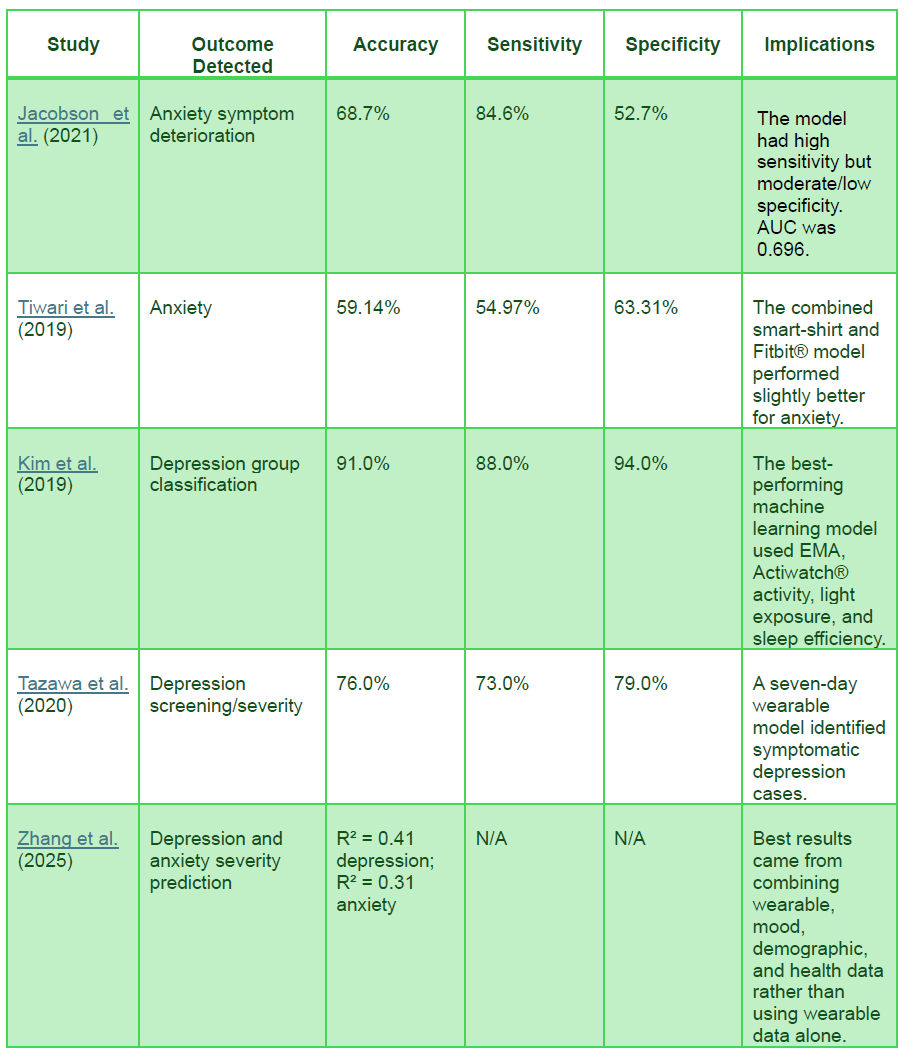
Only five out of the 22 sampled studies had clear reporting of accuracy or model performance metrics. The other research papers were mainly concerned with feasibility, symptom monitoring, relapse warning, mood fluctuation, and treatment support. This remains a major limitation because clinical use requires more than showing that wearable data is associated with depression or anxiety. Nurses and other clinicians need to know whether the model can correctly identify true cases without creating too many false alarms. Table 3 summarizes the accuracy-based and model-performance metrics for the wearable devices as captured in the respective studies.
In practical terms, the sensitivity and specificity values show that the devices are not yet equally ready for clinical use. A model with high sensitivity but low specificity may detect many possible cases, but it can also create many false positives. In a hospital setting, this could overwhelm nurses with alerts that do not always represent actual depression or anxiety risk. The newer large-scale work also shows that predictive validity improves when wearable data is combined with mood reports, demographic data, and other clinical information rather than used alone. However, it is worth noting that AUC values were not consistently reported across the included studies, limiting cross-study comparison of predictive performance.
Table 3
Accuracy-Based Metrics
Nursing-Relevant Findings
None of the included studies focused directly or exclusively on nurse-led interventions. Nursing relevance primarily appeared indirectly, through outcomes related to patient monitoring, symptom screening, remote follow-up, and tracking the requisite behavioural and physiological markers. In other words, the implications for nurses largely emerged indirectly as the findings can be helpful for nurses in their assessment and monitoring of patients. For instance, the studies by Zhang et al. (2021), Jacobson et al. (2021), and Moshe et al. (2021) all connected wearable sleep data with symptoms of anxiety and depression, which can be useful for nurses in enhancing early detection, screening, and seeking multidisciplinary help from psychologists and psychiatrists. Likewise, the studies by O’Brien et al. (2017) and Mishra et al. (2021) demonstrated the ability of the wearables to identify risky behaviours linked with depression, such as reduced activity, cadence changes, and prolonged sitting, among others. These findings are relevant for nurses who can use the data as a basis for preventive care. Some authors, like Chum et al. (2017), Swanson et al. (2018), and Nadal et al. (2021), demonstrated how the wearables could be used for intervention support. These authors established that the data collected from wearables could be used to activate behavioural change and implement unique treatment regimes like home light therapy. Despite the lack of direct connection with nursing, some of the findings from the research papers provide valuable insights into how nurses can lead the prevention, early detection, and treatment of depression and anxiety.
Informatics and System Integration
None of these studies reported on how the data from the wearable devices could be integrated into a hospital’s electronic health records (EHR) or clinical dashboards managed by nurses. The subject of informatics was restricted to mobile-linked tracking, passive monitoring, data collection, and prediction using machine learning. Some of the studies that reported on these issues are summarized in Table 4.
Table 4
Findings from an Informatics Perspective
Barriers and Facilitators
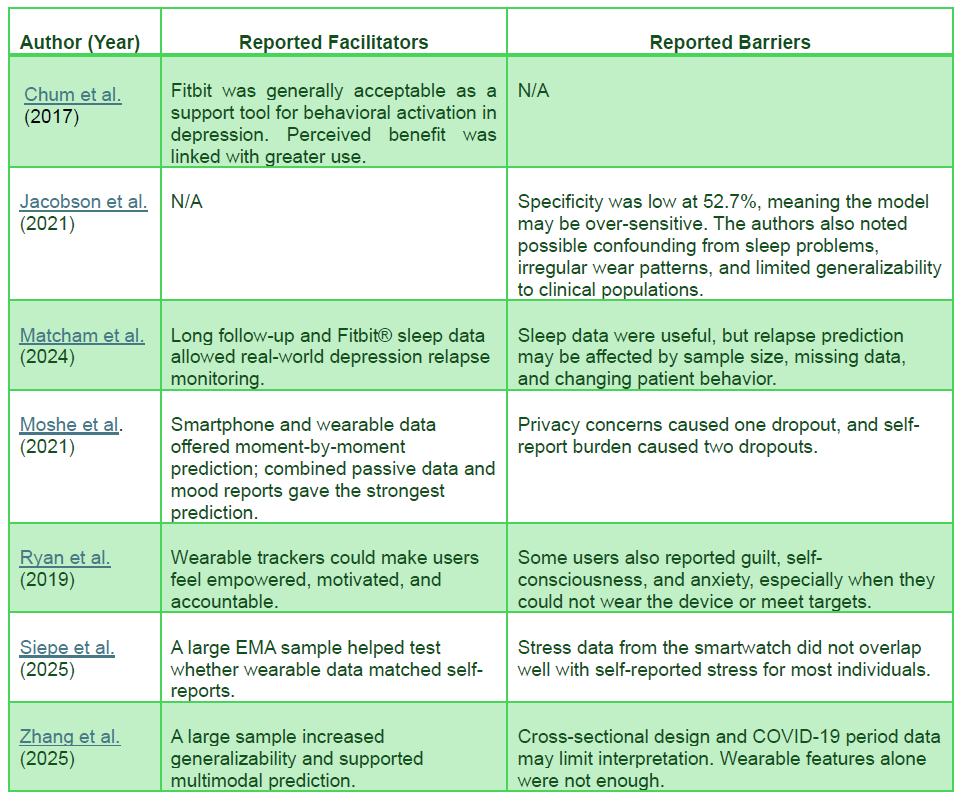
The review also placed considerable attention on barriers and facilitators of using the wearable tools for detecting anxiety and depression. However, this aspect was grossly underexplored within the sampled studies. One of the most significant facilitators for use was the patient’s attitude. Chum et al. (2017) reported acceptability as a significant factor that determined greater use among patients. Likewise, Ryan et al. (2019) found that patients were more likely to use the trackers if it made them feel motivated, empowered, and accountable. Another significant finding was the ability to integrate wearable tools with day-to-day devices like smartphones for remote usage, as established in the research by Moshe et al. (2021).
A few barriers were reported as well. For instance, Ryan et al. (2019) reported that a major barrier to the use of the devices is the emotional pressure that comes with them. For instance, a person may feel guilty or judged when they have not reached their targets. Moshe et al. (2021) identified privacy concerns and self-reported burden as major barriers associated with the use of these devices. For their part, Jacobson et al. (2021) acknowledged significant barriers, including low specificity and the fact that some markers, such as sleep problems, are not unique to anxiety. Table 5 provides the reported facilitators and barriers in detail.
Table 5
Facilitators and Barriers
Discussion
Summary of the Findings in Relation to the Research Questions
The first research question sought to establish the specific wearable technologies that are used for the early detection of anxiety and depression. The research found that wearables can be classified into wrist-based, body-worn, and smartphone-linked passive sensing tools. The main innovations represented in the research include Fitbit®, Actiwatch®, Apple Watch®, Garmin VivoSmart®, smartwatches, smart bracelets, smart shirts, wearable light therapy devices, and the Oura Ring®. Most devices were wrist-based, which shows that wrist-worn tools are still the most common in this area. The newer studies also showed a shift from small feasibility projects to larger real-world digital phenotyping studies using Fitbit® and smartphone-linked data.
The second research question sought to identify the biomarkers measured by the wearable devices. It emerged that the most common markers were physical activity, sleep, mobility, mood, and heart-related patterns. Furthermore, it appeared that some markers were more associated with depression, while others focused primarily on anxiety. In depression-related studies, researchers tracked sleep disturbance, reduced physical activity, and mood change. However, for anxiety, emphasis was on heart rate variability, sleep patterns, and other stress-related signals.
The third research question was concerned with establishing how wearable technologies are applied in nursing practice and nursing informatics. This was a major area of limitation as the studies did not directly tie their findings to nursing implications. Regardless, the findings had a strong indirect relevance for prevention, early detection, screening, and nursing informatics. More nurse-specific studies are required to show a stronger connection between how wearable data can influence nurse-led detection and intervention of anxiety and depression using the devices. Moreover, these studies have not offered specific implications for nurse informatics, such as the integration of wearable data with EHR or nurse-facing clinical dashboards.
The fourth research question focused primarily on the facilitators and barriers. Although this aspect was underexplored in the studies, several research papers identified it. Facilitators to wearable data use for anxiety and depression detection included perceived benefit, remote usage, and ability to integrate with smartphones. Attitude also emerged as a significant factor in determining the success of the devices’ usage. On the contrary, some of the barriers identified were guilt and anxiety of not meeting the targets, the non-specificity of the markers to depression/anxiety, privacy issues, and self-report bias.
The last research question focused on existing gaps and future research. One significant gap is still the lack of nurse-led studies. These studies also did not explore wearable data integration into EHR systems, HL7/FHIR interoperability, clinical decision support systems, or nurse-facing dashboards. This absence should not be read as a finding that these systems are unnecessary. Rather, it shows that the present literature has not yet moved far enough into hospital implementation. Another gap is equity. The studies rarely discussed whether low-income patients, rural patients, older adults, or people without smartphones can benefit from wearable monitoring. This digital divide is important because expensive consumer wearables may leave some groups behind.
Comparison with Existing Literature
The findings connect with the existing literature, particularly with regard to the growing evidence that wearables could be used to predict anxiety and depression. For instance, Elgendi et al. (2026) established that cardiovascular activity is considered a significant marker for anxiety. Respiratory and electrodermal activity are also viewed as fundamental biosignals for predicting anxiety (Elgendi et al., 2026). For this reason, collecting this data using relevant wearables can be useful in nurse-led mental health interventions. Furthermore, this research identified several fundamental biomarkers that are currently being used as predictors of anxiety and depression. Empirical studies on depression-related biomarkers have demonstrated their effectiveness in assisting clinicians to screen the disorder (Rykov et al., 2021). However, a major shortcoming, which is also reflected in the study, is the limited effectiveness of wearable devices working in isolation. Just like Kim et al. (2019) and Tazawa et al. (2020), Rykov et al. (2021) advocate for combining these digital biomarkers with machine learning tools to increase the chances of identifying individuals with high-risk depression.
This research has demonstrated that a major strength of digital wearables, compared to traditional ways of diagnosing health using standardized tools, is the ability to monitor patients in real-time. Markers such as sleep, physical activity, and heart rate, among others, are measured continuously, and the information can be relayed remotely using smartphones. Shin et al. (2025) argued that the real-time or continuous monitoring of patient data has significant implications for nursing practice. Firstly, it offers practitioners an opportunity to conduct community-level screening for patients with mental health conditions (Shin et al., 2025). Secondly, the practitioner acquires important information about the client’s daily life, which can inform clinical decision-making. However, a major shortcoming found in the scoping review is the lack of integration with EHR systems, a core component of clinical informatics. Although this area is yet to be explored, it has already been shown that wearable devices have various features that can support EHR, including multimodal data, the ability to integrate with other devices, and the tendency to relay data in real-time (Gomes et al., 2023). When the capabilities are properly harnessed, wearable devices for anxiety and depression can form a significant part of clinical informatics for nurses and mental health clinicians.
This scoping review has also identified some of the weaknesses of the wearable technology for anxiety and depression detection. One of the shortcomings is the non-specificity of some of the biomarkers. One study by Saad et al. (2019) evaluated the specificity of sleep disturbance as a potential indicator for depression. While the study found that sleep disorder is an essential biomarker, it is highly non-specific, as it could also indicate that a patient is responding to environmental factors and other physiological responses (Saad et al., 2019). Another major concern relates to privacy. Doherty et al. (2025) conducted a study by sampling 17 of the leading manufacturers of wearable technologies in the US. The most significant privacy issues reported were related to privacy reporting and vulnerability disclosure (Doherty et al., 2025). In addition, weak identity policies and poor data access controls were also reported. Failure to guarantee maximum privacy and protection could raise ethical and legal issues in line with GDPR rules in the EU.
Implications for Nursing and Nursing Informatics
One of the biggest shortcomings of the review is the underuse of the topic from a nursing and nursing informatics perspective. Nurses are at the center of patient care and arguably spend the highest time with hospitalized clients. As such, they are well-positioned to detect emerging psychological problems that could affect physical recovery in non-psychiatric wards. Shin et al. (2025) stressed the significance of real-time continuous multimodal data from wearable devices that provide information regarding the patient’s lifestyle. When strengthened with machine learning capabilities, these tools can not only predict but also differentiate between high-risk and low-risk patients (Rykov et al., 2021). From a nursing perspective, this is essential because it can significantly redefine workflows. Instead of relying on validated questionnaires, nurses have an additional innovation that they must incorporate into patient assessment. Nonetheless, this is only possible if data is integrated into the EHR systems using the HL7/FHIR standards that enable clinicians and patients to view and share data in real-time (Duda et al., 2022). This would ensure that wearable data directly contributes to clinical decision-making, especially when integrated into nurse-facing dashboards that are easy to interpret.
Nurse-Led Wearable Mental Health Monitoring Framework
Based on the gaps established in this research, this paper proposes a nurse-led wearable mental health monitoring framework. It is important to note that this framework is not premised on the research findings based on the 22 articles, but rather a recommendation for prospective health systems. At the center of the framework is the wearable device responsible for collecting physiological or behavioural data, such as sleep patterns and heart rhythms. The tool is powered by machine learning to increase its predictive capabilities. The data is then transferred into an HL7/FHIR-enabled interoperable EHR system. On the nurse-facing dashboard, the nurse can receive alerts and compare them with the patient’s history before making an informed decision.
The model ensures that nurses do not work on raw data from the devices alone. As such, it identifies the place of validated tools, such as PHQ-9 and GAD-7. In other words, the integration of wearable data does not necessarily replace clinical judgment. Rather, it should be collaboratively used with standardized tools to encourage earlier or proactive detection and faster treatment of anxiety and depression. The machine learning capability will prevent unnecessary alerts by only prioritizing high-risk situations. Other aspects to consider in the model include data governance protocols, cybersecurity standards, and occasional assessments to ensure that there is no algorithm bias. Table 6 identifies the main components of this model (See Figure 2 for visual representation).
Table 6
Nurse-Led Wearable Mental Health Monitoring Framework

Figure 2
Nurse-Led Wearable Data Framework Based on the Study Gaps

Strengths, Limitations, and Future Directions
The presented evidence is strong for several reasons. The review includes 22 sources, including five newer studies published between 2023 and 2025. The newer studies strengthen the review by adding larger samples, longer monitoring periods, and more European evidence. The evidence also captures different behavioural and physiological biomarkers, including wrist-based and body-worn wearables, sleep metrics, activity data, heart rate, heart rate variability, mood ratings, and smartphone-linked passive data. However, the evidence still needs to be interpreted carefully. The devices and models were not standardized, and the same biomarker could mean different things across patients. For example, sleep disturbance may suggest depression risk, but it may also reflect pain, shift work, medication, illness, or the hospital environment. Smaller machine learning studies may also have a risk of overfitting because the model may learn too much from a small sample and many wearable features, making it look accurate in the study but less reliable when applied to new patients, although newer large digital phenotyping studies reduce this risk partly by using wider datasets.
The review has several limitations, including a lack of adequate nurse-led studies and limited implications for clinical informatics. Although European evidence improved after the addition of newer studies, the literature still has a geographical imbalance. For instance, countries like Lithuania are still underrepresented in the literature. The review may also have publication bias, language bias, and database bias because only English-language, database-indexed sources were considered. Another major limitation is heterogeneity. The studies used different wearable devices, follow-up periods, biomarkers, and outcome measures. Because of this, a formal meta-analysis was not appropriate. Future research should develop standard biomarker definitions, test wearable data in hospital workflows, include nurse-led screening studies, and evaluate whether wearable alerts actually improve patient outcomes.
Ethical, Governance, and Clinical Implementation Issues
Monitoring mental health using wearable devices comes with significant ethical issues that nurses must pay attention to prior to clinical implementation. Continuous monitoring, without properly informing the client, potentially violates the patient’s autonomy. In this regard, clinicians must ensure that they properly inform the client regarding pertinent details, such as what data is being collected, who can see it, and when the collection process will stop. Nursing professionals in Europe must remain aware of legal provisions, such as GDPR, because wearable devices can expose private health information.
The success of the clinical implementation also demands thorough planning. For instance, hospital facilities would need to train nurses on matters related to usage and data governance. They would also need to understand the implications of adoption on workflow redesign, whereby conventional standards questionnaires are used alongside the wearable devices. Training would also ensure that nurses know how to detect false alerts, identify environmental confounders triggering physiological or behavioural responses, and question weak or non-specific data. Governance would also establish a framework for frequently checking algorithm bias, as systems trained using a certain unique demographic may offer skewed alerts that do not necessarily reflect the underlying situation. In general, the future of wearable mental health care should be nurse-centered, equitable, and clinically cautious rather than fully automated.
Another barrier to implementation is reimbursement because many healthcare payment systems still do not fully support continuous wearable monitoring, nurse review of passive data, or follow-up after digital alerts. Because of this, hospitals and community healthcare services may find it difficult to continue wearable monitoring programs outside of small pilot studies. Patient adherence is also very important because long-term device use depends on comfort, motivation, privacy concerns, and whether the device creates emotional stress for users. This is connected to Ryan et al. (2019), who found that wearable devices could make users feel both empowered and anxious, and Moshe et al. (2021), where privacy concerns and too much self-reporting affected participation.
Conclusion
In summary, this scoping review shows that wearable data can support the early detection and monitoring of anxiety and depression, but the evidence is still developing. The 22 reviewed studies show that wrist-worn and body-worn devices can collect useful information on sleep, activity, movement, mood, heart rate, and heart rate variability. Newer studies also show that larger real-world datasets can improve understanding of depression and anxiety indicators. Even so, wearable data are not specific enough to be used alone. Low specificity, weak generalizability, and dependence on non-specific biomarkers can create false positives and unnecessary clinical workload.
The evidence from the scoping review recommends cautious implementation that is alive to several realities. Firstly, wearable data should not replace traditional clinical judgment based on validated questionnaires due to specificity and sensitivity issues. Secondly, due to the possibility of false alerts, machine learning integration is essential to strengthen predictive analysis, which then differentiates between high-risk and low-risk situations. Thirdly, hospitals should invest in EHR integration in line with the HL7/FHIR requirements. This will offer a basis for clinical decision-making and data visualization via nurse dashboards. Nursing education, both at the hospital and higher education levels, should update its training to provide a framework for wearable data diagnosis of mental health. Through this education, nurses will gain additional knowledge on ethics related to privacy, data governance, and alert fatigue. More importantly, it will empower them to resolve emerging issues, such as algorithm bias and the potential for digital divide. Therefore, when properly implemented, wearable data may help nurses move from reactive care to earlier screening and prevention, but only if the technology supports human clinical judgment instead of replacing it.
Acknowledgments
The authors sincerely acknowledge the support and academic environment provided by the Faculty of Medicine, Vilnius University, which contributed significantly to the development of this work. Special appreciation is extended to Dr. Agn? Jakavonyt?-Akstinien?, Head of the Department of Midwifery and Nursing, Institute of Health Sciences, Faculty of Medicine, Vilnius University, for her academic guidance, encouragement, and commitment to advancing nursing science and research excellence.
The authors also express their gratitude to all co-authors for their intellectual contributions, collaboration, and dedication throughout the preparation of this manuscript.
Funding
This scoping review received no specific funding from any public, commercial, or not-for-profit funding agency.
Conflict of Interest
The authors declare that there are no conflicts of interest related to this scoping review.
References
Aktürk, Z., Hapfelmeier, A., Fomenko, A., Dümmler, D., Eck, S., Olm, M., Gehrmann, J., Von Schrottenberg, V., Rehder, R., Dawson, S., Löwe, B., Rücker, G., Schneider, A., & Linde, K. (2025). Generalized Anxiety Disorder 7-item (GAD-7) and 2-item (GAD-2) scales for detecting anxiety disorders in adults. Cochrane Database of Systematic Reviews, 2025(3). https://doi.org/10.1002/14651858.cd015455
Arias-de la Torre, J., Vilagut, G., Ronaldson, A., Bakolis, I., Dregan, A., Martín, V., Martinez-Alés, G., Molina, A. J., Serrano-Blanco, A., Valderas, J. M., Viana, M. C., & Alonso, J. (2023). Prevalence and variability of depressive symptoms in Europe: Update using representative data from the second and third waves of the European Health Interview Survey (EHIS-2 and EHIS-3). The Lancet Public Health, 8(11), e889–e898. https://doi.org/10.1016/s2468-2667(23)00220-7
Arksey, H., & O’Malley, L. (2005). Scoping studies: Towards a methodological framework. International Journal of Social Research Methodology, 8(1), 19–32. https://doi.org/10.1080/1364557032000119616
Beswick, E., Quigley, S., Macdonald, P., Patrick, S., Colville, S., Chandran, S., & Connick, P. (2022). The Patient Health Questionnaire (PHQ-9) as a tool to screen for depression in people with multiple sclerosis: A cross-sectional validation study. BMC Psychology, 10(1), 281. https://doi.org/10.1186/s40359-022-00949-8
Bobo, W. V., Grossardt, B. R., Virani, S., St Sauver, J. L., Boyd, C. M., & Rocca, W. A. (2022). Association of depression and anxiety with the accumulation of chronic conditions. JAMA Network Open, 5(5). https://doi.org/10.1001/jamanetworkopen.2022.9817
Chum, J., Kim, M. S., Zielinski, L., Bhatt, M., Chung, D., Yeung, S., Litke, K., McCabe, K., Whattam, J., Garrick, L., O’Neill, L., Goyert, S., Merrifield, C., Patel, Y., & Samaan, Z. (2017). Acceptability of the Fitbit in behavioral activation therapy for depression: A qualitative study. Evidence-Based Mental Health, 20(4), 128–133. https://doi.org/10.1136/eb-2017-102763
Condominas, E., Sanchez-Niubo, A., Domènech-Abella, J., Haro, J. M., Bailon, R., Giné-Vázquez, I., Riquelme, G., Matcham, F., Lamers, F., Kontaxis, S., Laporta, E., Garcia, E., Peñarrubia Maria, M. T., White, K. M., Oetzmann, C., Annas, P., Hotopf, M., Penninx, B. W. J. H., Narayan, V. A., … Siddi, S. (2025). Exploring the dynamic relationships between nocturnal heart rate, sleep disruptions, anxiety levels, and depression severity over time in recurrent major depressive disorder. Journal of Affective Disorders, 376, 139–148. https://doi.org/10.1016/j.jad.2025.02.010
Cormack, F., McCue, M., Skirrow, C., Cashdollar, N., Taptiklis, N., van Schaik, T., Fehnert, B., King, J., Chrones, L., Sarkey, S., Kroll, J., & Barnett, J. H. (2024). Characterizing longitudinal patterns in cognition, mood, and activity in depression with 6-week high-frequency wearable assessment: Observational study. JMIR Mental Health, 11. https://doi.org/10.2196/46895
Cormack, F., McCue, M., Taptiklis, N., Skirrow, C., Glazer, E., Panagopoulos, E., van Schaik, T. A., Fehnert, B., King, J., & Barnett, J. H. (2019). Wearable technology for high-frequency cognitive and mood assessment in major depressive disorder: Longitudinal observational study. JMIR Mental Health, 6(11), e12814. https://doi.org/10.2196/12814
Costa, J., Adams, A. T., Jung, M. F., Guimbretière, F., & Choudhury, T. (2016). EmotionCheck: Leveraging bodily signals and false feedback to regulate our emotions. In Proceedings of the 2016 ACM International Joint Conference on Pervasive and Ubiquitous Computing (pp. 758–769). Association for Computing Machinery. https://doi.org/10.1145/2971648.2971752
Costa, J., Adams, A. T., Jung, M. F., Guimbretière, F., & Choudhury, T. (2017). EmotionCheck: A wearable device to regulate anxiety through false heart rate feedback. GetMobile: Mobile Computing and Communications, 21(2), 22–25. https://doi.org/10.1145/3131214.3131222
Davey, M. G., O’Donnell, J. P., Maher, E., McMenamin, C., McAnena, P. F., Kerin, M. J., Miller, N., & Lowery, A. J. (2021). General data protection regulations (2018) and clinical research: Perspectives of patients and doctors in an Irish university teaching hospital. Irish Journal of Medical Science (1971 -), 191(4), 1513–1519. https://doi.org/10.1007/s11845-021-02789-8
Doherty, C., Baldwin, M., Lambe, R., Altini, M., & Caulfield, B. (2025). Privacy in consumer wearable technologies: A living systematic analysis of data policies across leading manufacturers. NPJ Digital Medicine, 8(1), 363. https://doi.org/10.1038/s41746-025-01757-1
Duda, S. N., Kennedy, N., Conway, D., Cheng, A. C., Nguyen, V., Zayas-Cabán, T., & Harris, P. A. (2022). HL7 FHIR-based tools and initiatives to support clinical research: A scoping review. Journal of the American Medical Informatics Association, 29(9), 1642–1653. https://doi.org/10.1093/jamia/ocac105
Duyilemi, F. E., & Mabunda, N. F. (2025). Nurses’ perceptions on the role of advanced psychiatric nurses in mental healthcare: An integrative review. International Journal of Environmental Research and Public Health, 22(4), 626. https://doi.org/10.3390/ijerph22040626
Elgendi, M., Markov, K., Liu, H., De Vos, M., Khalaf, K., Khandoker, A., Jelinek, H. F., Goswami, D., & Menon, C. (2026). Wearable devices for anxiety assessment: A systematic review. Communications Medicine, 6(1), 20. https://doi.org/10.1038/s43856-025-01234-6
Gomes, N., Pato, M., Lourenco, A. R., & Datia, N. (2023). A survey on wearable sensors for mental health monitoring. Sensors, 23(3), 1330. https://doi.org/10.3390/s23031330
Jacobson, N. C., Lekkas, D., Huang, R., & Thomas, N. (2021). Deep learning paired with wearable passive sensing data predicts deterioration in anxiety disorder symptoms across 17–18 years. Journal of Affective Disorders, 282, 104–111. https://doi.org/10.1016/j.jad.2020.12.086
Kim, H., Lee, S., Lee, S., Hong, S., Kang, H., & Kim, N. (2019). Depression prediction by using ecological momentary assessment, Actiwatch data, and machine learning: Observational study on older adults living alone. JMIR mHealth and uHealth, 7(10). https://doi.org/10.2196/14149
Mak, S., & Thomas, A. (2022). Steps for conducting a scoping review. Journal of Graduate Medical Education, 14(5), 565-567. https://doi.org/10.4300/JGME-D-22-00621.1
Matcham, F., Barattieri di San Pietro, C., Bulgari, V., de Girolamo, G., Dobson, R., Eriksson, H., Folarin, A. A., Haro, J. M., Kerz, M., Lamers, F., Li, Q., Manyakov, N. V., Mohr, D. C., Myin-Germeys, I., Narayan, V., Penninx, B. W. J. H., Ranjan, Y., Rashid, Z., Rintala, A.,… Hotopf, M. (2019). Remote assessment of disease and relapse in major depressive disorder (RADAR-MDD): A multicenter prospective cohort study protocol. BMC Psychiatry, 19. https://doi.org/10.1186/s12888-019-2049-z
Matcham, F., Carr, E., Meyer, N., White, K. M., Oetzmann, C., Leightley, D., Lamers, F., Siddi, S., Cummins, N., Annas, P., de Girolamo, G., Haro, J. M., Lavelle, G., Li, Q., Lombardini, F., Mohr, D. C., Narayan, V. A., Penninx, B. W. J. H., Coromina, M., … Hotopf, M. (2024). The relationship between wearable-derived sleep features and relapse in major depressive disorder. Journal of Affective Disorders. https://doi.org/10.1016/j.jad.2024.07.136
Mishra, R., Park, C., York, M. K., Kunik, M. E., Wung, S.-F., Naik, A. D., & Najafi, B. (2021). Decrease in mobility during the COVID-19 pandemic and its association with increase in depression among older adults: A longitudinal remote mobility monitoring using a wearable sensor. Sensors, 21(9), 3090. https://doi.org/10.3390/s21093090
Moshe, I., Terhorst, Y., Opoku Asare, K., Sander, L. B., Ferreira, D., Baumeister, H., Mohr, D. C., & Pulkki-Råback, L. (2021). Predicting symptoms of depression and anxiety using smartphone and wearable data. Frontiers in Psychiatry, 12, Article 625247. https://doi.org/10.3389/fpsyt.2021.625247
Nadal, C., Earley, C., Enrique, A., Vigano, N., Sas, C., Richards, D., & Doherty, G. (2021). Integration of a smartwatch within an internet-delivered intervention for depression: Protocol for a feasibility randomized controlled trial on acceptance. Contemporary Clinical Trials, 103, 106323. https://doi.org/10.1016/j.cct.2021.106323
Nashwan, A. J., Cabrega, J. A., Othman, M. I., Khedr, M. A., Osman, Y. M., El?Ashry, A. M., Naif, R., & Mousa, A. A. (2025). The evolving role of nursing informatics in the era of artificial intelligence. International Nursing Review, 72(1), e13084. https://doi.org/10.1111/inr.13084
Neurotorium. (2026, February 16). Prevalence of mental disorders across Europe – Neurotorium. https://neurotorium.org/slidedeck/anxiety-disorders-epidemiology-and-burden/slide/4-prevalence-of-mental-disorders-across-europe/
Nishida, M., Kikuchi, S., Nisijima, K., & Suda, S. (2017). Actigraphy in patients with major depressive disorder undergoing repetitive transcranial magnetic stimulation: An open-label pilot study. Journal of ECT, 33(1), 36–42. https://doi.org/10.1097/YCT.0000000000000352
O’Brien, J. T., Gallagher, P., Stow, D., Hammerla, N., Ploetz, T., Firbank, M., Ladha, C., Ladha, K., Jackson, D., McNaney, R., Ferrier, I. N., & Olivier, P. (2017). A study of wrist-worn activity measurement as a potential real-world biomarker for late-life depression. Psychological Medicine, 47(1), 93–102. https://doi.org/10.1017/S0033291716002166
Piwek, L., Ellis, D. A., Andrews, S., & Joinson, A. (2016). The rise of consumer health wearables: Promises and barriers. PLoS Medicine, 13(2). https://doi.org/10.1371/journal.pmed.1001953
Ryan, J., Edney, S., & Maher, C. (2019). Anxious or empowered? A cross-sectional study exploring how wearable activity trackers make their owners feel. BMC Psychology, 7. https://doi.org/10.1186/s40359-019-0315-y
Rykov, Y., Thach, T. Q., Bojic, I., Christopoulos, G., & Car, J. (2021). Digital biomarkers for depression screening with wearable devices: Cross-sectional study with machine learning modeling. JMIR mHealth and uHealth, 9(10). https://doi.org/10.2196/24872
Saad, M., Ray, L. B., Bujaki, B., Parvaresh, A., Palamarchuk, I., De Koninck, J., Douglass, A., Lee, E. K., Soucy, L. J., Fogel, S., Morin, C. M., Bastien, C., Merali, Z., & Robillard, R. (2019). Using heart rate profiles during sleep as a biomarker of depression. BMC Psychiatry, 19(1), 168. https://doi.org/10.1186/s12888-019-2152-1
Shin, Y. B., Kim, A. Y., Kim, S., Shin, M. S., Choi, J., Lee, K. L., Lee, J., Byun, S., Kim, S., Lee, H.-J., & Cho, C.-H. (2025). Development of prediction models for screening depression and anxiety using smartphone and wearable-based digital phenotyping: Protocol for the Smartphone and Wearable Assessment for Real-Time Screening of Depression and Anxiety (SWARTS-DA) observational study in Korea. BMJ Open, 15(6). https://doi.org/10.1136/bmjopen-2024-096773
Siepe, B. S., Tutunji, R., Rieble, C. L., Proppert, R. K. K., & Fried, E. I. (2025). Associations between ecological momentary assessment and passive sensor data in a large student sample. Journal of Psychopathology and Clinical Science, 134(8), 912–925. https://doi.org/10.1037/abn0001013
Swanson, L. M., Burgess, H. J., Zollars, J., & Arnedt, J. T. (2018). An open-label pilot study of a home wearable light therapy device for postpartum depression. Archives of Women’s Mental Health, 21(5), 583–586. https://doi.org/10.1007/s00737-018-0836-z
Tazawa, Y., Liang, K.-C., Yoshimura, M., Kitazawa, M., Kaise, Y., Takamiya, A., Kishi, A., Horigome, T., Mitsukura, Y., Mimura, M., & Kishimoto, T. (2020). Evaluating depression with multimodal wristband-type wearable device: Screening and assessing patient severity utilizing machine learning. Heliyon, 6(2), e03274. https://doi.org/10.1016/j.heliyon.2020.e03274
Tiwari, A., Cassani, R., Narayanan, S. S., & Falk, T. H. (2019). A comparative study of stress and anxiety estimation in ecological settings using a smart-shirt and a smart-bracelet. In 2019 41st Annual International Conference of the IEEE Engineering in Medicine and Biology Society (EMBC) (pp. 2213–2216). IEEE. https://doi.org/10.1109/EMBC.2019.8857890
Tricco, A. C., Lillie, E., Zarin, W., O’Brien, K. K., Colquhoun, H., Levac, D., Moher, D., Peters, M. D. J., Horsley, T., Weeks, L., Hempel, S., Akl, E. A., Chang, C., McGowan, J., Stewart, L., Hartling, L., Aldcroft, A., Wilson, M. G., Garritty, C., Lewin, S., … Straus, S. E. (2018). PRISMA Extension for Scoping Reviews (PRISMA-ScR): Checklist and explanation. Annals of Internal Medicine, 169(7), 467–473. https://doi.org/10.7326/M18-0850
Zhang, Y., Folarin, A. A., Sun, S., Cummins, N., Bendayan, R., Ranjan, Y., Rashid, Z., Conde, P., Stewart, C., Laiou, P., Matcham, F., White, K. M., Lamers, F., Siddi, S., Simblett, S., Myin-Germeys, I., Rintala, A., Wykes, T., Haro, J. M…. RADAR-CNS Consortium. (2021). Relationship between major depression symptom severity and sleep collected using a wristband wearable device: Multicenter longitudinal observational study. JMIR mHealth and uHealth, 9(4), e24604. https://doi.org/10.2196/24604
Zhang, Y., Stewart, C., Ranjan, Y., Conde, P., Sankesara, H., Rashid, Z., Sun, S., Dobson, R. J. B., & Folarin, A. A. (2025). Large-scale digital phenotyping: Identifying depression and anxiety indicators in a general UK population with over 10,000 participants. Journal of Affective Disorders, 375, 412–422. https://doi.org/10.1016/j.jad.2025.01.124
Appendix A
Appendix B
Example Search Strategy Adapted for Scopus
TITLE-ABS-KEY((“wearable technology” OR wearable* OR smartwatch*
OR “smart watch” OR “wearable sensor” OR biosensor* OR Fitbit
OR Actiwatch OR actigraphy OR “activity tracker” OR “fitness tracker”
OR “smart bracelet” OR “smart shirt”)
AND
(anxiety OR anxious OR depression OR depressive
OR “depressive symptoms” OR “major depressive disorder”
OR “mental health” OR stress)
AND
(nursing OR nurse* OR “nursing informatics”
OR “digital health” OR mHealth OR “remote monitoring”
OR “patient monitoring”))
Author Biographies
Faustinus Chukwuma Onyima
Faustinus is a nursing student at the Faculty of Medicine, Vilnius University, Lithuania, with a multidisciplinary background spanning healthcare, technology, innovation, and entrepreneurship. He holds a Master’s degree in DeepTech Entrepreneurship from Vilnius University Business School and has developed a strong professional and research interest in the application of emerging technologies to nursing and healthcare.
His primary areas of interest include nursing informatics, digital health, artificial intelligence in healthcare, and wearable health technologies, with particular emphasis on how technology can support nursing practice, improve patient outcomes, strengthen clinical decision-making, and contribute to the development of more proactive and data-driven models of care.
Faustinus is a member of the Australasian Institute of Digital Health (AIDH); Member of the American Nursing Informatics Association (ANIA); and a member of the European Society of Clinical Microbiology and Infectious Diseases (ESCMID). reflecting his active engagement with the international digital health and nursing informatics communities.
He has contributed to scholarly research and has presented his work at The COINS Conference 2026 titled“Combining Bioinformatics and Wearable Health Data for Person-Centered Disease Risk Prediction. His continuing academic engagement includes an accepted poster presentation at AMSE 2026, titled “Artificial Intelligence in Nursing Education: Preparing Future Nurses for Digital Healthcare.”
His broader professional goal is to contribute to the advancement of nursing informatics and digitally enabled healthcare, particularly through the responsible integration of artificial intelligence, wearable technologies, and innovative digital health solutions into nursing education, clinical practice, and patient care.
Emmanuel Arinze Onuorah
Emmanuel is a Bachelor of Science in Nursing student at Vilnius University, Lithuania. His academic and research interests include nursing informatics, digital health, health technology, and the use of health data to support person-centred care. He is involved in research and academic activities focused on the intersection of nursing, technology, and data-driven healthcare.
Emmanuella Munachi Onyima
Emmanuella has an academic background in Industrial Chemistry and Business Administration (MBA) and is currently pursuing a career in nursing. Her multidisciplinary educational background provides a strong foundation across science, business, and healthcare.
Her professional interests include nursing practice, digital health, healthcare innovation, and technology-enabled care. She is particularly interested in exploring how scientific knowledge, strategic thinking, and evidence-based nursing practice can contribute to improved healthcare delivery and patient outcomes.
Emmanuella is committed to continuous learning, professional development, and research, with the long-term goal of integrating her scientific, business, and nursing expertise to contribute meaningfully to healthcare innovation and high-quality patient care.


Recent articles
- Index of volume 21 number 321 Sep 2026
- Cyber Security Awareness Month in the Age of AI21 Sep 2026
- Are we supporting the next generation of nurses to be AI proficient or AI dependent?21 Sep 2026
- Designing What AI Makes Possible in Healthcare21 Sep 2026
- Cybersecurity Threats to Hospital Information Systems: A Narrative Review of Risks, Patient-Safety Impacts, and Defensive Strategies with Implications for the United States21 Sep 2026