
Supporting Early Health Literacy: A Review of Apps for Children’s Health and Wellness Learning

by Dr. Anila Virani, Ph.D. RN, BScN, MN
Lukhvir Johal
Sourajita Panda
Dr. Anthony Aighobahi
Thompson Rivers University, Canada
Citation: Virani, A., Johal, L., Panda, S., & Aighobahi, A. (2026). Supporting early health literacy: A review of apps for children’s health and wellness learning. Canadian Journal of Nursing Informatics, 21(1). https://cjni.net/journal/?p=16064
Abstract
Background: Digital technologies are integral to children’s lives, offering opportunities for health promotion and education. Although apps are widely available, guidance for families and healthcare professionals on selecting high-quality, free tools for children aged 9–12 is limited.
Aims: This review aimed to (1) identify free, high-quality health promotion apps for children aged 9–12, and (2) examine engagement strategies within these apps to inform future development.
Methods: A structured Google Play Store search was conducted using predefined criteria. Of 239 apps identified, five met eligibility requirements and were evaluated for characteristics, content, engagement strategies, and relevance to health learning.
Results: The apps addressed four areas: mental well-being, cognitive stimulation, literacy development integrated with preventive health education, and basic human physiology. Common engagement strategies included animations, gamification, quizzes, flashcards, and interactive book or audio content to enhance engagement.
Conclusion: Few high-quality, free health promotion apps exist for children aged 9–12. This review highlights both the potential and current limitations of the freely available digital health app landscape. These insights can guide parents, healthcare professionals, and researchers in selecting and designing effective digital tools to promote health literacy and well-being.
Background
Technology has now become an integral part of our society and its use among young children is increasing. Sixty percent of American parents with children under 12 reported that their child uses a smartphone and six in ten among these parents reported children smartphone use before the age of five. Nearly one in five parents of children 11 or younger (17%) stated their child has their own smartphone (Pew Research Center, 2024). Canadian statistics suggested 39% of children aged 7-11 own a mobile device (Statista 2024). Pandemic-related restrictions such as lockdowns further increased the use of technology for recreational and educational purposes. A study reported that pandemic-related technology use increased by an average of 71 minutes per day in children aged 4 to 12 from 2019 to 2021 (Hedderson, 2023).
One contributing factor to the growing use of children’s health and learning apps is the preference among parents for high-quality apps, driven by their perceived benefits in supporting children’s development. A survey reported that Canadian parents identified learning (58 %) and creativity (49 %) as the primary benefits of using digital technologies (Brisson-Boivin, 2018). These apps can adapt to a child’s learning pace and provide personalized learning experiences. Their convenience, being accessible anytime and anywhere including offline, makes them particularly appealing to busy working parents (Virani et al., 2021). Additionally, the diverse range of content offered by these apps, including literacy, artistic expression, and information on healthy behaviours enhances their attractiveness (Mehdizadeh et al., 2019; Puzia et al 2020). Interactive features such as gamification further capture children’s interest, sustain engagement, and support learning through multiple modalities (Mohammadzadeh et al., 2023).
Children’s health promotion apps play an increasingly significant role in fostering early health and well-being by empowering parents as primary facilitators of healthy behaviours. Evidence from recent reviews indicates that these apps go beyond simple information dissemination by incorporating evidence-based content and interactive features such as gamification, goal setting, reminders, and personalized feedback to sustain user engagement (Blakeslee et al., 2023; DeWitt et al., 2022). Furthermore, research highlights that early childhood mHealth interventions are most effective when they are developmentally appropriate, grounded in behavioural theory, and designed with simplicity, with age-appropriate visuals, and interactivity as core elements to enhance engagement and support long-term behaviour change. Well-designed child health promotion apps can serve as scalable and accessible tools that facilitate the early establishment of healthy habits, thereby contributing to positive health trajectories across the lifespan (Mohammadzadeh et al., 2023; Zarnowiecki et al., 2020).
This proliferation of subpar apps presents a significant challenge for parents, and health professionals seeking effective digital learning tools, resulting in a notable gap in high-quality resources specifically designed for children aged 9 to 12 years. Therefore, the objective of this comprehensive app review is twofold: 1) To compile a curated list of freely available, high-quality apps that parents, and healthcare professionals can use to enhance learning and promote understanding of health and well-being among children aged 9 to 12. 2) to identify the engagement strategies these apps employed to foster positive interactions with content among children.
Methodology
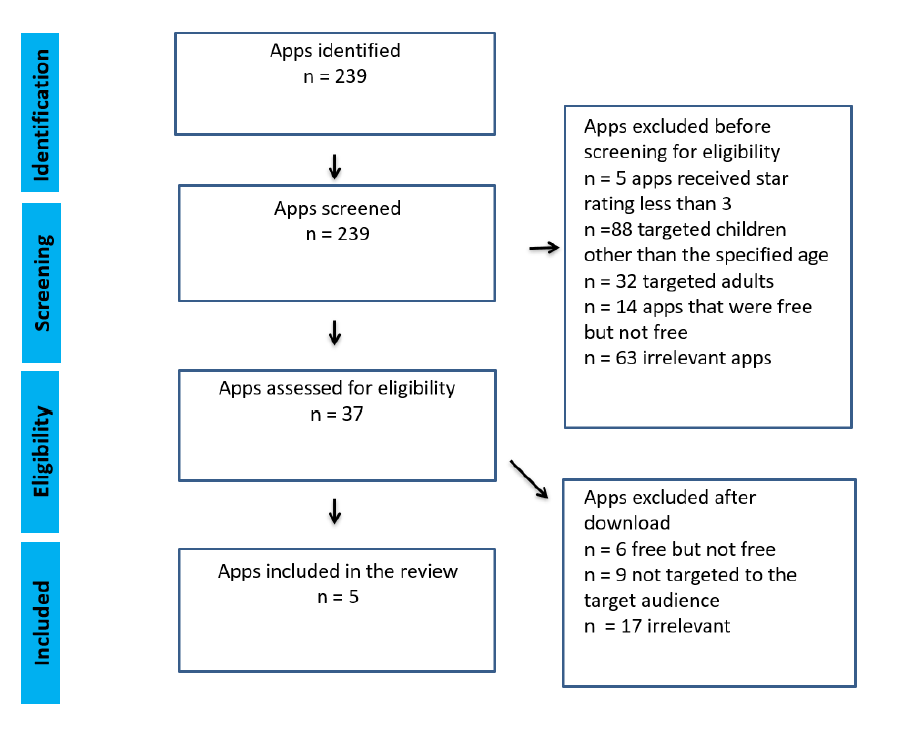
The search strategy followed the Preferred Reporting Items for Systematic Reviews and Meta-Analyses (PRISMA) guidelines for systematic reviews (Page et al., 2021). A comprehensive search of the Google Play Store was conducted to identify freely available child health promotion apps. The initial search retrieved 239 apps, which were systematically screened against prespecified eligibility criteria. Following this screening process, five apps met the inclusion criteria and were retained for review. Data extraction was undertaken using information from the Google Play Store and Apple App Store description pages, supplemented by direct examination of the apps to ensure accurate and comprehensive assessment.
Systematic App Search and Data Extraction
A systematic search for child health promotion apps was conducted in the Google Play Store on December 1, 2024, using the keyword phrase “children health education.” All apps were identified using a Google Pixel 6 smartphone that was exclusively dedicated to this review to ensure consistency of the search process. First, an initial screening of all apps (n= 239) was conducted using the information available on the app store. Following this, 37 apps that met the criteria, were downloaded on the Google Pixel 6 device and were further screened for eligibility. Finally, a detailed evaluation of five apps was conducted. The data for review was extracted from Google Play and Apple Store description pages and apps themselves. Each eligible app was tested by the first and second author for a minimum of 30 minutes to ensure functionality and relevance.
Identification of Eligible Apps
The authors included apps based on the following inclusion and exclusion criteria. Apps were included if they were: i) written in English; ii) freely available to the general public; and iii) a self-contained product that did not necessitate add-ons or an external device to operate. Apps were excluded if they: i) received a star rating less than 3; ii) targeted children younger or older than the specified age (9 – 12 years); iii) exclusively targeted teachers, parents, healthcare providers and the general public; iv) free but not free included apps containing in-app purchases for the majority of the app features or free trial apps with subscription fees and; v) irrelevant apps including apps focusing on accessing health records or health services, research study apps, banking or financial apps, astrology, etc. See Figure 1 for the PRISMA flow diagram.
Figure 1.
PRISMA Flow Diagram
Results
Characteristics of Eligible Apps
Five apps met the eligibility criteria out of 239 apps that were identified in the initial search. All apps were free and available to the general public. Most eligible apps (n=4) were also available on the Apple app store. Two apps were completely free with no in-app purchases. All of the apps (n=5) contained a privacy policy, and three apps were free of advertisements or “ads”. A majority (n=4) were updated within the last year. App ratings on both platforms ranged from 4.4 to 4.9. The number of ratings and reviews ranged from 6,000 to 114,000 with the number of downloads ranging from 100,000 to 10 million +, reflecting the popularity of apps among users. Eligible apps were featured in health and fitness (n = 1), medical (n = 2) and education (n = 2) categories. Google Play Store did not specify the age group for eligible apps except for Books for Kids Reading & Math, which is targeted at children up to age 12. In contrast, the Apple App Store provided a targeted age for eligible apps ranging from 4+ to 12+ years. Most apps (n = 4) were developed by medical, education and technology experts. Please see Table 1 for details.
Table 1.
Eligible App Details
Brief Overview of Eligible Apps
This section provides an overview of the five apps included in the review. The Healthy Minds Program app promotes mental well-being in children through activities such as mindfulness and emotional regulation. The MindPal–Brain Training Games app supports cognitive development by offering exercises that enhance attention, memory, and problem-solving skills. The Anatomy Learning–3D Anatomy and Daily Anatomy Flashcards apps facilitate the acquisition of foundational knowledge in human anatomy and physiology, focusing on normal body structure and function. Finally, the Books for Kids: Reading & Math app strengthens literacy skills and introduces health-related topics, including health promotion practices such as handwashing.
1. Healthy Minds Program App
The Healthy Minds Program app is designed to enhance mental well-being by integrating guided meditations and mindfulness practices. The app is developed by a team of meditation experts and researchers; this app is rooted in four essential pillars of well-being: Awareness, Connection, Insight, and Purpose. The app has five main sections: My Path, Explore, Favorite, Profile and Donate. Upon opening the app, users are greeted by the “My Path” page, organized into five categories. The first category, Foundations, introduces users to basic meditation and mindfulness skills through 10 lessons and 14 meditations. The remaining four categories represent the well-being framework: Awareness, Connection, Insight, and Purpose, each offering 18-20 lessons and 27 meditations pertaining to that wellness pillar. The Explore section allows users to browse various meditation and mindfulness resources, while the Favorite section lists users’ favorite meditations marked by clicking a heart icon. The Profile section provides an overview of users’ progress, including completed assessments, daily time spent on the app, streak tracking (daily, current, and longest streaks), and total time dedicated to practice and learning. The app is free, does not contain ads, and is supported by donations, with a Donate section that invites users to contribute.
Users can move forward or backward by 15 seconds or play/pause during a meditation session. Users can end the session anytime to switch to another. Users can also choose between speakers, offering both male and female voices. Each session is followed by prompts encouraging users to apply learning in their daily lives, such as reaching out to someone with a kind word. The lessons and meditations vary in length from 5 to 30 minutes, accommodating different time constraints. There is no option to select meditations based on age. The app’s user-friendly interface and organized layout allow for intuitive navigation. Users must sign up to use the app, starting with an optional assessment that evaluates their well-being across the four pillars, providing a score on a spectrum of low to high. Users are also invited to participate in ongoing research by sharing data on their app usage and its impact on daily stress.
2. MindPal-Brain Training Games
The MindPal-Brain Training Games app is developed by educational experts and game designers to enhance users’ cognitive skills through various games, rooted in neuroscience concepts. The app is free. It contains infrequent ads and in-app purchases that do not interfere with the gameplay. The Home screen has five tabs: Workout, Games, Stats, Blocks and Profile. The Workout screen is divided into three categories: Continue Workout, Today’s Games and Free Games of the Week. The Games tab provides games in different categories focusing on specific skills such as language, problem-solving, attention, math, flexibility, memory, and speed. The Stats tab shows users their overall performance and progress across all game categories. The Blocks tab features a free Sudoku Blocks game that does not affect the user’s performance stats in the stats tab, providing a break from brain training games. The Profile tab allows users to create a profile (not required to play the games) for an enhanced and personalized experience. It also includes options for customizable settings for sound effects, background music, daily alarms and notifications. The Other section within the Profile tab provides information on the pro version, social media presence, privacy policy and the science behind the games featured in the app. The app has a clean and organized layout with a white background and vibrant, colourful icons making it easy for users to navigate and select games. The app’s graphics are high quality, and the game icons are eye-catching, with animations that hint at the type of game users can expect.
3. Anatomy Learning – 3D Anatomy App
The Anatomy Learning-3D Anatomy app is designed to provide users with detailed and interactive 3D models of the human body. This app allows exploration at various anatomical levels, including muscles, tissues, and the skeletal system, making it a valuable resource for parents, children and anyone interested in learning about the human body. There is no information available about the app development team. The Home screen is organized into four categories: Atlas of Anatomy, Animations, Quizzes, and Sectional Anatomy. The Atlas of Anatomy features bones, cartilage, and joints. Animations vividly demonstrate various body movements, such as flexion, extension, and rotation. Quizzes challenge users to correctly identify structures. If an incorrect answer is chosen, the question is repeated until the correct answer is selected, reinforcing learning. Sectional anatomy, allow users to explore detailed anatomical regions such as the head, thorax, abdomen-pelvis, upper and lower limbs. However, many of the 3D models, animations, quizzes, and sectional views require payment to access.
When users open the app, they are taken directly to where they last left off, with a menu accessible in the upper right corner. This menu includes options such as Home, Bookmark, 3D Model, Settings, For Teachers, Go Pro, and Rate the App. The bookmark feature allows users to save their progress and return to specific sections later. The Settings menu enables users to adjust the quality, size and rotation speed. It also offers the option to select a preferred language from 10 available options. The “For Teachers” section offers free access for educators and social media influencers, while “Go Pro” provides payment options for unlocking all content. Frequent ads promoting the pro version can be intrusive. If parents’ payment information is stored on the device, there is a risk of accidental purchases, therefore parents should exercise caution. The app features a colourful and aesthetically pleasing design. Its user-friendly interface allows for easy navigation, with adjustable size settings (50%-150%), customizable text, graphic quality and the ability to zoom in and out on the 3D skeleton model. The layout is well-organized with clearly labelled sections.
4. Daily Anatomy Flashcards
The Daily Anatomy Flashcards app is designed to help users memorize various human body parts and system terminologies through interactive quizzes using flashcards. Developed with input from scientists and medical experts, the app contains a total of 9 topics containing 427 flashcards ranging from 29 to 55 per topic. The Home screen features a list of topics. Each topic is represented by a relevant icon clearly labelled with a body part or system. Users can select their desired topic on the Home screen and click the visible purple “Start Learning” button to begin their session. The flashcards display specific sections from the chosen topics. Depending on the topic, certain parts of the anatomy are highlighted, requiring users to identify specific bones, ligaments, tendons, or muscles. Some flashcards show entire sections of a limb, prompting users to guess the correct anatomical term from four possible options. Correct answers turn the selected option green, while incorrect answers turn red. If a user answers incorrectly, the card is reinserted into the deck and will reappear until it is correctly identified.
After completing a quiz, a bar appears at the bottom showing the user’s average score for the selected topics, along with the corresponding topic icons. Users can select up to eight out of nine topics to be quizzed on at a time. The home screen also displays the number of correctly identified terms per topic and a circle with a percentage indicating the average score for each section. The setting icon allows users to choose a language from English, German, Spanish, and Portuguese, with an option to toggle sound on or off. The About section provides information on the privacy and copyright of the app content. The app maintains a clean and organized layout with a consistent white background. Users can zoom in on images during quizzes for a closer look by pinching the screen. There is no option to increase text size.
5. Books for Kids Reading & Math
The app Books for Kids Reading & Math, developed by educators and technology experts, focuses on enhancing reading and math skills through a variety of engaging content. Although it offers in-app purchases, the app is ad-free and allows users to enjoy several activities without interruptions. Home page features two categories at the top: Reading and Math that allow users to explore content by age group, reading level, grade, and topic, with options including flashcards, read-along books, audiobooks, activity books, and hearables. The app includes a monthly choice board and a section for new books, making it easy for users to discover fresh content.
The Home screen provides four tabs: Home, Search, My List and Profile. The Search tab features a search bar and an option to search through topics. Users can also add books to My list for easy retrieval. The Profile tab tracks a users’ progress and provides rewards to celebrate achievements through a leaderboard, badges, reports, activity feed, smart bank, and a wall of fame. The report provides a detailed summary of time spent on certain topics, level of reading, category, and types of activity. The app offers customized and engaging learning experience by requesting the child’s name, age group, and top three favorite topics to recommends appropriate books and activities.
The topics cater to a wide variety of audiences, including stories, time, travel, science, holidays, health and wellness, animals and more. When users open a book, they see the title, author, age group, grade level, reading level, category, keywords, a brief description and available interactive features, such as object-finding activities, comprehension quizzes, and read-alongs. The read-along books also allow users to choose ‘read to me’ or ‘read by myself’. The app features a clean interface with a white background and yellow headings, ensuring clear and colorful graphics that enhance user experience. Navigation is straightforward, with content organized into easily accessible categories.
Description of Engagement Strategies Used in Eligible Apps
Several engagement strategies were employed across the eligible apps to capture children’s attention while supporting learning. This section describes the engagement strategies identified in the reviewed apps, which may inform app developers and researchers in the design of effective educational and health promotion apps for children. The key strategies included animations, gamification, quizzes and flashcards, as well as interactive books and songs.
Animations
Animations are widely recognized for their ability to make abstract concepts more tangible and engaging for young learners. The Cognitive Theory of Multimedia Learning (Mayer, 2014) supports the use of animations in learning visual and verbal information, enhancing comprehension and retention. Relevant explanations delivered in the form of animations using images and narration help optimize cognitive resources by engaging both auditory and visual channels without overwhelming the learner, thereby enhancing understanding, especially in complex subjects. However, researchers should consider cognitive overload while designing animations and avoid unnecessary complexity (Ko?-Januchta, 2020). One of the eligible apps, Anatomy Learning- 3D Anatomy app is a great example where animations are optimally used to teach human body systems.
Gamification
The Self-Determination Theory(Deci & Ryan, 2000) posits gamification can enhance intrinsic motivation by fulfilling basic psychological needs such as autonomy, competence, and relatedness. Well-designed educational games foster deep learning by creating immersive, interactive environments that encourage exploration and problem-solving. Games provide immediate feedback and facilitate the transfer of knowledge across different scenarios (Karakoç et al., 2022). One of the eligible apps MindPal-Brain Training Games, features games to enhance cognitive skills. The apps provide performance stats supporting users in tracking their progress, creating motivation to improve. While games can enhance engagement, they may result in superficial learning when competitive elements are emphasized, as learners prioritize winning over comprehension. This competitive focus can lead to the mere recall of facts without fostering deep understanding or the ability to transfer knowledge. Researchers should incorporate reflection activities in app designing to ensure meaningful and conducive learning for deeper comprehension (Limone et al., 2022; Pakide & Anburaj, 2024).
Quizzes/Flashcards
Quizzes are a well-established method for reinforcing and evaluating learning. They leverage the Testing Effect which suggests that testing enhances long-term retention through retrieval, identifying knowledge gaps for targeted studying, and boosts motivation by providing a sense of achievement. Quizzes allow children to learn, review, and repeat content at their own pace, incorporating various sensory inputs like pictures, text, or voices to cater to diverse needs. Quizzes are useful for both formative (real-time) and summative (end-of-activity) assessments. When paired with feedback, they help correct misconceptions and improve understanding. Additionally, quizzes combined with rewards and progress tracking enhance engagement (Li et al., 2028; Zainuddin et al., 2020). A quiz is a versatile educational strategy that can be offered alone or in combination with other strategies. For example, flashcards can be used for learning and retaining information using the concepts of Spaced Repetition (Ebbinghaus, 2013) and can also serve as a quiz (Özdemir & Seçkin 2024). One of the eligible apps, Daily Anatomy Flashcards, exemplifies the dual use of flashcards for learning and quizzing. This app provides visual feedback by showing incorrect answers in red and correct answers in green, allowing users to see their mistakes and correct answers in real time. Another eligible app, Books for Kids Reading & Math, presents a quiz at the end of a book to evaluate the child’s comprehension. This app rewards learners with coins and tracks their progress, enhancing their active participation in the learning process.
Interactive Books and songs
The use of digital picture books, audiobooks, podcasts, read-along books and sing-along songs are common strategies used in children’s education apps to enhance engagement and learning opportunities. The use of auditory and textual strategies in educational apps aligns with the Dual Coding Theory(Paivio, 1990) which posits that integrating text with visual imagery significantly enhances comprehension, memory retention, and language acquisition. Audiobooks are an effective tool for improving reading fluency, developing vocabulary, engaging with texts beyond children’s current reading capabilities, and fostering comprehension. Audiobooks can make content accessible, support diverse learners especially those reluctant to read, and promote critical thinking and cultural awareness. Learners are exposed to various narratives and perspectives that can enhance empathy and understanding of different societal contexts (Eftimova et al., 2022).
The digital books incorporate features like images, animations, narration, interactive elements and comprehension quizzes, significantly improving children’s understanding of the content and recall (Kucirkova, 2019). A study with 60 children found the Read Along app improved comprehension, reading, pronunciation, listening, and speaking skills, making learning more engaging and effective (Abdusalomova & Artikova, 2023).One of the eligible apps Books for Kids Reading & Math provides digital books that help children understand various health topics. For example, one book explores the importance of handwashing, while another discusses the use of masks to promote infection prevention. These interactive books make complex health subjects accessible and engaging for young readers.
Implications for Parents, Healthcare Professionals, and Researchers
The findings of this review have important implications for parents, healthcare professionals, and researchers. This review identifies five rigorously evaluated, high-quality apps designed to foster children’s understanding of health and well-being that parents can use. This review emphasizes apps that successfully integrate engaging design to support learning. Evidence from prior research highlights the value of interactive features such as animations, gamification, quizzes, and digital reading in promoting motivation, comprehension, and knowledge retention among children, provided these elements are purposefully aligned with clear learning objectives (Mohammadzadeh et al., 2023; Shao et al., 2025). While educational apps offer documented benefits, their effectiveness depends on parental involvement. Active parental involvement remains a critical determinant of success, ensuring that screen time is leveraged for health promotion and meaningful learning rather than passive consumption (Radesky et al., 2020). Parents play an essential role in guiding app use, monitoring engagement, and reinforcing learning to maximize the potential of these digital tools.
This review highlights the increasingly important role of digital apps as complementary tools for fostering early health literacy, particularly within child health promotion, health education, and preventive care contexts. Nurses and other healthcare providers are increasingly approached by families to recommend credible, accessible, and developmentally appropriate digital resources, yet often lack formal guidance on how to evaluate app quality and educational value (Nievas Soriano et al., 2022). Healthcare professionals are well positioned to integrate carefully selected apps into anticipatory guidance, health teaching, and community-based education initiatives. In parallel, they play a critical role in counseling families on appropriate app use, data privacy considerations, and maintaining a healthy balance between screen time and activities that support children’s overall growth and development.
These findings highlight the need for educational and health promotion apps to be grounded in established educational, behavioural, and learning theories. Apps that are developmentally appropriate, evidence informed, and intentionally designed to support key principles such as autonomy, competence, and timely feedback are more likely to foster meaningful engagement and sustained learning (Zarnowiecki et al., 2020). App developers and researchers should also prioritize content accuracy, usability, accessibility, and equity, particularly in light of ongoing concerns related to the digital divide and unequal access to high-quality digital health resources (DeWitt et al., 2022). Future research should move beyond short-term engagement metrics to rigorously examine the effectiveness of interactive and engagement strategies across diverse populations and settings, with particular attention to long-term learning outcomes, health literacy, and health-related behaviours (Lee et al., 2024).
Conclusion
This review highlights both the promise and the limitations of freely available digital health promotion apps for children aged 9 to 12 years. Despite the vast number of apps initially identified, only a small subset met criteria for quality, relevance, and accessibility, highlighting the ongoing challenge faced by parents and healthcare professionals in identifying trustworthy digital resources. The five eligible apps have a potential to support children’s health literacy across multiple domains, including mental well-being, cognitive stimulation, foundational anatomy knowledge, and literacy integrated with preventive health education. Common strengths included the purposeful use of animations, gamification, quizzes, flashcards, and interactive reading features, all of which supported engagement and learning when aligned with clear educational goals. At the same time, the findings reveal gaps in the current app ecosystem, including limited availability of truly free, age-specific apps, the presence of advertisements or in-app purchase prompts, and inconsistent attention to developmental appropriateness. These limitations reinforce the need for greater involvement of healthcare professionals, educators, and researchers in guiding app selection, recommending credible tools, and contributing to the design and evaluation of future digital health resources. Overall, this review provides a practical foundation for informed decision-making and highlights the importance of engaging digital solutions to support early health literacy and well-being among school-aged children.
Acknowledgments
The authors gratefully acknowledge the support of Thompson Rivers University through the Undergraduate Research Apprenticeship Fund. This funding made it possible to engage undergraduate students in meaningful research activities and supported the development, implementation, and scholarly dissemination of this project.
References
Abdusalomova, M., & Artikova, M. (2023). Benefits of applying gamification approach in teaching English to young learners: Read along (educational app). Zenodo. https://doi.org/10.5281/zenodo.7980145
Blakeslee, S. B., Vieler, K., Horak, I., Stritter, W., & Seifert, G. (2023). Planting seeds for the future: Scoping review of child health promotion apps for parents. JMIR mHealth and uHealth, 11, e39929. https://doi.org/10.2196/39929
Brisson-Boivin, K. (2018). The digital well-being of Canadian families. MediaSmarts. https://mediasmarts.ca/sites/mediasmarts/files/publication-report/full/digital-canadian-families.pdf
Deci, E. L., & Ryan, R. M. (2000). The “what” and “why” of goal pursuits: Human needs and the self-determination of behavior. Psychological Inquiry, 11(4), 227–268. https://doi.org/10.1207/S15327965PLI1104_01
DeWitt, A., Kientz, J., Coker, T. R., & Liljenquist, K. (2022). mHealth technology design and evaluation for early childhood health promotion: Systematic literature review. JMIR Pediatrics and Parenting, 5(4), e37718. https://doi.org/10.2196/37718
Ebbinghaus, H. (2013). Memory: A contribution to experimental psychology. Annals of Neurosciences, 20(4), 155–156. https://doi.org/10.5214/ans.0972.7531.200408
Eftimova, S., Damianova, I., Atanasov, H., Mincheva, K., & Nikolova, B. (2022). The therapeutic function of reading: Audiobooks and children in a global pandemic. In Proceedings of the Online Conference (pp. 2416–2421). IATED. https://library.iated.org/view/EFTIMOVA2022RAP
Hedderson, M. M., Bekelman, T. A., Li, M., Knapp, E. A., Palmore, M., Dong, Y., Elliott, A. J., Friedman, C., Galarce, M., Gilbert-Diamond, D., Glueck, D., Hockett, C. W., Lucchini, M., McDonald, J., Sauder, K., Zhu, Y., Karagas, M. R., Dabelea, D., Ferrara, A., & Environmental Influences on Child Health Outcomes Program. (2023). Trends in screen time use among children during the COVID-19 pandemic, July 2019 through August 2021. JAMA Network Open, 6, e2256157. https://doi.org/10.1001/jamanetworkopen.2022.56157
Karakoç, B., Ery?lmaz, K., Turan Özpolat, E., & Y?ld?r?m, ?. (2022). The effect of game-based learning on student achievement: A meta-analysis study. Technology, Knowledge and Learning, 27(1), 207–222. https://doi.org/10.1007/s10758-020-09471-5
Ko?-Januchta, M. M., Höffler, T. N., Prechtl, H., & Leutner, D. (2020). Is too much help an obstacle? Effects of interactivity and cognitive style on learning with dynamic versus non-dynamic visualizations with narrative explanations. Educational Technology Research and Development, 68(6), 2971–2990. https://doi.org/10.1007/s11423-020-09822-0
Kucirkova, N. (2019). Children’s reading with digital books: Past moving quickly to the future. Child Development Perspectives, 13(4), 208–214. https://doi.org/10.1111/cdep.12339
Lee, J., Su, Z., & Chen, Y. (2023). Mobile apps for children’s health and wellbeing: Design features and future opportunities. In AMIA Annual Symposium Proceedings (pp. 1027–1036). American Medical Informatics Association. https://pmc.ncbi.nlm.nih.gov/articles/PMC10785842/
Li, X., Mok, S. W., Cheng, Y. Y. J., & Chu, S. K. W. (2018). An examination of a gamified e-quiz system in fostering students’ reading habit, interest, and ability. Proceedings of the Association for Information Science and Technology, 55(1), 290–299. https://doi.org/10.1002/pra2.2018.14505501032
Limone, P., Messina, G., & Toto, G. A. (2022). Serious games and eating behaviors: A systematic review of the last 5 years (2018–2022). Frontiers in Nutrition, 9, 978793. https://doi.org/10.3389/fnut.2022.978793
Mayer, R. E. (2014). Cognitive theory of multimedia learning. In R. E. Mayer (Ed.), The Cambridge handbook of multimedia learning (2nd ed., pp. 43–71). Cambridge University Press. https://doi.org/10.1017/CBO9781139547369.005
Mehdizadeh, H., Asadi, F., Mehrvar, A., Nazemi, E., & Emami, H. (2019). Smartphone apps to help children and adolescents with cancer and their families: A scoping review. Acta Oncologica, 58(7), 1003–1014. https://doi.org/10.1080/0284186X.2019.1588474
Mohammadzadeh, N., Gholamzadeh, M., Zahednamazi, S., & Ayyoubzadeh, S. M. (2023). Mobile health applications for children’s oral health improvement: A systematic eview. Informatics in Medicine Unlocked, 37, 101189. https://doi.org/10.1016/j.imu.2023.101189
Nievas Soriano, B. J., Uribe-Toril, J., Ruiz-Real, J. L., & Parron-Carreno, T. (2022). Pediatric apps: what are they for? A scoping review. European Journal of Pediatrics, 181(4), 1321-1327. https://doi.org/10.1007/s00431-021-04351-1
Özdemir, O., & Seçkin, H. (2024). Quantifying cognitive and affective impacts of Quizlet on learning outcomes: A systematic review and comprehensive meta-analysis. Frontiers in Psychology, 15, 1349835. https://doi.org/10.3389/fpsyg.2024.1349835
Page, M. J., McKenzie, J. E., Bossuyt, P. M., Boutron, I., Hoffmann, T. C., Mulrow, C. D., Shamseer, L., Tetzlaff, J. M., Akl, E. A., Brennan, S. E., Chou, R., Glanville, J., Grimshaw, J. M., Hróbjartsson, A., Lalu, M. M., Li, T., Loder, E. W., Mayo-Wilson, E., McDonald, S., McGuinness, L. A., … Moher, D. (2021). The PRISMA 2020 statement: An updated guideline for reporting systematic reviews. International Journal of Surgery (London, England), 88, 105906. https://doi.org/10.1016/j.ijsu.2021.105906
Paivio, A. (1990). Mental representations: A dual coding approach. Oxford University Press. https://academic.oup.com/book/10932
Pakide, A., & Anburaj, G. (2024). The impact of gamification in education. Quest Journal of Research in Humanities and Social Science, 12, 147–156. https://www.questjournals.org/jrhss/papers/vol12-issue11/1211147156.pdf
Papadakis, S. (2021). Tools for evaluating educational apps for young children: A systematic review of the literature. Interactive Technology and Smart Education, 18(1), 18–49. https://doi.org/10.1108/ITSE-08-2020-0127
Pew Research Center. (2020, July 28). Children’s engagement with digital devices, screen time. https://www.pewresearch.org/internet/2020/07/28/childrens-engagement-with-digital-d evices-screen-time/
Pierce, G. L., & Cleary, P. F. (2024). The persistent educational digital divide and its impact on societal inequality. PLOS ONE, 19, e0286795. https://doi.org/10.1371/journal.pone.0286795
Puzia, M., Laird, B., Green, J., & Huberty, J. (2020). Parents’ perceptions of their children’s engagement in a consumer-based meditation mobile app: Cross-sectional survey study. JMIR Pediatrics and Parenting, 3, e24536. https://doi.org/10.2196/24536
Radesky, J. S., Schumacher, J., & Zuckerman, B. (2020). Mobile and interactive media use by young children: The good, the bad, and the unknown. Pediatrics, 135(1), 1–3. https://doi.org/10.1542/peds.2014-2251
Shao, J., Abdul Rabu, S., & Chen, C. (2025). The impact of gamified interactive e-books incorporating metacognitive reading strategies on Chinese elementary students’ mathematical reading comprehension, word problem-solving performance, and general reading motivation. Education and Information Technologies, 30, 22893–22929. https://doi.org/10.1007/s10639-025-13660-z
Statista. (2022). Mobile phone usage for kids and teens in Canada by age 2022. https://www.statista.com/statistics/1319950/canada-mobile-usage-kids-and-teens-by-age/
Vaiopoulou, J., Papadakis, S., Sifaki, E., Kalogiannakis, M., & Stamovlasis, D. (2023). Classification and evaluation of educational apps for early childhood: Security matters. Education and Information Technologies, 28(3), 2547–2578. https://doi.org/10.1007/s10639-022-11289-w
Virani, A., Duffett-Leger, L., & Letourneau, N. (2021). Parents’ use of mobile applications in the first year of parenthood: A narrative review of the literature. Health Technology, 5, 14. https://doi.org/10.21037/ht-20-28
Virani, A., Duffett-Leger, L., & Letourneau, N. (2019). Parenting apps review: In search of good quality apps. mHealth, 5, 44. https://doi.org/10.21037/mhealth.2019.08.10
Zainuddin, Z., Shujahat, M., Haruna, H., & Chu, S. K. W. (2020). The role of gamified e-quizzes on student learning and engagement: An interactive gamification solution for a formative assessment system. Computers and Education, 145, 103729. https://doi.org/10.1016/j.compedu.2019.103729
Zarnowiecki, D., Mauch, C. E., Middleton, G., Matwiejczyk, L., Watson, W. L., Dibbs, J., Dessaix, A., & Golley, R. K. (2020). A systematic evaluation of digital nutrition promotion websites and apps for supporting parents to influence children’s nutrition. International Journal of Behavioral Nutrition and Physical Activity, 17(1), 17. https://doi.org/10.1186/s12966-020-0915-1
Zhang, Y. (2024). Subscription economy: Impacts on inequality. Finance and Economics, 1. https://www.deanfrancispress.com/index.php/fe/article/view/269
Author Bios
Dr. Anila Virani
Dr. Anila Virani is a registered nurse with over 25 years of nursing experience. She is currently an Assistant Professor in the School of Nursing at Thompson Rivers University, Canada. Her scholarship focuses on health informatics, mHealth, simulation-based learning, AI-enhanced education, and innovative teaching strategies to advance nursing education and practice
Lukhvir Joha
Lukhvir Johal is an undergraduate nursing student in the School of Nursing at Thompson Rivers University, Canada.
Sourajita Panda
Sourajita Panda is an undergraduate student in the Bob Gaglardi School of Business and Economics at Thompson Rivers University, Canada.
Dr. Anthony Aighobahi
Dr. Anthony Aighobahi is an Assistant Teaching Professor in the Department of Computing Science at Thompson Rivers University, Canada.


Recent articles
- Index of volume 21 number 321 Sep 2026
- Cyber Security Awareness Month in the Age of AI21 Sep 2026
- Are we supporting the next generation of nurses to be AI proficient or AI dependent?21 Sep 2026
- Designing What AI Makes Possible in Healthcare21 Sep 2026
- Cybersecurity Threats to Hospital Information Systems: A Narrative Review of Risks, Patient-Safety Impacts, and Defensive Strategies with Implications for the United States21 Sep 2026