
What does Canada’s new National Artificial Intelligence Strategy mean for healthcare?

by June Kaminski, RN MSN PhD(c)
Editor in Chief
CJNI was initiated by June Kaminski in 2006 when she was President-Elect of CNIA. In 2012, June was honoured to receive the CASN and Canada Health Infoway’s inaugural Nursing Faculty E-Health Award 2012 in Ottawa Canada. She offers the Nursing Informatics Learning Centre with accredited CEU informatics courses.
Citation: Kaminski, J. (2026). Editorial. What does Canada’s new national artificial intelligence strategy mean for healthcare? Canadian Journal of Nursing Informatics, 21(2). https://cjni.net/journal/?p=16747

On June 4, 2026, the Canadian government released their latest strategic five year plan related to the Pan-Canadian AI Strategy (first launched in 2017), named Canada’s National Artificial Intelligence Strategy: AI for All (Government of Canada, 2026).
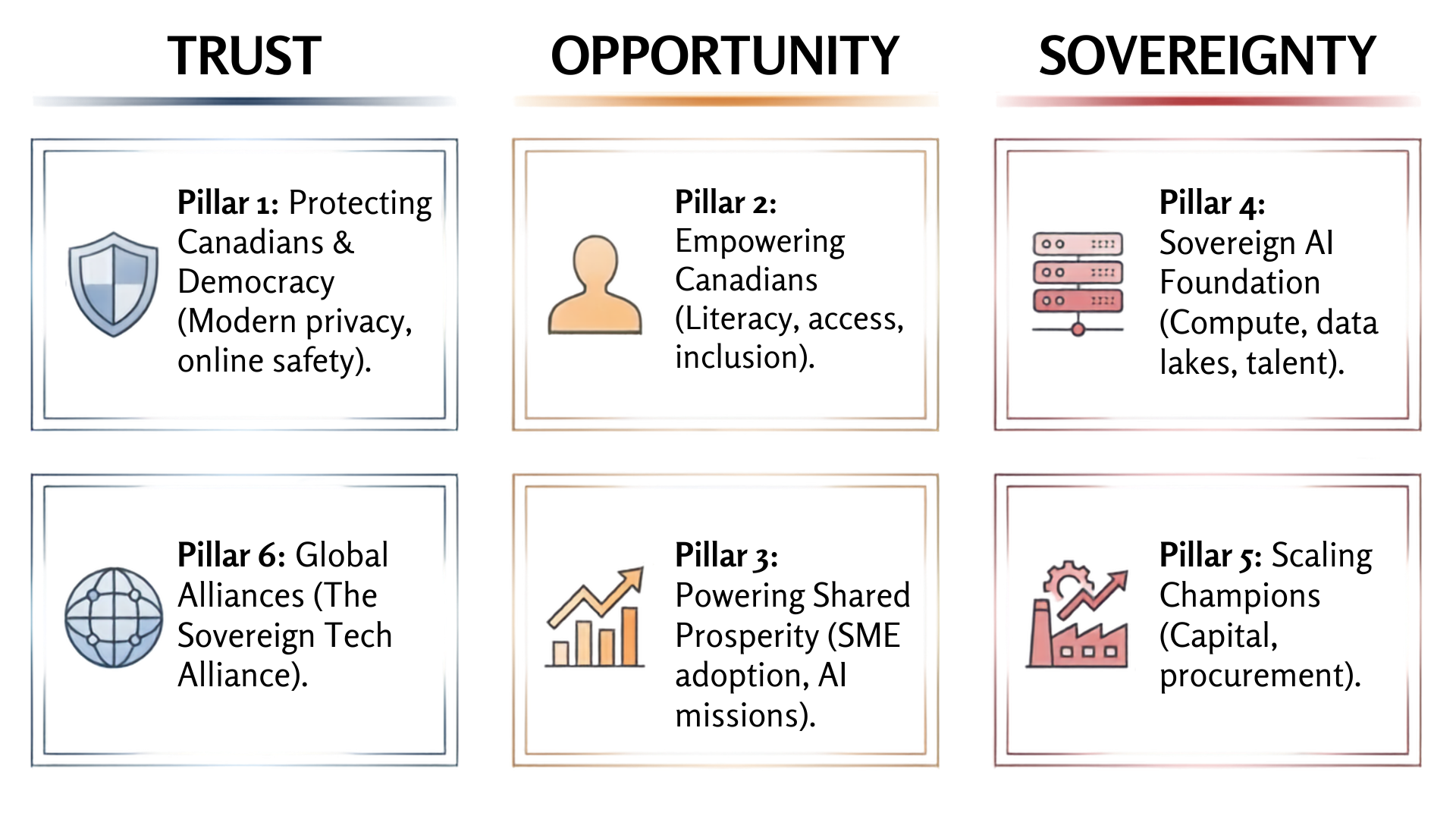
Currently, only 12% of Canadian businesses have actively embraced AI in their processes: the goal of this new strategy is to support adoption by 60% of all businesses by 2034. The strategy hinges on six distinct pillars organized within three themes: Trust, Opportunity, and Sovereignty.
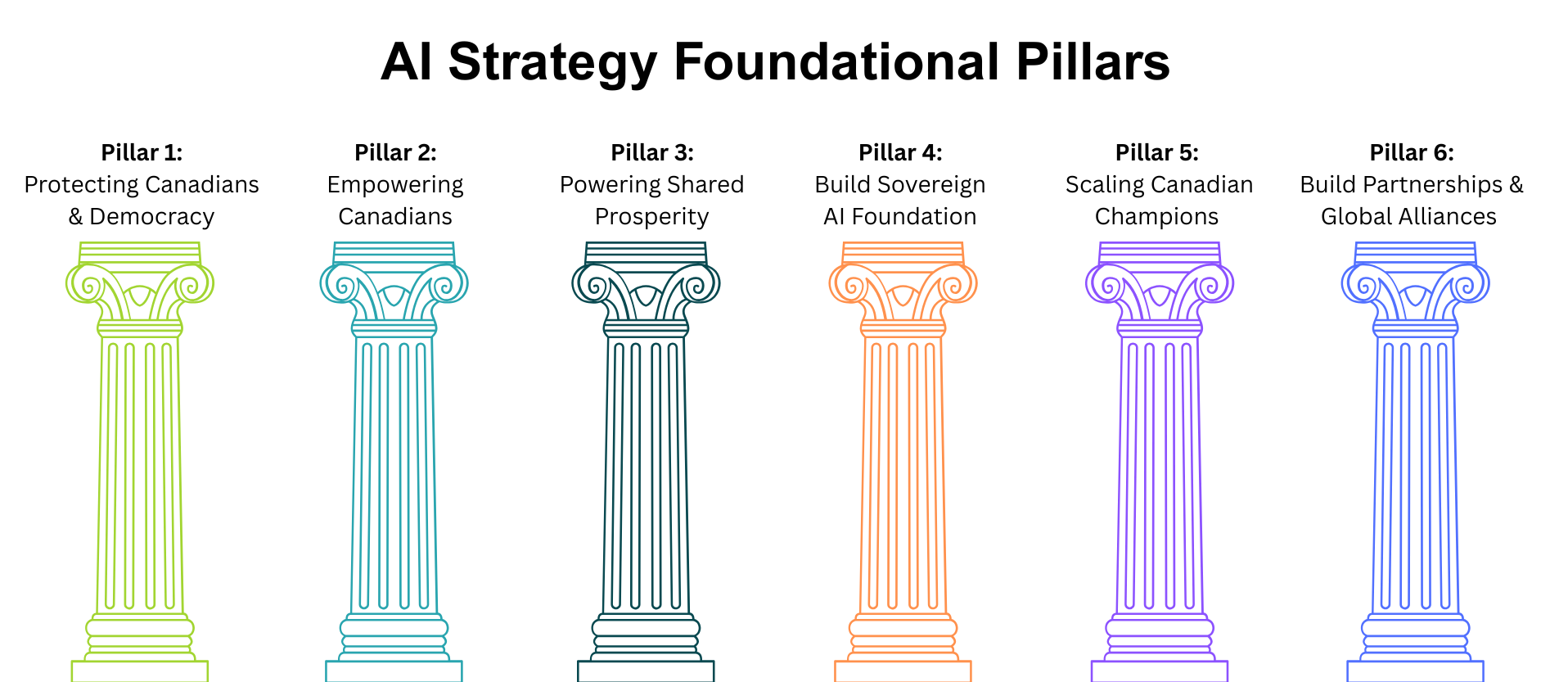
Pillar 1: Protecting Canadians and safeguarding our democracy
This first pillar addresses the Trust theme: it is important that Canadians trust AI, which includes strong updated “privacy and online safety laws, strong national AI safety capabilities, and secure government systems” (Government of Canada, 2026, p. 12).
Pillar 2: Empowering Canadians
The second pillar addresses the Opportunity theme. Canadians need free training and ready access to AI tools to adeptly use it in the workplace, at school and in their personal lives. It must also make these efforts distinctly Canadian “by representing and including Canadian voices, languages, and culture” (Government of Canada, 2026, p. 12).
Pillar 3: Powering AI adoption for shared prosperity
The third pillar also addresses the Opportunity theme. Financing is available to support adoption including a $200 million budget to support health care adoption, as well as strategies to “transform public service delivery for better services to Canadians” (Government of Canada, 2026, p. 12).
Pillar 4: Building the Canadian sovereign AI foundation
The fourth pillar addresses the Sovereignty theme by promising better infrastructure, support for researchers and developers, and centering Canadian AI development on Canadian soil.
Pillar 5: Scaling Canadian champions
The fifth pillar also addresses the Sovereignty theme by outlining further growth investment funds to support Canadian-based development and expertise. The Government intends to “unlock growth capital and leverage government as a strategic anchor customer” (Government of Canada, 2026, p. 12).
Pillar 6: Building trusted economic and governance partnerships and global alliances
This final sixth pillar addresses the Trust theme but also influences the Sovereignty theme and focuses on building partnerships with trusted global allies. “Canada will work with a variety of trusted partners to align standards, co-invest in innovation, and help Canadian companies access global markets — while shaping an AI ecosystem anchored in democratic values” (Government of Canada, 2026, p. 12).
Questions left Unanswered
This new strategy plan presents lofty goals but is missing key information. “Those include things like estimates for potential layoffs caused by AI and how the government might respond, insight into the specifics of promised privacy and online harms legislation, any detailed mention of regulation or a plan to mitigate environmental concerns around data centres, and any clear timelines for when most of the government’s promises will be achieved” (Boynton, 2026, p. 1). Other concerns are whether this strategy plan will actually serve all Canadians, as promised, or only a few (CBC News, 2026; The Conversation, 2026). All these concerns impact Canadian healthcare in one way or another. Protecting private information, health concerns about the environmental impacts of data centres to both the planet and people, (Ibrahimpoor, 2026) and how AI tool access will be made equitable and preserve human (Public Service Alliance of Canada, 2026; Wilson, 2026). and Indigenous rights and jobs are all concerns of health care professionals. It will be important for us all to keep a careful watch on how this plan unfolds and may require collective action to ensure these protections are considered and applied across the nation (Evans, 2026).
AI for All and Healthcare
Healthcare is the first industry sector focused on in the new strategic plan document: “Canada’s first mission will be in healthcare, where the conditions are uniquely strong: a universal public system generating data at a scale most countries cannot match, world-class clinical and research institutions, and a population whose daily lives are touched by the system’s pressures. AI deployed well can expand access to primary care, reduce ER wait times, prevent avoidable visits through better upstream care, and lighten the administrative burden on physicians” (Government of Canada, 2026, p. 29).
One way this will be supported is through the announced launch of the first AI Missions Program of 200 million dollars, “with a flagship health mission to accelerate the adoption of AI in diagnostics, patient care, and system efficiency, delivering faster, better care for Canadians while strengthening Canada’s life sciences and health innovation ecosystem” (Prime Minister of Canada, 2026, p. 1). Another $200 million will be devoted to AI in healthcare through the $100 million investment in dataset work with the Canadian Institute for Health Information (CIHI), with a vision that “mobilizing it responsibly can reduce wait times, enable personalized medicine, support more equitable access to care” (Government of Canada, 2026, p. 35).
As well, a $100 million investment will be devoted to expanding the VITAL platform “in five additional provinces, supporting its ability to leverage clinical data from hospitals and enable health data innovation that reduces mortality rates and accelerates critical care for Canadians” (Government of Canada, 2026, p. 35). This initiative promises to unlock the staggering amount of health-related data that is currently locked away in silos and make it accessible for healthcare researchers and leaders to promote better health, improve predictive capabilities, and enrich the healthcare experience for all Canadians. “VITAL is building the infrastructure to change that. As a pan-Canadian health data platform designed to connect clinical data from hospitals across multiple provinces, it is enabling AI-driven discovery: supporting research that can generate leads for novel therapies, attracting new clinical trials, and identifying genetic risk factors with greater precision” (Government of Canada, 2026, p. 36). VITAL is currently being used in 160 hospitals across Ontario, Alberta, and Quebec, (Gemini Medicine, 2026) and this new funding will widen that scope to a total of eight provinces. Through this platform, national datasets from both rural and urban areas will be accessible to Canadian researchers and health leaders, data that will be owned and operated by Canadians on Canadian soil. This includes distinct development of Indigenous datasets that will be governed by Indigenous primary health services, leaders, and researchers. “Vital is being developed in partnership with Canada’s national digital infrastructure, including the Digital Research Alliance of Canada, the national AI institutes, the Canadian Institute for Health Information and Canada Health Infoway, alongside strong collaborations with provincial partners” (Gemini Medicine, 2026, p. 1)
To summarize, the targeted funding for healthcare promised by this new AI strategy includes the following three initiatives (Evans, 2026):
| AI Missions — Healthcare | $200M | First mission: improving health outcomes through AI deployment |
| Health Sector Data Space | $100M | Linked health datasets for clinical research via CIHI |
| VITAL platform expansion | $100M | Pan-Canadian health data platform expanding to 5 new provinces |
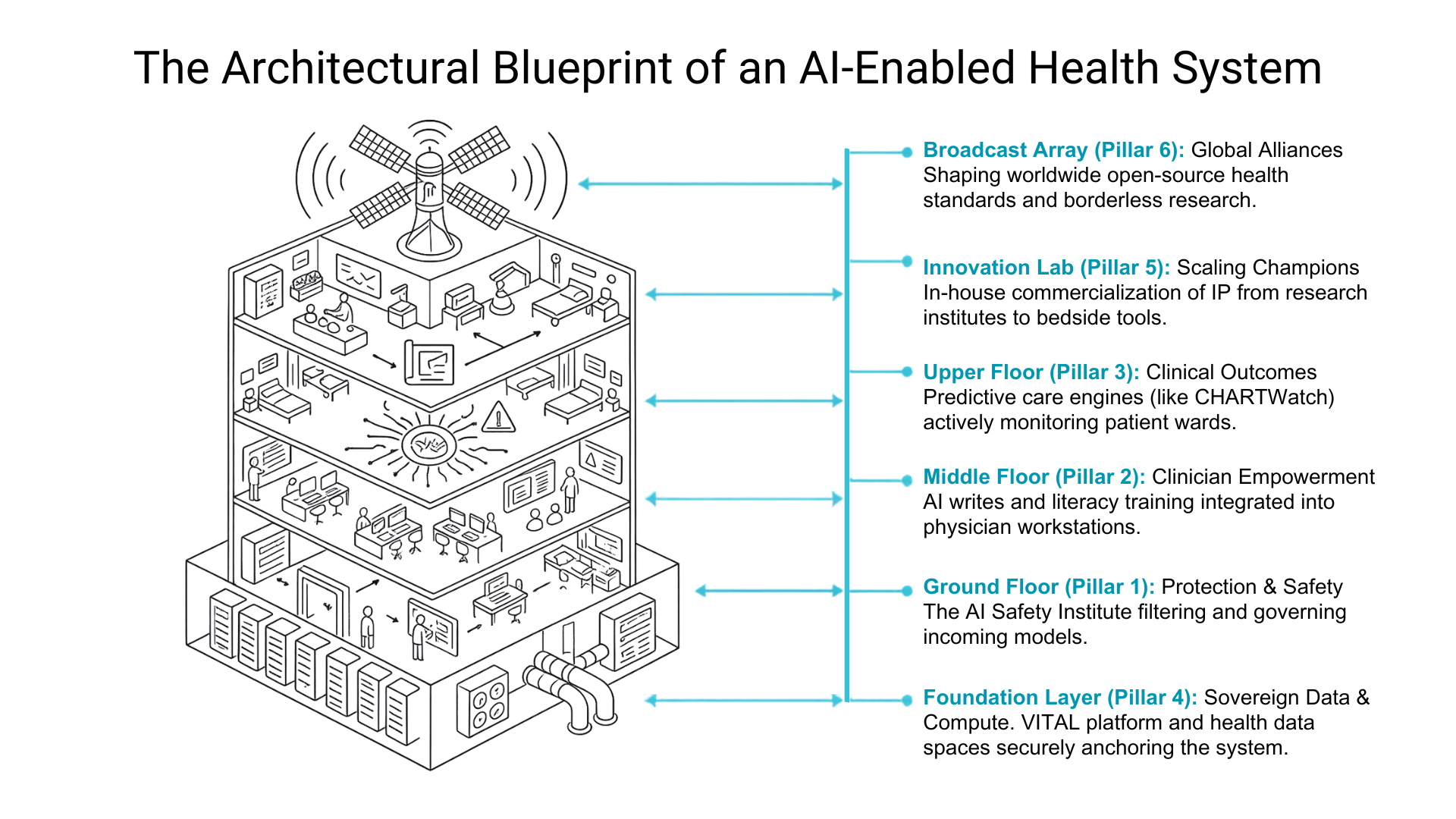
The funding is certainly being offered to support AI use in Canadian healthcare. A closer look at how each of the six pillars facilitate a more cohesive and vibrant healthcare system can help to motivate and spark innovation by healthcare professionals to take advantage of these investment opportunities.
Pillar 1: Building Trust through Safety and Privacy
Updating Privacy Laws: it will be important to widen the scope of existing privacy laws, which were mostly established before the advent of the AI era.
Safeguarding against Bias: Updating standards to protect vulnerable groups from algorithmic biases that could impact clinical fairness.
Establishing Safety Standards: Another $50 million investment into the Canadian AI Safety Institute will help to safeguard Canadian personal information data and reduce cybercrime risks, which reflects well on safeguarding health information data.
Pillar 2: Empowering the Healthcare Workforce
Applied Workforce Skills: The strategy supports specialized training for frontline workers and professionals to use AI productively and judiciously.
Reducing Administrative Burden: AI tools can be deployed to augment human expertise, such as decision-support systems and AI scribe programs. The emphasis here is on augmentation rather than substitution of human cognitive decision-making and insights.
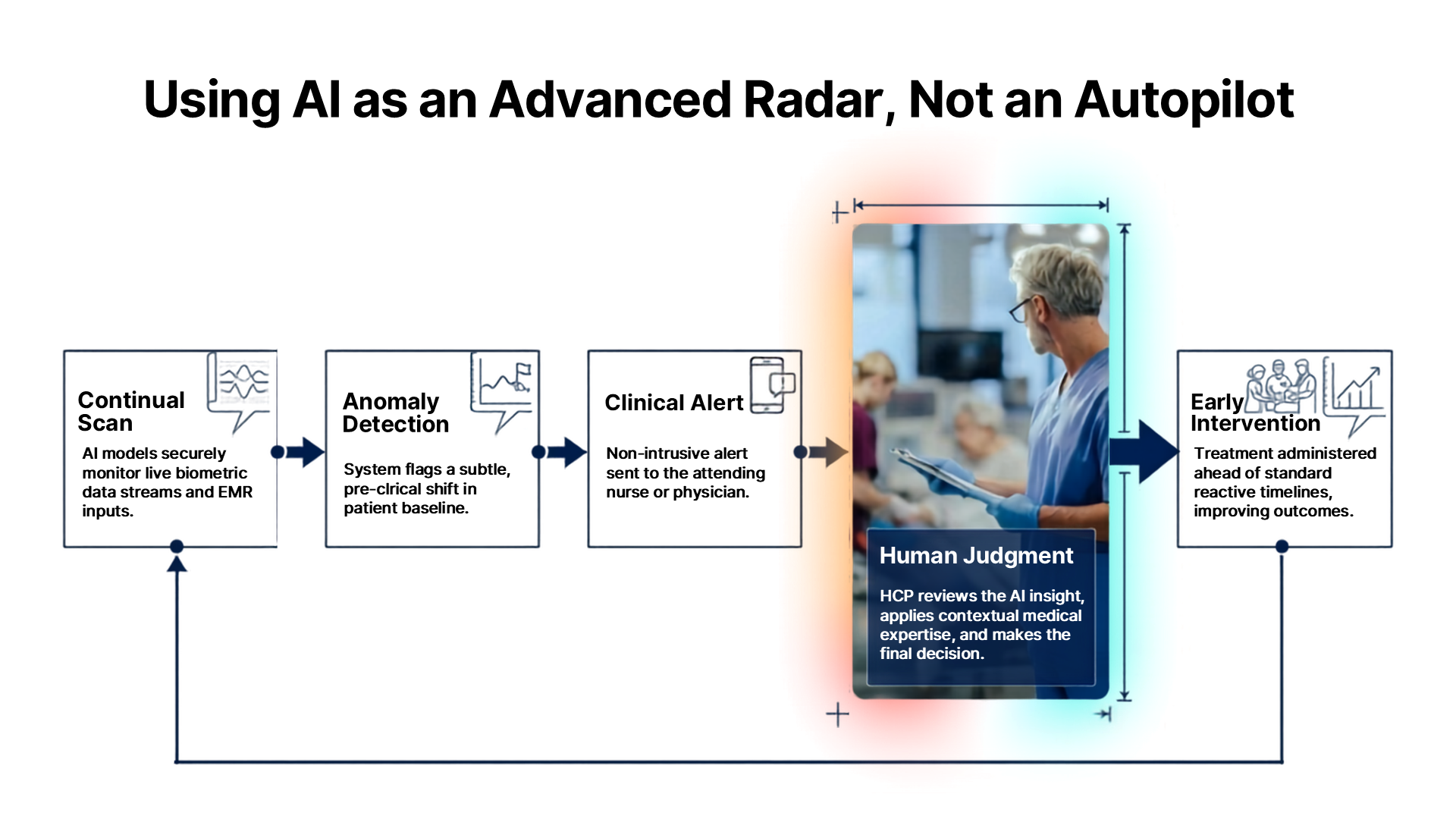
Pillar 3: Powering Shared Prosperity through AI Missions
First National AI Mission: Canada has committed $200 million to its first mission: improving health outcomes which provides unique opportunities for AI development within the sector.
Tangible Healthcare Targets: This mission focuses on expanding access to primary care, reducing ER wait times, and preventing avoidable hospital visits through improved upstream care.
Proven Applications: A focus on meaningful software and applications is part of this first mission. An example given is Chartwatch, an application being used at St. Michael’s Hospital in Toronto, which monitors vitals to warn staff of patient deterioration, leading to a 26% drop in unexpected deaths (Government of Canada, 2026, p. 28).
Pillar 4: Mobilizing Health Data as a Sovereign Asset
Health Sector Data Space: A $100 million investment (in partnership with CIHI) treats healthcare data as a strategic national asset to link standardized, secure datasets to strengthen clinical trials and health research.
VITAL Platform Expansion: Another $100 million to expand the VITAL platform into five more provinces, connecting hospital clinical data to support breakthroughs in treating diseases like sepsis and heart disease.
Anchoring Talent: The strategy doubles down on national AI institutes (Mila, Amii, Vector) that translate research into tools.
Pillar 5: Scaling Canadian Healthcare AI Champions
Secure Infrastructure: Support is promised to provide secure environments for sensitive data, such as in healthcare where data sovereignty is paramount.
Growth Capital: Another funding initiative promises $500 million for the Canadian Tech Growth Fund that can help domestic healthcare AI firms scale and grow within Canada.
Pillar 6: Global Alliances for Standardized Care
Alliances and Partnerships: Through alliances like the Sovereign Technology Alliance, Canada works with trusted partners (such as Germany) to align AI safety and evaluation standards. This ensures that AI tools used in Canadian hospitals meet rigorous global benchmarks for safety and interoperability.
Canada’s National Artificial Intelligence Strategy: AI for All (Government of Canada, 2026) plan has been received with mixed reviews, leaves many questions to be answered, and seems unrealistic to some. However, one concrete aspect of this plan is a strong emphasis on healthcare with the funding to back up this focus. It behooves all Canadian healthcare leaders and professionals to consider the possibilities that judicious use of AI could provide to healthcare structure, processes and delivery. If done well, the advantages could be many, as long as the perils of AI to the planet and to people are addressed and minimized through careful use of clean energy and keeping human rights in mind with each decision.
References
Amii. (2026). AI for all: Canada’s national AI strategy. https://www.amii.ca/updates-insights/ai-for-all-national-ai-strategy
Boynton, S. (2026, June 4). 5 things missing from Canada’s AI strategy, from timelines to job impacts. Global News. https://globalnews.ca/news/11890433/ai-strategy-canada-whats-missing/
CBC News. (2026, June 5). Canada’s AI strategy | The Current. YouTube. [Video]. https://youtu.be/gKhu_PaJ8uU?si=rKQRcPT-i3-j03Xx
Evans, K. (2026). Canada’s national AI strategy: Reading between the lines of AI for all. Code to Cloud. https://codetocloud.io/blog/canada-ai-for-all
Gemini Medicine. (2026). Vital: Canada’s largest hospital data network for research and innovation. https://geminimedicine.ca/VITAL/
Government of Canada. (2026). Canada’s national artificial intelligence strategy: AI for all. https://ised-isde.canada.ca/site/ised/en/canadas-national-artificial-intelligence-strategy-ai-all
Guly, C. (2026). Expansion of Canada CIFAR AI chairs signals ‘Canada really can be a leader.’ University Affairs. https://universityaffairs.ca/news/new-federal-ai-strategy-invests-heavily-in-university-research-training-and-commercialization/
Ibrahimpoor, T. (2026, June 9). ‘Reflexive and honest’: AI data centre backlash reflects public concerns, analyst says. CTV News. https://www.ctvnews.ca/canada/article/reflexive-and-honest-analyst-says-ai-data-centre-backlash-reflects-public-concerns/
Innovation, Science and Economic Development Canada. (2026). Pan-Canadian artificial intelligence strategy. Government of Canada. https://ised-isde.canada.ca/site/ised/en/pan-canadian-artificial-intelligence-strategy
Prime Minister of Canada. (2026). Prime Minister Carney launches AI for All: Canada’s new national artificial intelligence strategy. https://www.pm.gc.ca/en/news/news-releases/2026/06/04/prime-minister-carney-launches-ai-all-canadas-new-national-artificial
Public Service Alliance of Canada. (2026). PSAC pushes back on federal AI strategy. https://psacunion.ca/psac-pushes-back-federal-ai-strategy
Stikeman Elliott. (2026). Canada’s national AI strategy: A turning point for business adoption. https://stikeman.com/en-CA/kh/canadian-ma-law/canadas-national-ai-strategy-a-turning-point-for-business-adoption
The Conversation. (2026). Canada’s ‘AI for All’ strategy has ambitious growth targets, but it falls short on workers and the environment. https://theconversation.com/canadas-ai-for-all-strategy-has-ambitious-growth-targets-but-it-falls-short-on-workers-and-the-environment-284648
Wilson, J. (2026, June 8). Human rights, labour advocates raise concerns about ‘AI for All’ strategy. HR Reporter. https://www.hrreporter.com/focus-areas/automation-ai/human-rights-labour-advocates-raise-concerns-about-ai-for-all-strategy/394544
Yousif, N. (2026, June 4). What to know about Canada’s new AI strategy. BBC. https://www.bbc.com/news/articles/c4g7gv8l0xlo




Recent articles
- Index of volume 21 number 321 Sep 2026
- Cyber Security Awareness Month in the Age of AI21 Sep 2026
- Are we supporting the next generation of nurses to be AI proficient or AI dependent?21 Sep 2026
- Designing What AI Makes Possible in Healthcare21 Sep 2026
- Cybersecurity Threats to Hospital Information Systems: A Narrative Review of Risks, Patient-Safety Impacts, and Defensive Strategies with Implications for the United States21 Sep 2026