
Advancing Nursing Informatics Through the Integration of Genomics: Addressing Barriers and Capacity Building in Canadian Healthcare

by Andrea Gretchev, PhD, RN, CCNE
Faculty, Bachelor of Science in Nursing, Faculty of Health Sciences, Douglas College
Instructor, Faculty of Health Disciplines, Athabasca University
Jacqueline Limoges, PhD, RN
Professor, Faculty of Health Disciplines, Athabasca University
Ryan Chan, PhD(c), RN
Assistant Professor, Arthur Labatt Family School of Nursing, Western University
Pat Visosky, DHealth (Informatics), CHIM, MHI
Program Coordinator, Health Information Management, Faculty of Health Sciences, Douglas College
Citation: Gretchev, A., Limoges, J., Chan, R., & Visosky, P. (2026). Advancing nursing informatics through the integration of genomics: Addressing barriers and capacity building in Canadian healthcare. Canadian Journal of Nursing Informatics, 21(2). https://cjni.net/journal/?p=16756
Abstract
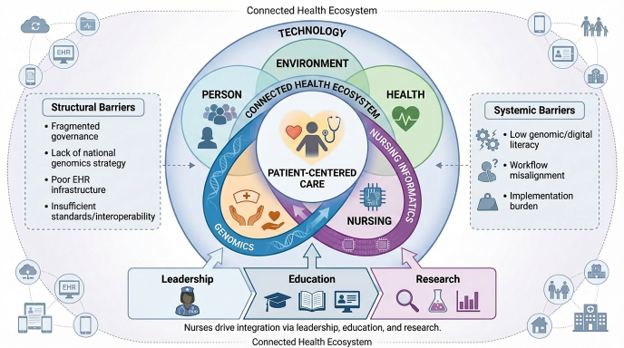
Genomics integration into nursing informatics (NI) remains limited despite the interdependence of these disciplines, constraining the translation of genomic data into digitally enabled care. This commentary examines the structural and systemic barriers that hinder integration. Strategies to mitigate these barriers and advance genomics-informed NI in Canada are identified. Structural barriers include fragmented governance, a lack of a coordinated national genomics strategy, limited system interoperability, and inadequate electronic health record infrastructure for storing and using complex genomic data. Systemic barriers to genomics integration into NI include low genomic and digital literacy, misaligned workflows, and a heavy implementation burden.
We believe that genomics and NI should develop together to enable data-driven, clinically actionable decisions at the point of care. Nurses, who make up the largest part of the healthcare workforce, are well-suited to lead this integration through their roles in leadership, education, and research. Key priorities include integrating genomic data into informatics systems (such as the electronic health record), adjusting educational frameworks and revising curricula, and building an evidence base to support implementation and evaluate outcomes. Coordinated, interdisciplinary strategies are required to support scalable, equitable integration to realize the potential of genomics-informed NI to improve patient and health system outcomes.
Background
Nursing informatics (NI) and genomics are functionally interdependent domains that are insufficiently aligned in both research and practice (see Appendix A for a glossary of terms). To date, each field has largely advanced along parallel trajectories, limiting the extent to which genomic data can be effectively integrated into digitally enabled care environments. Genomics offers the potential to enhance disease prevention, enable early diagnosis, and support more precise and individualized treatment strategies (Lennon, 2023; Nundy et al., 2022). When operationalized through informatics infrastructures, genomics’ capabilities could contribute to improved patient safety, enhanced quality of care, and greater health system efficiency.
The integration of digital technology into standard nursing care is so complete that there are calls to include technology as the fifth domain of Fawcett’s nursing metaparadigm, in addition to the domains of human, health, nursing, and environment (Johnson & Carrington, 2023). Placing technology within the metaparadigm signals that nurses are innovators and early adopters of practice-changing developments in technology (Johnson & Carrington, 2023), and helps prioritize research and scholarship in areas such as genomics and informatics. Examining how technology defines and shapes the nursing discipline can be an important policy advocacy tool and helps nurses integrate various technologies to optimize nursing practice, patient, and health system outcomes. For example, nurses can actively contribute to the design and research of digital infrastructures that support data-driven, genomics-informed care.
Significant structural and systemic barriers currently hinder the harmonization of genomics into NI, including a lack of a national genomics implementation strategy (Husereau, Villalba, et al., 2023) and fragmented adoption of electronic health records, which affect the usability of health data (El Sabawy et al., 2024). Considering genomics and informatics concurrently could catalyze action toward a vision of connected health, help overcome barriers to operationalization and improve patient health outcomes and equity. In this commentary, we identify key facilitators for advancing genomics in NI, situating nurses as leaders and innovators in connected health.
The Relevance of Genomics and Informatics to Nursing and Patient Outcomes
Since the sequencing of the human genome in 2003, healthcare delivery has become increasingly genomics-informed. The Canadian Institutes of Health Research (CIHR) Institute of Genetics strategic vision (2022) projected that by the year 2023, pharmacogenomic profiles would be incorporated into routine care, and genomic sequencing data would be integrated into electronic health records. However, this level of integration has not yet been realized in practice, reflecting a persistent gap between genomic discovery and its translation into clinical environments. As a result, genomic data that are already being generated are not consistently accessible, interoperable, or actionable at the point of care, limiting their potential to inform clinical decision-making. This misalignment can impact the quality of care and the efficiency of the system.
At the same time, there is increasing emphasis on developing models of care to support the mainstreaming of genomics across diverse healthcare settings (Mackley et al., 2025), which is expected to expand access to genomic services, enabling more people to experience its benefits. As the largest segment of the healthcare workforce (World Health Organization, 2025), nurses are central to collecting family histories, assessing genetic risk, educating patients, integrating genomic information into care, supporting ethical decision-making, and coordinating referrals within interprofessional teams. However, without coordinated integration into informatics infrastructures, these advances risk uneven implementation, potentially exacerbating existing health inequities. However, the design and implementation of genomics and informatics initiatives must be carefully planned to avoid exacerbating health disparities (Assamad et al., 2023; Rees et al., 2025). This impending practice shift requires nurses to possess genomic literacy to interpret and apply genomic data effectively in care planning (Limoges et al., 2025).
To illustrate our point about the potential contributions of genomics embedded within the patient’s electronic health record (EHR), we offer an example from the perspective of a nurse working on a medical-surgical inpatient unit. A patient with a newly diagnosed deep vein thrombosis (DVT) had previously undergone pharmacogenomic sequencing. In the background, bioinformatics pipelines processed their raw sequence data to identify genetic variants associated with drug metabolism, and machine learning models classified the variants to predict drug response. Subsequently, this information is integrated into the EHR, generating a nurse-facing alert. Before administering medication or verifying the patient’s medication orders, the nurse is prompted to acknowledge that they are aware the patient has a genetic variant that affects Warfarin metabolism. The system calculates the safest starting dose based on the patient’s genotype and clinical laboratory results. The nurse uses this information to coordinate with the prescribing physician, adjust the patient care plan, and provide patient education. At present, however, this remains an aspirational scenario. To make this a reality, nurses will need competencies in both genomics and informatics to contribute to and function effectively in digitally enabled, data-intensive healthcare environments.
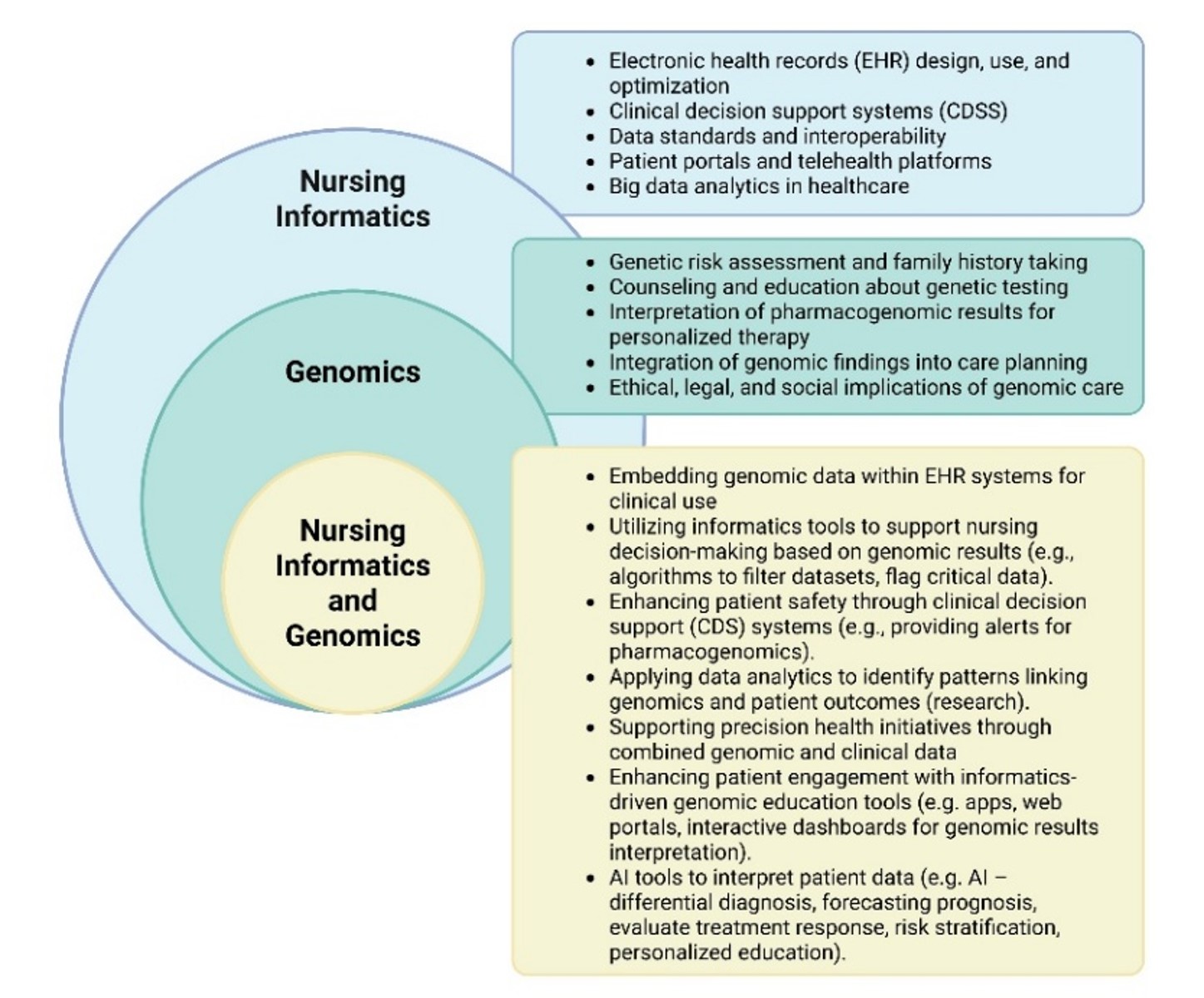
Genomics and informatics are two independent areas where globally, nurses have actively worked to advance literacy, implementation, and policy development (Garcia-Dia, 2021; Limoges et al., 2025; Mackley et al., 2025; McCormick & Calzone, 2017; Nashwan et al., 2025; Topaz et al., 2016). However, we argue that when these technologies are viewed as interdependent fields, there are opportunities to accelerate both simultaneously (see Figure 1). Genomics generates vast amounts of complex data that must be managed, interpreted, and applied to patient care. Thus, rather than existing in silos, genomics can be embedded in NI to facilitate genomics-informed nursing assessment and the incorporation of patients’ genomic data in nursing care plans. Strategies that enhance parallel evolution across these fields can enable alignment and accelerate development. Thus, the genomics and informatics fields can help identify barriers to implementation and develop strategies to coordinate the advancement of genomics in NI.
Figure 1
The Confluence of Genomics and Nursing Informatics Competencies
Drawing on Existing Strengths in Genomics and NI to Accelerate Integration
As mentioned, there has been considerable effort in NI and genomics to support workforce development, education policy and research. For instance, NI, a sub-discipline of informatics, was first recognized as a nursing specialty in 1992 by the American Nurses Association (ANA), which developed a formal certification process (Cummins et al., 2016; Sweeney, 2017). In 1994, the ANA published the first edition of Nursing Informatics: Scope and Standards of Practice. The most recent edition (3rd) was updated in 2022 to include more functional areas, such as genomics and informatics (American Nurses Association, 2022). In Canada, NI was established as a nursing science in 1999 with the National Nursing Informatics Project, which aimed to establish a national consensus on a definition, competencies, and educational strategies (Chauvette & Paul, 2016). In 2012, the Canadian Association of Schools of Nursing (CASN), in collaboration with Canada Health Infoway, released the Nursing Informatics Entry-to-Practice Competencies for Registered Nurses (Canadian Association of Schools of Nursing, 2012). At the same time, CASN included informatics in the 2012 Nursing Education Framework, firmly establishing NI as a foundational entry-level nursing competency, and making curriculum alignment an accreditation requirement for CASN-accredited schools of nursing (Canadian Association of Schools of Nursing, 2022). The release of the competencies was supported by concerted efforts to engage nurses in integrating them in practice, including the development of a toolkit (Canadian Association of Schools of Nursing, 2013). The competencies were further updated in 2025 to reflect advances in digital health technologies such as AI (Canadian Association of Schools of Nursing, 2025).
Substantial progress has also been made to identify genomics nursing competencies, particularly in the US and the UK. The National Health Service (NHS) in the UK developed the Genomic Competency Framework for UK Nurses, with the most recent edition released in 2023 (2023 Genomic Competency Framework for UK Nurses, 2023). Additionally, the American Nurses Association (ANA), in collaboration with the International Society for Nurses in Genetics (ISONG), produced the Genomics Nursing Scope and Standards of Practice, with the third edition released in 2025 (American Nurses Association; International Society of Nursing in Genetics, 2025). Furthermore, the two organizations collaborated to publish the Essentials of Genomic Nursing: Competencies and Outcome Indicators (American Nurses Association, 2023). As genomics became increasingly integrated into healthcare, the development of competencies for all nurses reflected a shift toward genomics as a fundamental knowledge base for entry-to-practice.
Canada does not have genomics nursing competencies like the US and the UK (Chiu, Limoges, Pike, et al., 2024; Chiu, Limoges, Puddester, et al., 2024; Limoges et al., 2025). However, efforts are ongoing in Canada, and entry-to-practice competencies (which include NI elements) and the Canadian entry-level competencies, from which the provincial/territorial ones are developed, are currently under revision, providing an opportunity to embed them in a single policy document. Additionally, the 2022 CASN Nursing Education Framework integrated genomics as a required component of nursing curricula, signalling the need for schools of nursing to prioritize its adoption (Canadian Association of Schools of Nursing, 2022). Despite these advancements in developing competencies, their translation into clinical practice is lagging (Limoges et al., 2025), suggesting a broader misalignment between policy intent and system-level implementation.
Structural and Systemic Barriers to Integrating Genomics in Nursing Informatics
The integration of genomics into NI is constrained by structural and systemic conditions that shape how genomics data are generated, governed, and translated into clinical practice. Distinguishing between these barriers is important to clarify where intervention is required to enable coordinated advancement across policy, infrastructure, and practice. Structural barriers define the organizational context. They include formal tools of political governance, such as legislation, policy frameworks, funding models, and jurisdictional authority, that determine how genomic services are delivered and how health data are managed (Bosic-Reiniger et al., 2024; Husereau, Bombard, et al., 2023; Husereau, Villalba, et al., 2023). In contrast, systemic barriers represent the downstream manifestation of these structures in practice (McCaskill & Rushubirwa, n.d.). These are embedded in institutional practices rooted in sociocultural norms that directly influence how healthcare providers engage with technologies and innovations and can be resistant to change (Bosic-Reiniger et al., 2024; Husereau, Bombard, et al., 2023; Husereau, Villalba, et al., 2023). This distinction is particularly evident in the context of genomics-informed NI, where the integration challenges span the continuum from genomic testing and data generation to data integration, interpretation, and application. Drawing on both the genomics and informatics literature, the barriers identified in these domains are not discrete and are likely to require coordinated strategies to address them.
Structural Barriers
Structural barriers to embedding genomics into NI include fragmented governance, limitations in electronic health record (EHR) infrastructure, and inconsistent adoption of data and interoperability standards. These barriers originate upstream in how genomic services are prioritized, funded, and organized across provinces and territories. The implications of this structure propagate downstream into informatics systems and clinical workflows, leading to gaps in service delivery and equitable access. (Assamad et al., 2023; Bakken & Dreisbach, 2022; Rees et al., 2025).
In Canada, the absence of a coordinated national genomics strategy contributes to the substantial variability in how genomics testing is delivered. Because healthcare is provincially administered, services are decentralized, with differences in laboratory infrastructure, funding models, and eligibility criteria (Husereau, Bombard, et al., 2023). This fragmentation has direct implications for informatics: genomics data are generated within siloed systems that lack standardized mechanisms for aggregation, portability, and longitudinal integration. For example, the lack of an integrated laboratory system for genomic testing and differences in funding for genetic testing across the country create variability in access (Husereau, Villalba, et al., 2023). Additionally, most services are centralized in specialized tertiary care centres, contributing to inequities in access and deepening the rural–urban divide (Bosic-Reiniger et al., 2024; Husereau, Villalba, et al., 2023). Jurisdictions such as Alberta and Quebec, which have established coordinated service models and centralized laboratory infrastructures, are better prepared for genomics clinical application compared to those with decentralized systems (Husereau, Villalba, et al., 2023).
These governance and service delivery gaps are further compounded by the highly fragmented adoption of EHR systems, with multiple platforms operating across and within provinces. In British Columbia, for instance, the absence of a unified provincial EHR limits the ability of genomic information to follow patients across care settings or over time, forcing healthcare providers to rely on incomplete information or unnecessarily duplicating costly testing (Boothe et al., 2020). As a result, the integration of genomics into NI is not solely a technical issue, but a consequence of a misaligned architecture across jurisdictions. For nurses at the point of care, these structural gaps can translate into inconsistent access to genomic information and uncertainty in care coordination across jurisdictions.
The structure of EHR systems, which are now central to nursing practice, can also limit the harmonization of genomic data. Many existing EHR platforms lack the scalability and data architecture required to accommodate the volume, complexity, and longitudinal nature of genomic data (Friedrich et al., 2023; Husereau, Villalba, et al., 2023; McCormick & Calzone, 2016). These infrastructural limitations are further compounded by substantial computational demands for genomic data storage, processing, and retrieval, as well as regulatory requirements for data localization within certain jurisdictions (Bourne, 2021; Johnson et al., 2020; McCormick & Calzone, 2016). As a result, even when genomic information is available, it may not be integrated into clinical workflows in a structured or actionable format. For example, genomic test results are frequently stored as static reports rather than discrete data elements, limiting their usability within clinical decision support systems and their application in point-of-care workflows (Johnson et al., 2020).
A further structural challenge is the lack of standardization across key domains necessary for interoperability. Variability in gene variant nomenclature (Johnson et al., 2020), phenotype ontologies (McCormick & Calzone, 2017), and reporting formats (Braithwaite et al., 2025; Morris et al., 2024) limit consistent interpretation and information exchange. Although standardized clinical reference terminologies [e.g. International Classification for Nursing Practice (ICNP), Systematized Nomenclature of Medicine Clinical Terms (SNOMED-CT] and documentation standards [e.g., Canadian Health Outcomes for Better Information and Care (C-HOBIC) and Logical Observation Identifiers Names and Codes (LOINC)] exist, their adoption remains inconsistent (Canadian Nurses Association & Canadian Nursing Informatics Association, 2024). Thus, for genomics-informed NI to achieve its intended function of enabling clinically actionable genomic data to inform real-time nursing decision-making across care settings and the lifespan, a robust, coordinated digital infrastructure is required.
Systemic Barriers
While structural barriers create the challenging conditions for integration, systemic barriers determine whether genomics-informed NI is meaningfully adopted in practice. Among these, workforce-related factors may represent the most immediate constraint on implementation (Bosic-Reiniger et al., 2024; Bourne, 2021; Buaki-Sogo & Percival, 2022; Dragojlovic et al., 2023; Friedrich et al., 2023; Husereau, Bombard, et al., 2023; Johnson et al., 2020; Limoges et al., 2025; McCormick & Calzone, 2017). Nurses consistently report feeling unprepared to manage genomic information in clinical contexts and report low levels of genomic literacy (Dadwal et al., 2026; Dante et al., 2025; Hines-Dowell et al., 2024; Limoges et al., 2024; Thomas et al., 2023). Gaps in digital literacy compound these challenges (Canada Health Infoway, 2024). EHR adoption among nurses has already been shown to be burdened by abrupt implementation without nursing input, lack of practical training, and ongoing usability concerns (Canada Health Infoway, 2024; Canadian Nursing Informatics Association, 2022). Furthermore, nurses report feeling overburdened by work demands, which can lead to a reluctance to innovate (Canada Health Infoway, 2024). The addition of genomics as another area to develop competencies can compound these ongoing concerns.
However, these systemic barriers are not isolated, and they arise from the cumulative impact of structural deficiencies in education, policy guidance, and the design of the healthcare system. For example, nurses and other healthcare providers report that digital health technologies are frequently poorly aligned with clinical workflows, lack integration across platforms, and are introduced without sufficient training or support, all of which reduce uptake and effective use (Bosic-Reiniger et al., 2024; Canada Health Infoway, 2024; Friedrich et al., 2023). These factors contribute to the underutilization of genomic information even when it is available, reinforcing its marginalization within routine care (Johnson et al., 2020). The absence of coordinated implementation strategies and sustained system optimization further perpetuates low adoption of both informatics tools and genomics-informed interventions (Johnson et al., 2020). Together, these constraints impede the development of a connected, data-enabled care environment in which nurses can reliably access and apply genomic information to support assessment, care planning, patient education, and interprofessional coordination.
How Nurses with Genomic and Informatics Literacy Can Participate in Adoption Efforts
The misalignment between genomics and NI reflects a broader disconnect between the generation of genomic knowledge and its translation into digitally enabled clinical practice. Addressing structural and systemic barriers through parallel, interconnected advancements across fields can support digitally enabled clinical practice outcomes. To achieve this aim, deliberate strategies that integrate genomics and informatics across policy, infrastructure, education, and practice are recommended. Nurses with genomics and informatics literacy are well-positioned to contribute to this integration across multiple domains, including leadership, education, and research, by aligning implementation efforts with the structural and systemic barriers identified above.
Nurses in Leadership
Leadership is central to advancing the coordinated integration of genomics and NI, particularly in addressing structural barriers related to governance, infrastructure, and standardization. Roles such as the Chief Nursing Informatics Officer (CNIO) provide a critical interface between digital infrastructure design and clinical practice realities (Canadian Nursing Informatics Association, 2022). This role was first introduced in 1992 by the ANA and has gained prominence in the United States (Canadian Nursing Informatics Association, 2022). However, the uptake of such roles in Canada has been much more gradual. For example, in Canada, a 2023 study reported only ten CNIOs nationwide (Strudwick et al., 2023). CNIOs who possess genomic literacy are well-situated to understand the potential of big data technologies. Their focus on strategic leadership allows them to anticipate future needs (Canadian Nursing Informatics Association, 2022; Strudwick et al., 2023). As leaders representing the needs of nurses interfacing with technology, they can promote the prioritization of genomics harmonization with informatics in a sustainable, scalable way and help drive the successful adoption of new technology. Nurses in the CNIO role can ensure that strategic priorities align with efforts to mitigate structural and systemic barriers.
While national leadership and specialized roles such as CNIOs are vital to advance strategic directions, genomics–informatics adoption will ultimately depend on the actions of nurse leaders at the organizational and unit levels, where technology is implemented, and practice is shaped. Nursing leaders with genomics and informatics competencies are uniquely positioned to advocate at decision-making tables for interoperable EHR systems, standardized data terminology, and ensuring genomics information is integrated as structured data, with enhanced visibility, accessibility, and relevance for clinical decision-making at the point of care. For example, nurse leaders can advocate for the inclusion of genomic indicators within documentation templates (e.g., assessment checklists), support the adoption of clinical decision support tools that incorporate genomic data (e.g., red flag indicators and care pathways), and ensure that workflow design reflects the realities of nursing practice. By aligning local quality improvement efforts with broader system-level objectives, such as improving medication safety through pharmacogenomics or enhancing risk assessment, nurse leaders can make genomics-informed informatics applications tangible and meaningful within everyday care delivery. These strategies directly address systemic barriers related to usability, workflow disruption, and limited adoption.
Leadership strategies extend to workforce development. Genomic literacy can be fostered by providing ongoing support and protected time for nursing education and training (Limoges et al., 2025) and identifying clinical champions who can support peer-to-peer knowledge translation (Sperber et al., 2021). Importantly, these strategies should focus on genomics and informatics as interconnected and interdependent competencies, both of which are required for contemporary nursing practice.
The advancement of genomics and NI will require collaborative, interprofessional efforts. We call on leadership within Canadian [e.g., the Canadian Nurses Association, the Canadian Nursing Informatics Associations, Canadian Nurses and Genomics (CNG), and CASN] and international nursing organizations (ANA, ISONG) to collaborate to amplify and accelerate each other’s work in this area. Further, nursing leaders should consider engaging in interdisciplinary efforts (such as collaboration with the Canadian Health Information Management Association), as a collaborative approach within and beyond nursing will strengthen and unify our collective efforts. Partnering with national and international health information management associations provides access to health professionals and academics with expertise in designing, implementing, and sustaining fully integrated, optimized data ecosystems. Such collaboration could help develop an integrated genomics and NI framework, advancing the culture and concepts of connected care.
Nurses in Education
Educational strategies are critical to addressing systemic barriers related to workforce readiness. However, current policy and curricular infrastructure in Canada remain underdeveloped in genomics (Puddester et al., 2023), and there is the beginning of work amalgamating genomics and informatics competencies from the US (McCormick & Calzone, 2017). While the CASN National Nursing Education Framework (Canadian Association of Schools of Nursing, 2022) briefly mentions genomics and NI, it does not provide guidance on how to incorporate them into the curriculum, nor does it address how to approach them as integrated domains. This is likely, in part, due to the lack of clinical harmonization of these domains.
To address this gap, we can rely on existing competency frameworks and curricular resources to inform the development of Canadian genomics competencies and recommendations for integrating genomics and NI in curricula. For example, members of the CNG have created an e-textbook for genomics-informed nursing (Gretchev, 2025) and an online genomics toolkit for nurses and nurse educators (Chiu, Gretchev, et al., 2024). Combined with the aforementioned genomics and informatics competencies and the CASN Nursing Informatics Toolkit (Canadian Association of Schools of Nursing, 2013), these provide the necessary foundation for developing additional resources that address the intersection of genomics and NI. For example, designing learning experiences that explicitly link genomics concepts (e.g., pharmacogenomics) with informatics applications (e.g., data visualization, clinical decision support, and EHR documentation) could prepare nurses to engage with genomic data as part of routine technology-mediated practice.
Nurses in Research
Research is essential to advancing the integration of genomics and NI by generating the evidence needed to guide implementation, practice and evaluate outcomes. While both fields have well-established bodies of literature, there is a relative paucity of research examining their intersection, particularly from a nursing perspective. A coordinated research agenda is needed to explore how genomics can be effectively integrated into NI systems to support nursing practice. This includes implementation research to identify effective strategies for embedding genomic data into nursing informatics, as well as outcomes research to evaluate impacts on patient care, safety, and health system performance, both of which are currently lacking (Thomas et al., 2023; Zureigat et al., 2022). Given the variability in infrastructure and service delivery across jurisdictions, comparative research may also help identify scalable models for integration.
Nurse researchers can contribute by leading interdisciplinary studies, securing funding for genomics-informed NI initiatives, and embedding research within clinical environments. Building capacity in areas such as bioinformatics, data analytics, and computational methods (e.g., machine learning and statistical analysis in R or Python) will further enable nurses to engage with complex genomic datasets and digital infrastructures. This can be facilitated by nurse clinician-scientists with academic appointments across disciplines. Such work is critical to ensuring that genomics-informed NI evolves in an evidence-based, contextually relevant, and equitable manner.
The Evolving Landscape of Healthcare Technology
The conceptual landscape of healthcare technology is moving from a discipline-specific, compartmentalized model to a more integrated, interdisciplinary one, driven by advances in big data science (Bakken & Dreisbach, 2022; Dreisbach & Koleck, 2020). We believe the integration of genomics and informatics represents a fundamental shift in how knowledge is generated, interpreted, and applied in practice. Within this context, genomics-informed NI represents a critical juncture that can facilitate the translation of high-dimensional data to clinically relevant information to guide person-centred care. The presence of nurses across care settings, combined with their holistic approach to patient care, places nurses at the juncture where data, technology, and lived experiences converge. Genomics-informed NI is therefore critical to nursing practice, influencing health assessment, risk interpretation, and patient care planning.
Nurses also bring a critical lens related to equity and the social determinants of health, which are often underrepresented in technology-driven innovation. Thus, their involvement is essential to ensure that genomics and informatics integration does not exacerbate existing disparities but instead contributes to more equitable and accessible care (Assamad et al., 2023; Bakken & Dreisbach, 2022; Carter & Maricque, 2025; Silva et al., 2024). By participating in the design, implementation, and evaluation of these integrated systems, nurses can help ensure that technological advancements translate into meaningful improvements in patient outcomes (Bakken & Dreisbach, 2022; Rees et al., 2025). Realizing these outcomes will require deliberate efforts to address structural and systemic barriers and to position nurses as central contributors to the development of connected, data-enabled health systems. As medical technologies continue to evolve, the integration of genomics and informatics within nursing practice is foundational to ensuring that care remains person-centred and evidence-informed.
Appendix A
Glossary of Terms
| Bioinformatics | The use of computing technology to analyze and understand biological data (National Human Genome Research Institute, 2026). |
| Data science | An interdisciplinary field combining elements of computer science, statistics, information science, and applied mathematics (Bourne, 2021). |
| Digital health | A general term referring to technology solutions that support clinical care delivery (Foley, n.d.). |
| Genetics | Genetics is the study of gene variation and heritability. The contemporary use of this term applies to single-gene variants and associated phenotypes (Genetics, 2026). |
| Genomics | Genomics has a broader focus than genetics, as it examines the entirety of an organism’s DNA and the interactions of genes with the environment (Genomics, 2026). |
| Health Informatics | The discipline concerning the systematic use of data, information, and knowledge to advance human health and optimize the delivery of health care services (American Medical Informatics Association, 2026). The focus is on the use of information and communication technology in healthcare by practitioners (Foley, n.d.). |
| Nursing informatics | “The science and practice that integrates nursing, its information and knowledge, and their management, with information and communication technologies to promote the health of people, families, and communities worldwide” (American Medical Informatics Association, 2026, p. 1). It is distinct from health informatics in that it focuses on data structure, organization, and communication to support nursing practice (Foley, n.d.). |
References
2023 Genomic competency framework for UK nurses. (2023). NHS England. https://www.genomicseducation.hee.nhs.uk/wp-content/uploads/2023/12/2023-Genomic-Competency-Framework-for-UK-Nurses.pdf
American Medical Informatics Association. (2026). Informatics: Research and practice. https://amia.org/about-amia/why-informatics/informatics-research-and-practice
American Nurses Association. (2022, June 17). Nursing informatics: Scope and standards of practice, 3rd Edition. ANA. https://www.nursingworld.org/nurses-books/nursing-informatics-scope-and-standards-of-practi/
American Nurses Association. (2023). Essentials of genomic nursing: Competencies and outcome indicators (3rd ed.). https://www.nursingworld.org/nurses-books/ana-books/ebook-essentials-of-genomic-nursing-competencies-/
American Nurses Association; International Society of Nursing in Genetics. (2025). Genomics Nursing Scope and Standards of Practice (3rd ed.). American Nurses Association, Inc. https://www.wolterskluwer.com/en/solutions/ovid/genomics-nursing-scope-and-standards-of-practice-8622
Assamad, D., Majeed, S., Aguda, V., Grewal, S., Butkowsky, C., Clausen, M., D’Amours, G., & Bombard, Y. (2023). Digital health tools in genomics: Advancing Diversity, equity, and inclusion. Public Health Genomics, 26(1), 194–200. https://doi.org/10.1159/000534804
Bakken, S., & Dreisbach, C. (2022). Informatics and data science perspective on Future of Nursing 2020-2030: Charting a pathway to health equity. Nursing Outlook, 70(6 Suppl 1), S77–S87. https://doi.org/10.1016/j.outlook.2022.04.004
Boothe, C., Bhullar, J., Chahal, N., Chai, A., Hayre, K., Park, M., Ragan, C., Ramirez, C., & Suh, D. (2020). The history of technology in nursing: The implementation of electronic health records in Canadian healthcare settings. Canadian Journal of Nursing Informatics, 15(2). https://cjni.net/journal/?p=7192
Bosic-Reiniger, J., Martin, J. L., Brown, K. E., Anderson, H. D., Blackburn, H., Kao, D. P., Trinkley, K. E., Woodahl, E. L., & Aquilante, C. L. (2024). Barriers and facilitators of the use of clinical informatics resources to facilitate pharmacogenomic implementation in resource-limited settings. JAMIA Open, 7(4), ooae101. https://doi.org/10.1093/jamiaopen/ooae101
Bourne, P. E. (2021). Is “bioinformatics” dead? PLoS Biology, 19(3), e3001165. https://doi.org/10.1371/journal.pbio.3001165
Braithwaite, J., Spanos, S., Lamprell, K., Vizheh, M., Sheriff, S., Fisher, G., Pagano, L., Ellis, L. A., Churruca, K., Patel, R., Taylor, N., Best, S., & Long, J. C. (2025). Adopting public health genomics when the house is on fire: How will we navigate to 2030? Public Health Genomics, 28(1), 53–65. https://doi.org/10.1159/000543161
Buaki-Sogo, M., & Percival, N. (2022). Genomic medicine: The role of the nursing workforce. Nursing Times, 118(8). https://www.nursingtimes.net/research-and-innovation/genomic-medicine-the-role-of-the-nursing-workforce-11-07-2022/
Canada Health Infoway. (2024). Infoway insights: 2023 Canadian survey of nurses. https://insights.infoway-inforoute.ca/2023-nursing-survey
Canadian Association of Schools of Nursing. (2012). Nursing informatics entry-to-practice competencies for registered nurses. Author. https://www.casn.ca/2014/12/nursing-informatics-entry-practice-competencies-registered-nurses-2/
Canadian Association of Schools of Nursing. (2013). Nursing informatics teaching toolkit: Supporting the integration of the CASN nursing informatics competencies into nursing curricula. http://digitalhealth.casn.ca/wp-content/uploads/2019/03/FINAL-EN_Nursing-Informatics-Teaching-Toolkit.pdf
Canadian Association of Schools of Nursing. (2022, November). National nursing education framework. CASN. https://www.casn.ca/competency-guidelines/national-nursing-education-framework/
Canadian Association of Schools of Nursing. (2025). Nursing informatics entry-to-practice competencies for registered nurses (2nd ed.). https://www.casn.ca/wp-content/uploads/2014/12/Informatics-Entry-to-Practice-Competencies_2025_EN.pdf
Canadian Institute of Health Research. (2022, May 9). Sequencing our future: Institute of Genetics strategic plan 2022-2027. Government of Canada. https://cihr-irsc.gc.ca/e/52972.html
Canadian Nurses Association, & Canadian Nursing Informatics Association. (2024). Nursing practice in digitally enabled care environments. CNA & CNIA. https://hl-prod-ca-oc-download.s3-ca-central-1.amazonaws.com/CNA/2f975e7e-4a40-45ca-863c-5ebf0a138d5e/UploadedImages/documents/policy-advocacy/CNA-Position-Statement_Nursing-Practice-in-Digitally-Enabled-Care-Environments_E.pdf
Canadian Nursing Informatics Association. (2022, April). The value of the Chief Nursing Informatics Officer role for health organizations in Canada. https://cnia.ca/resources/Documents/The%20Value%20of%20CNIOs%20in%20Canada.pdf
Carter, C. R., & Maricque, B. (2025). Are diverse databases actually creating equity in genomics? Lancet Regional Health – Americas, 46, 101112. https://doi.org/10.1016/j.lana.2025.101112
Chauvette, A., & Paul, P. (2016). History of Nursing Informatics in Canada. Canadian Journal of Nursing Informatics, 11(4). https://cjni.net/journal/?p=5032
Chiu, P., Gretchev, A., Limoges, J., Puddester, R., Carlsson, L., Pike, A., Leslie, K., & Dordunoo, D. (2024). Preparing Canadian nurses for the genomic era: A toolkit for Canadian nurses. https://genomicstoolkit.my.canva.site/
Chiu, P., Limoges, J., Pike, A., Calzone, K., Tonkin, E., Puddester, R., Gretchev, A., Dewell, S., Newton, L., & Leslie, K. (2024). Integrating genomics into Canadian oncology nursing policy: Insights from a comparative policy analysis. Journal of Advanced Nursing, 80(11), 4488–4509. https://doi.org/10.1111/jan.16099
Chiu, P., Limoges, J., Puddester, R., Gretchev, A., Carlsson, L., Leslie, K., Flaming, D., Meyer, A., & Pike, A. (2024). Developing policy infrastructure to guide genomics-informed oncology nursing in Canada: An interpretive descriptive study. The Canadian Journal of Nursing Research, 56(4), 363–376. https://doi.org/10.1177/08445621241252615
Cummins, M. R., Gundlapalli, A. V., Gundlapalli, A. V., Murray, P., Park, H.-A., & Lehmann, C. U. (2016). Nursing informatics certification worldwide: History, pathway, roles, and motivation. Yearbook of Medical Informatics, 10(1), 264–271. https://doi.org/10.15265/IY-2016-039
Dadwal, R., Mehra, M., Priya, N., Joshi, P., Srivastava, S. P., & Tiwari, S. K. (2026). Genomic literacy in nursing education: A systematic review of current knowledge, barriers, and integration. Nurse Education Today, 159, 106959. https://doi.org/10.1016/j.nedt.2025.106959
Dante, A., Masotta, V., Paoli, I., Caponnetto, V., Caples, M., Laaksonen, M., Kamenšek, T., Petrucci, C., & Lancia, L. (2025). Genomic literacy in nursing: A systematic scoping review of the literature (Pt. E100054). BMJ Open, 15(7). https://doi.org/10.1136/bmjopen-2025-100054
Dragojlovic, N., Borle, K., Kopac, N., Nisselle, A., Nuk, J., Jevon, M., Friedman, J. M., Elliott, A. M., & Lynd, L. D. (2023). Workforce implications of increased referrals to hereditary cancer services in Canada: A scenario-based analysis. Current Oncology, 30(8), 7241. https://doi.org/10.3390/curroncol30080525
Dreisbach, C., & Koleck, T. A. (2020). The state of data science in genomic nursing. Biological Research for Nursing, 22(3), 309–318. https://doi.org/10.1177/1099800420915991
El Sabawy, D., Feldman, J., & Pinto, A. D. (2024). The Connected Care for Canadians Act: An important step toward interoperability of health data. CMAJ?: Canadian Medical Association Journal, 196(42), E1385–E1388. https://doi.org/10.1503/cmaj.241123
Foley, M. (n.d.). Module 1 In Summary. Digital Health. Canadian Association of Schools of Nursing. https://digitalhealth.casn.ca/modules/module-one/module-1-in-summary/
Friedrich, B., Vindrola-Padros, C., Lucassen, A. M., Patch, C., Clarke, A., Lakhanpaul, M., & Lewis, C. (2023). “A very big challenge”: A qualitative study to explore the early barriers and enablers to implementing a national genomic medicine service in England. Frontiers in Genetics, 14, 1282034. https://doi.org/10.3389/fgene.2023.1282034
Garcia-Dia, M. J. (2021). Reimagining the role of nursing informatics. Nursing Management, 52(12), 48. https://doi.org/10.1097/01.NUMA.0000800388.33704.ab
Genetics. (2026). National Human Genome Research Institute. https://www.genome.gov/genetics-glossary/Genetics
Genomics. (2026). National Human Genome Research Institute https://www.genome.gov/genetics-glossary/genomics
Gretchev, A. (2025). Precision healthcare: Genomics-informed nursing [E-book]. Pressbooks. https://ecampusontario.pressbooks.pub/personalizedhealthnursing/
Hines-Dowell, S., McNamara, E., Mostafavi, R., Taylor, L., Harrison, L., McGee, R. B., Blake, A. K., Lewis, S., Perrino, M., Mandrell, B., & Nichols, K. E. (2024). Genomes for Nurses: Understanding and Overcoming Barriers to Nurses Utilizing Genomics. Journal of Pediatric Hematology/Oncology Nursing, 41(2), 140–147. https://doi.org/10.1177/27527530231214540
Husereau, D., Bombard, Y., Stockley, T., Carter, M., Davey, S., Lemaire, D., Nohr, E., Park, P., Spatz, A., Williams, C., Pollett, A., Lo, B., Yip, S., El Hallani, S., & Feilotter, H. (2023). Future role of health technology assessment for genomic medicine in oncology: A Canadian laboratory perspective. Current Oncology, 30(11), 9660–9669. (37999120). https://doi.org/10.3390/curroncol30110700
Husereau, D., Villalba, E., Muthu, V., Mengel, M., Ivany, C., Steuten, L., Spinner, D. S., Sheffield, B., Yip, S., Jacobs, P., Sullivan, T., & Arshoff, L. (2023). Progress toward health System readiness for genome-based testing in Canada. Current Oncology, 30(6), Article 6. https://doi.org/10.3390/curroncol30060408
Johnson, E., & Carrington, J. M. (2023). Revisiting the nursing metaparadigm: Acknowledging technology as foundational to progressing nursing knowledge. Nursing Inquiry, 30(1), e12502. https://doi.org/10.1111/nin.12502
Johnson, K. B., Clayton, E. W., Starren, J., & Peterson, J. (2020). The implementation chasm hindering genome-informed health care. The Journal of Law, Medicine & Ethics?: A Journal of the American Society of Law, Medicine & Ethics, 48(1), 119–125. https://doi.org/10.1177/1073110520916999
Lennon, Y. (2023, August 1). The quintuple aim: What is it and why does it matter? CHESS Health Solutions. http://www.chesshealthsolutions.com/2023/08/01/the-quintuple-aim-what-is-it-and-why-does-it-matter/
Limoges, J., Puddester, R., Gretchev, A., Chiu, P., Calzone, K., Leslie, K., Pike, A., & Letourneau, N. (2025). Building a genomics-informed nursing workforce: Recommendations for oncology nursing practice and beyond. Current Oncology, 32(1), 1–13. https://doi.org/10.3390/curroncol32010014
Limoges, J., Puddester, R., Pike, A., Calzone, K., Carlsson, L., Letourneau, N., & Gretchev, A. (2024). Leadership strategies for genomics integration: A descriptive study using the Canadian adaptation of the Genetics and Genomics Nursing Practice Survey. Nursing Leadership, 37(2), 22–40. https://doi.org/10.12927/cjnl.2024.27467
Mackley, M. P., Richer, J., Guerin, A., Caluseriu, O., Armstrong, L., Blood, K. A., Bernier, F., Boswell-Patterson, C., Chard, M., Costain, G., Dyment, D., Eaton, A., Faghfoury, H., Frosk, P., Gillespie, M. K., Goh, E. S., Hayeems, R. Z., Hashemi, B., Innes, A. M., … Boycott, K. M. (2025). Mainstreaming of clinical genetic testing: A conceptual framework. Genetics in Medicine, 27(8), 101465. https://doi.org/10.1016/j.gim.2025.101465
McCaskill, J., & Rushubirwa, L. (n.d.). Chapter 3: Trauma-informed practice. Bias, privilege, systemic barriers, advocacy, and allyship. [E-book]. In Introduction to Community Support Work. Pressbooks. https://doi.org/10.29173/oerjm74y1gf
McCormick, K. A., & Calzone, K. A. (2016). The impact of genomics on health outcomes, quality, and safety. Nursing Management, 47(4), 23–26. https://doi.org/10.1097/01.NUMA.0000481844.50047.ee
McCormick, K. A., & Calzone, K. A. (2017). Genetic and genomic competencies for nursing informatics internationally. Studies in Health Technology and Informatics, 232, 152–164. https://doi.org/10.3233/978-1-61499-738-2-152
Morris, S. A., Nguyen, D. G., Morris, V., Mroz, K., Kwange, S. O., & Patel, J. N. (2024). Integrating pharmacogenomic results in the electronic health record to facilitate precision medicine at a large multisite health system. Journal of the American College of Clinical Pharmacy, 7(8), 845–857. https://doi.org/10.1002/jac5.1996
Nashwan, A. J., Cabrega, J. A., Othman, M. I., Khedr, M. A., Osman, Y. M., El?Ashry, A. M., Naif, R., & Mousa, A. A. (2025). The evolving role of nursing informatics in the era of artificial intelligence. International Nursing Review, 72(1), e13084. https://doi.org/10.1111/inr.13084
National Human Genome Research Institute. (2026, April 9). Bioinformatics. NHGRI. https://www.genome.gov/genetics-glossary/Bioinformatics
Nundy, S., Cooper, L. A., & Mate, K. S. (2022). The quintuple aim for health care improvement: A new imperative to advance health equity. Journal of the American Medical Association, 327(6), 521–522. https://doi.org/10.1001/jama.2021.25181
Puddester, R., Limoges, J., Dewell, S., Maddigan, J., Carlsson, L., & Pike, A. (2023). The Canadian landscape of genetics and genomics in nursing: A policy document analysis. The Canadian Journal of Nursing Research, 55(4), 494–509. https://doi.org/10.1177/08445621231159164
Rees, G., Nowell, L., & Risling, T. (2025). Shaping the Future of Digital Health Education in Canada: Prioritizing Competencies for Health Care Professionals Using the Quintuple Aim. JMIR Medical Education, 11(1), e75904. https://doi.org/10.2196/75904
Silva, P. J., Rahimzadeh, V., Powell, R., Husain, J., Grossman, S., Hansen, A., Hinkel, J., Rosengarten, R., Ory, M. G., & Ramos, K. S. (2024). Health equity innovation in precision medicine: Data stewardship and agency to expand representation in clinicogenomics. Health Research Policy and Systems, 22, 170. https://doi.org/10.1186/s12961-024-01258-9
Sperber, N. R., Dong, O. M., Roberts, M. C., Dexter, P., Elsey, A. R., Ginsburg, G. S., Horowitz, C. R., Johnson, J. A., Levy, K. D., Ong, H., Peterson, J. F., Pollin, T. I., Rakhra-Burris, T., Ramos, M. A., Skaar, T., & Orlando, L. A. (2021). Strategies to Integrate Genomic Medicine into Clinical Care: Evidence from the IGNITE Network. Journal of Personalized Medicine, 11(7), 647. https://doi.org/10.3390/jpm11070647
Strudwick, G., Lo, B., Kemp, J., Jessa, K., Tajirian, T., White, P., & Nagle, L. (2023). Opportunities and challenges to enhance the value and uptake of Chief Nursing Informatics Officer (CNIO) roles in Canada: A qualitative study. AMIA Annual Symposium Proceedings, 2022, 1012–1021. https://pmc.ncbi.nlm.nih.gov/articles/PMC10148352/
Sweeney, J. (2017). Healthcare informatics. Online Journal of Nursing Informatics, 21(1). https://www.himss.org/resources/healthcare-informatics/
Thomas, J., Keels, J., Calzone, K. A., Badzek, L., Dewell, S., Patch, C., Tonkin, E. T., & Dwyer, A. A. (2023). Current state of genomics in nursing: A scoping review of healthcare provider oriented (clinical and educational) outcomes (2012–2022). Genes, 14(11), 2013. https://doi.org/10.3390/genes14112013
Topaz, M., Ronquillo, C., Peltonen, L.-M., Pruinelli, L., Sarmiento, R. F., Badger, M. K., Ali, S., Lewis, A., Georgsson, M., Jeon, E., Tayaben, J. L., Kuo, C.-H., Islam, T., Sommer, J., Jung, H., Eler, G. J., & Alhuwail, D. (2016). Advancing Nursing Informatics in the Next Decade: Recommendations from an International Survey. Studies in Health Technology and Informatics, 225, 123–127. https://ebooks.iospress.nl/publication/43020
World Health Organization. (2025). State of the world’s nursing 2025: Investing in education, jobs, leadership and service delivery. World Health Organization. https://www.who.int/publications/i/item/9789240110236/
Zureigat, B., Gould, D., & Seven, M. (2022). Educational interventions to improve nurses’ competency in genetics and genomics: A scoping review. Journal of Continuing Education in Nursing, 53(1), 13–20. https://doi.org/10.3928/00220124-20211210-06
Author Bios
Andrea Gretchev, PhD, RN, CCNE
Faculty, Bachelor of Science in Nursing, Faculty of Health Sciences, Douglas College
Instructor, Faculty of Health Disciplines, Athabasca University
ORCID ID: https://orcid.org/0000-0003-2296-1016
Jacqueline Limoges, PhD, RN
Professor, Faculty of Health Disciplines, Athabasca University
ORCID ID: https://orcid.org/0000-0003-1261-829X
Ryan Chan, PhD(c), RN
Assistant Professor, Arthur Labatt Family School of Nursing, Western University
ORCID ID: https://orcid.org/0000-0002-3164-5640
Pat Visosky, DHealth (Informatics), CHIM, MHI
Program Coordinator, Health Information Management, Faculty of Health Sciences, Douglas College


Recent articles
- Index of volume 21 number 321 Sep 2026
- Cyber Security Awareness Month in the Age of AI21 Sep 2026
- Are we supporting the next generation of nurses to be AI proficient or AI dependent?21 Sep 2026
- Designing What AI Makes Possible in Healthcare21 Sep 2026
- Cybersecurity Threats to Hospital Information Systems: A Narrative Review of Risks, Patient-Safety Impacts, and Defensive Strategies with Implications for the United States21 Sep 2026