
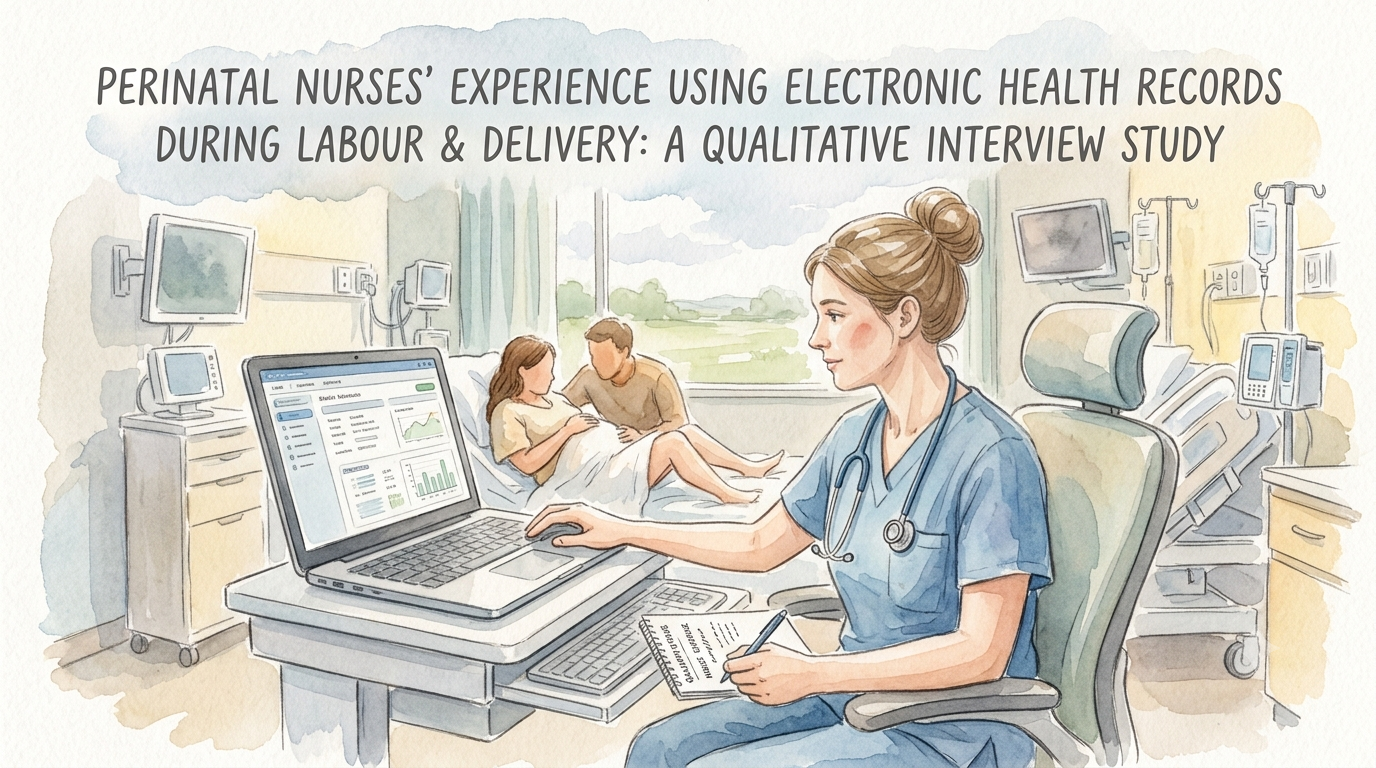
Perinatal nurses’ experience using electronic health records during labour and delivery: A qualitative interview study

By Leslie Buxton, RN, MN
Clinical Informatics Manager, BC Children’s and Women’s Hospital
Dr. Vera Caine, PhD, RN
Professor, School of Nursing, University of Victoria, and Adjunct professor, University of Alberta
Dr. Olga Petrovskaya, PhD, RN
Associate Professor, School of Nursing, University of Victoria (Corresponding author)
Citation: Buxton, L., Caine, V., & Petrovskaya, O. (2026). Perinatal nurses’ experience using electronic health records during labour and delivery: A qualitative interview study. Canadian Journal of Nursing Informatics, 21(2). https://cjni.net/journal/?p=16766
Abstract
Background: Since the implementation of electronic health records across Canada in the early 2000s, research has largely focused on their impact on patient care and organizational outcomes. Little attention has been given to their user experiences by perinatal nurses, particularly those providing care during labour and delivery.
Aim: To examine the experiences and challenges faced by perinatal nurses when documenting care for labouring patients using electronic health records.
Design: A qualitative methodology was employed.
Methods: Interviews were held with eleven perinatal nurses from a large urban women’s hospital in Western Canada. Thematic analysis was informed by Davina Allen’s translational mobilization theory.
Results: Three key themes were generated: the impact of the location of electronic health records in the physical space; system design impacts electronic health records utilization; and electronic health record usage embodies increased regulatory professional obligations for labour and delivery nurses.
Conclusion: Electronic health records have substantially changed nurses’ work of documenting care during labour and affected how nurses support patients. Nurses faced the ongoing challenge of balancing the need to document with being fully present at the bedside.
Implications for patient care: The implementation of electronic health records has reshaped perinatal nursing practice, altering how nurses engage with patients during labour and delivery. Nurses must continually navigate competing demands between documentation requirements and the provision of direct, supportive care.
Reporting Method: This manuscript adheres to the Standards for Reporting Qualitative Research (SRQR) (O’Brien et al., 2014).
Keywords: Electronic health records, perinatal nursing, Canada, labour and delivery, nursing practice; translational mobilization theory
Background and Purpose
Electronic health records (EHRs) have been accessible for decades in the United States, while in Canada, their wider use has only started in the early 2000s. Organizational and patient impacts of EHRs have been varied (Harrison et al., 2007). The implementation of EHRs in acute care requires extensive change management and preparation, and additional considerations are needed when EHRs are being implemented in hospitals providing perinatal care. In the province of British Columbia (BC), Canada, perinatal care during labour and delivery is planned, directed, and coordinated by Perinatal Services BC (PSBC) and the Society of Obstetricians and Gynecologists of Canada (SOGC), in addition to nursing professional regulations, which adds complexity to the integration of EHR in perinatal practice.
Research that places nurses at the center to examine how EHR affects nurses’ work is limited (Chao & Golbert, 2012; Wisner et al. 2021). Direct patient care nurses are often overlooked during the planning and EHR implementation phases, yet they are required to draw on their extensive skills in adaptability to use the system. Interestingly, this adaptability is not accounted for in nurses’ workload. The literature consistently highlights the increased time burden on nurses’ work (Campbell & Rankin, 2017; De Groot et al., 2022; Johnson et al., 2024; Pors, 2018; Tan et al., 2019; Walker et al., 2019), increased cognitive load (Chao, 2016; Colligan et al., 2015; Walker et al., 2019; Wisner et al. 2021) and the impacts to nurses workflow (Chao & Golbert, 2012; Craswell et al., 2014; Harrison et al., 2007; Ivory, 2015; Kossman et al., 2013) due to EHR use. Research directly focusing on perinatal care, especially labour and delivery care (Chao & Golbert, 2012; Ivory, 2015; Wisner et al., 2021) is limited. This lack of research devalues the work of perinatal nurse and reinforces the invisibility of their contributions within health care. This study fills a gap by focusing on perinatal nurses’ use of EHR in a labour-and-delivery context in a large hospital in Western Canada.
The research question for this study was: What are the experiences and challenges of labour and delivery nurses using EHRs while caring for labouring patients?
Methods and Procedures
Design
The authors employed a qualitative interview design and utilized Translational Mobilization Theory (Allen, 2015) to inform data collection and analysis. This manuscript adheres to the Standards for Reporting Qualitative Research (SRQR) (O’Brien et al., 2014).
Theoretical Approach
In this study, nurses’ work is conceptualized as including direct patient care as well as care coordination, which sometimes remains marginalized in nursing research focused on care in nursing practice. According to Davina Allen’s (2015) Translational Mobilization Theory (TMT), in their everyday (often invisible) work of managing patient care trajectories, bedside nurses bridge multiple agendas: their professional focus on individual patient care and the increasingly pressing organizational priorities. Their organizational priorities include resource and bed allocation and meeting quality indicators and regulatory requirements
Allen (2015) describes how nurses are responsible for mobilizing their clinical and organizational knowledge to provide care. In the context of this study, perinatal nurses are required to uphold the provincial standards set out by PSBC and meet hospital and legal requirements for documentation. With the introduction of new workflows following the implementation of an EHR, nurses must adapt their work while maintaining a high standard of care.
Another component of the TMT is the emphasis on understanding the local activity systems (i.e., human and non-human actors such as health care providers, paperwork, technology assembled around a specific patient care trajectory) to appreciate the scope of nurses’ work and their contribution (Allen, 2015; Allen, 2018). In the context of this study, this includes being attentive to how nurses understand and act within the routines of the hospital, the unit culture, and processes by which nurses enable care for patients at critical times. In the hospital where the study took place, EHR design prioritized physician and midwife workflows rather than nurses’ processes. Changes in activity systems post-EHR implementation included changes in team communication such as the ways in which a physician or midwife is informed about labour progress or how an anesthesiologist is called for the administration of an epidural. TMT (Allen, 2018) invites researchers’ attention to how nurses’ work changes or remains the same, as well as how nurses navigate this change. In this research, we drew on nurses’ experiences to understand how their interactions with local activity systems have been affected by the implementation of EHR.
Sensemaking, another element of TMT (Allen, 2015; Allen, 2018), invites researchers’ attention to nurses’ ability to create order in situations that otherwise do not fit together. An example of sense making is nurses’ handover (i.e., the exchange of critical patient information at the end of a shift, prior to or after a staff break, or in care transitions). For a labouring patient, handover occurs several times during their inpatient stay. In the hospital where the study took place, while handover tools and checklists have been developed, the introduction of the EHR precipitated the change in the process of handover, and nurses were at the centre of these changes.
TMT draws on the assumptions of Actor Network Theory (ANT), which views human or non-human elements of the network (e.g., healthcare providers, patients, and material objects including computers and electronic documentation) as potentially equal within the relationship and capable of producing effects (Allen, 2015). With this insight, the authors view checklists, flow sheets, and computers in patient rooms as material actors that redirect nurse’s attention and have effects on human connection and care processes.
Study Setting and Recruitment
The study took place in a large urban hospital in BC, Canada, that provides primary, secondary, and tertiary maternity care to the local community as well as specialized perinatal care to the entire province and the neighbouring territory of the Yukon (Provincial Health Services Authority [PHSA], 2025). This hospital implemented the EHR in early 2022 as part of the ongoing larger project of Clinical Systems Transformation.
Purposive sampling was used to recruit 11 perinatal nurses who had direct experience providing bedside care in a delivery setting. In this setting, acute perinatal trained nurses rotate between assessment, antenatal, intrapartum, postpartum, and the obstetrical surgical suite. Nurses who work on these units have completed supplemental education relating specifically to perinatal and newborn care.
To recruit nurses, postcards were placed in staff areas and handed out during daily staff huddles that the first author attended in the fall of 2024. The study was also advertised in a staff newsletter. Inclusion criteria were nurses who had been on staff for at least three years and thus worked with paper documentation pre-EHR and shifted to electronic documentation post-EHR implementation.
Data Collection
Semi-structured interviews (n=11) took place between December 2024 and February 2025 using Zoom video calls that ranged between 32-60 minutes (average 42 minutes). Each interview began with the primary researcher situating herself as a perinatal nurse to encourage open dialogue. Opening questions asked participants to describe their roles and what they loved about their job, which encouraged storytelling and sharing of participants’ experiences in a way that put them at the center of the conversation. Questions such as “How did your day look different prior to the implementation of the EHR?” and “Do you think electronic documentation helps or hinders your care of the patient? In what ways?” allowed for the participants to reflect on their experiences and share details of what it is like to care for and document on a patient in labour. All interviews were recorded, stored on a secure network drive, and transcribed verbatim using Whisper, an AI transcription software.
Data processing and Analysis
Interview transcripts were checked for completeness and accuracy. All transcripts were de-identified once transcription accuracy had been confirmed prior to engaging in the formal analysis. Identifying information including names and specific contextual details was removed to protect participant confidentiality. Data management procedures complied with institutional ethical guidelines.
Drawing on Braun and Clarke’s work (2006), the data was thematically analyzed, and patterns of data were identified and coded. Initial coding of selected transcripts was done by all team members. Observations, reflections, and insights were documented in the margins of the transcripts and collaboratively examined by the research team, facilitating the identification of similarities and differences in the interpretation. Final coding of all transcripts was conducted by the first author using the agreed upon coding framework. Any uncertainties or discrepancies were discussed and resolved collaboratively.
Codes were data-driven and developed inductively, remaining closely grounded in the participants’ experience. Following initial coding, transcripts were systematically coded using the selected framework. As analysis progressed, codes were refined, merged, or expanded where necessary to better reflect the data. Patterns across codes were examined to identify broader themes that captured shared meanings and experiences.
Themes were initially developed by the first author and subsequently refined through team discussions to ensure coherence. Insights and reflections were systematically grouped according to their relevance, forming initial categories for analysis. These categories were then interpreted through the lens of TMT and ANT which emphasizes the relational dynamics between human and non-human actors within a network.
Ethical considerations
A harmonized ethics approval was obtained through the agency’s affiliated University Human Research Ethics Board and the Hospital’s Research Ethics Board. An electronic copy of an informed consent was shared with participants prior to the interview date and then reviewed in detail at the start of the interview. All participants provided informed consent.
Rigour and reflexivity
In addition to any interview notes that were taken during the conversation, reflective notes were completed following each interview to capture any details or thoughts pertaining to the unique conversation as well as to allow the primary researcher to assess the applicability of the interview guide so revisions could be made iteratively. To enhance trustworthiness, strategies such as collaborative coding and reflexive discussion were employed throughout the process. These procedures supported credibility, dependability, and transparency in the analysis.
It is important to note that the first author has a dual practice background in perinatal nursing and clinical informatics. This expertise provided both the clinical context of perinatal care and the technical aspects of EHR design, allowing for a nuanced understanding of participants’ explanations and experiences. Polit and Beck (2021) described this process as reflexivity—the researcher’s conscious awareness of their own background, values, and beliefs, and the potential influence these may exert on the research process and outcomes. Although the first author is a nurse informatician in a hospital where the study was done, and in her job, she might have indirectly supported frontline nurses participating in the study, she did not have any oversight or power-over role in relation to the participants.
Results
Characteristics of participants
Participating nurses’ years of experience varied between three and 26 years with a mean of 12.6 years. Of the 11 participants, all have worked in direct care, bedside nursing roles; four identified that they have worked or are working as a clinical resource nurse; and four identified that they have worked as a charge nurse on one of the perinatal units. Clinical resource nurses are responsible for ongoing mentoring of nursing staff on the patient care unit, coordinating clinical staffing and expertise with patient care needs, and ensuring the safety of the environment for patient care. Charge nurses oversee nursing care within a specific department or unit. They assign responsibilities to staff, manage admissions and discharges, communicate with patients and healthcare professionals to ensure smooth operations, and handle administrative duties.
Interview data showed that experiences and challenges faced by perinatal nurses documenting care using an EHR during labour and delivery varied. Three key themes were identified: the impact of the location of EHR in the physical space; system design impacts EHR utilization; and EHR embodies increased regulatory professional obligations.
The Location of EHR in the Physical Space
A patient in labour presents for medical care to safely deliver their baby and to seek support through a significant, life changing event. The labour and delivery room frames the setting in which nurses and patients negotiate how best to provide care. As one participant mentioned:
Just sort of meeting the patient where they’re at and figuring out what they want from their labour.
(010)
According to participating nurses, electronic documentation during labour and delivery impacts patient’s experience by introducing noise, as well as additional equipment. The use of computers for documentation requires the use of a keyboard, whose sound can alter the environment in the labour space.
The keyboards in the room are actually quite loud and so I find that sound really annoying, … it’s an invasive sound, your focus is away from [patient], you’re basically focusing on this screen … it takes away the human connection.
(018).
Another participant recalled,
I remember when one of the nurses got in trouble for clicking the keyboard in a labour room because the patient was trying to sleep and all she could hear was the clicking on the keyboard.
(012).
In situations where patients require a calm, quiet environment to manage pain and focus, the use of the keyboard is disruptive. This shift in how documentation is performed can unintentionally interfere with the therapeutic atmosphere nurses strive to create, impacting their ability to remain fully present and responsive to the patient’s needs.
The labouring patient is encouraged to ambulate or change position during labour to help encourage progress and descent of the baby. This includes walking the halls or spending time in the bath or shower. Prior to the implementation of EHR, nurses were able to complete their documentation on paper while accompanying the patient regardless of their physical location.
The biggest thing for me is that it [the paper record such as partogram] was portable so if the patient was in the bathroom in the tub say, I could take it with me
(010).
With the introduction of the EHR, nurses have to physically remove themselves from the patient’s (bed)side to fulfil documentation requirement. This has shifted their practice.
It’s detrimental in that I’m not as physically present with the patient, I’m often distracted or out of the room. (…) It still affected my mobility in the room, I think that was my biggest thing is that you know the computer is very stationary and because it’s built into the wall it doesn’t move and even if I used a WOW [Workstation on Wheels] in the room, the WOWs are so big.
(010).
Nurses struggled to be present with their patients while also completing the required ongoing and timely documentation. The EHR system requires attention and concentration that inevitably shifts the focus away from patients.
You’re so focused on something else that they don’t have your attention a hundred percent of the time, which, you’re their one-to-one support. … And when you’re focused half on charting on the computer and half on the patient, it just takes away from the patient.
(015).
Nurses are constantly balancing the provision of care with the regulated documentation requirements. At times they are conflicted between advocating for the birth environment that patients desire and the physical constraints they encounter.
Because of the way the electrical and data cables are set up in the labour rooms, computers are not ideally located. Fetal monitoring computers are attached to the main computer station, which requires extra space to accommodate large machines. Combined with the numerous carts and emergency equipment required for a delivery, this EHR setup means that labour rooms are often crowded.
They’ve installed computers in areas that don’t really flow well. Ergonomically terrible.
(016).
Before the implementation of the EHR,
You could still provide that care, you can’t really do that with this online charting because of the structure of where the actual charting area is and how you can’t really position in that sense.
(008).
As labour progresses, documentation requirements increase. Monitoring standards defined by PSBC require documentation as often as every 5 minutes while the patient is pushing. This creates a challenge for nurse with the EHR not being in physical proximity.
When someone’s pushing, the computer is in one place in the room, the patients in a different place. It’s like clicking into all different boxes and you have to have both hands, and the computer is usually further away from the patient.
(015).
Nurses are required to manipulate multiple objects and attend to the physical needs of the patient. When charting on paper, nurses can use one hand on the patient while quickly documenting key information with the other hand, but now they need to step away if they are going to document in real time. Participants also commented on the physical position of their body. This shift in positioning means that:
Now with electronic charting, you’re always staring at the computer screen, sort of typing as you’re talking to the patient, versus before I could just write on a piece of paper as I’m facing them.
(001).
Nurses’ work and relationships with their patients have been impacted by the location of EHR hardware in the Labour and Delivery space.
System Design Impacts EHR Utilization
EHR systems have become a standard of care in Canada. Organizational leaders leverage these systems to provide data and metrics to support organizational decision making. When reflecting on their experiences, perinatal nurses identified the benefits of the system such as the transferability of documentation; however, they noted the increased demand on nurses’ time. Nursing time is a finite resource and one that is not always considered when new EHR systems are being implemented. Whereas nurses’ time spent on direct care is easier to account for, their time spent searching through the EHR and documenting (sometimes in data fields not relevant to Labour and Delivery but “forced” by the EHR setup) remains unrecognized.
I feel like everything takes longer now because back then there was a lot of paper but it was all in the chart so … you would just flip through the chart and I think you wouldn’t miss things as easily because you could just go through every single thing and just fill it out, versus now there’s probably 10 times the amount of tabs and blank spaces and probably 80% of them you don’t even need to chart on.
(006).
This searching through the documentation takes significant time.
Every time you’re clicking on a new band, there’s a pause, there’s a downtime, you’re waiting for it to come through, and those pauses are taking time, are moments that I’m not looking at my patient.
(017).
In the hospital where all of the participants worked, the EHR is designed in such a way that one application is used for multiple hospitals, health centers, and outpatient clinics. This means that certain aspects of the design are not customizable to reflect workflows in specific clinical programs.
I think in the beginning that was a huge challenge because it is such a big program [perinatal program], it’s like why do I have this navigation band about cardiac stuff, I’m like, I don’t need that, like it’s like paring it down and making it so it works for you.
(010).
This enterprise EHR design results in shared data fields that are standardized and often irrelevant in different areas of the EHR chart, which contributes to nurses’ increased confusion and frustration and distracts from the information relevant to perinatal care.
You know when you change a dressing for c-section for example, there’s 30 different cells… and at the bottom it says leeches applied. Why is that band even there? You can’t remove it but you’re looking at 30 different options.
(002).
Another way in which the EHR has added an often overlooked but tangible demand on nurses relates to communication within the interprofessional health care team. With the EHR, the team shifted to a Computerized Provider Order Entry (CPOE), in which the providers including physicians, midwives, and nurse practitioners place orders directly in the EHR so that all care requirements are documented and accounted for. Unlike previous, more flexible practice of taking and placing orders, CPOE discourages nurses from taking verbal orders. Instead, nurse must rely on the prescribing providers (mostly physicians) to place electronic orders. This change has led nurses waiting for orders to be placed. In cases where a physician is busy with another patient, care delays and frustrations can happen.
Well you know, [a physician says] I’m busy right now, I can’t put that order in, and I’m [the nurse] like, but that order affects me doing the lab work so you need to put it in or else I can’t send the blood work …[whereas] before it was just a verbal [order] and then it was done.
(010).
In contrast, some aspects of the EHR have created efficiencies for nurses. While demands on nursing time increased due to the limitations of EHR design and shifts in communication, the transferability of electronic documentation has significantly contributed to the ease of access of information nurses need to support patient care. Unlike other care needs, perinatal care and interaction with the health care system does not begin as an acute event or sudden diagnosis but is rather a longitudinal trajectory that begins in the community, transitions to hospital care, and then back to community for postpartum follow up. The EHR allows the triaging perinatal nurse easier access to patient information.
Now everything is on the computer so if I’m like, to the patient, “oh do you remember your recent weight” or “did you ever get a rubella screening done” and they’re like “yeah I did,” I can actually look into their chart … like exactly when they did it.
(006).
Similarly, nurses can access patient information on antepartum admissions or specialty care that may have been provided.
When a patient presents in labour, they are usually in a significant amount of pain and their ability to recall dates and details can be limited. Access to information means the triage nurse can provide care more quickly and have a full picture of the pregnancy history regardless of the state of the patient. Given the transfer of high-risk pregnancies from across the province to a hospital where the study was done, it is now possible to access information across hospitals from all care providers. Conversely, if a hospital is over capacity, it may need to divert a healthy full-term patient to another hospital.
I would agree that it is helpful in seeing visits or encounters from other facilities or the transferability, like not having to photocopy the entire chart if someone is getting transferred somewhere.
018.
The transferability of information within the EHR contributes to ease of access to pertinent data that nurses require to provide safe care.
Data from the EHR impacts organizational processes and workflows and allows decisions about capacity and clinical needs to be made. The hospital where the study took place is laid out across multiple floors and units including triage, labour, antepartum, and surgical suites, and people who provide oversight are covering a wide range of areas. The EHR allows the charge nurses and clinical resource nurses (CRNs) the ability to have a bird’s eye view of each patient’s status.
I’m better able to see what’s going on in the rest of the hospital, as a CRN I’m kind of involved in all the different units…so I’m able to log in from the office and see the patient progress from where I am.
(011).
The data placed by nurses in the EHR helps the CRNs to know where to allocate support and what urgent patient issues may be emerging. It also provides an opportunity for them to provide advice to bedside nurses. However, this support is not always welcomed by experienced nurses who feel that their documentation is being evaluated or scrutinized as they are entering the data.
I’ve had lots of people come to my room and say, I see you’ve charted this, what do you, what’s going on? There’s like an element of big brother that is, that can be sometimes really helpful and sometimes more annoying than anything.
(016).
While CRNs see this access to nurses’ data charted in the EHR as helpful, it can also be seen as intrusive.
The implementation of EHR brings many changes for both staff nurses and operational leaders, but the leaders of the organization are the ones accountable for the change management and staff satisfaction when it comes to large operational changes. Many nurse participants spoke of how this study is the first time they have been solicited for their thoughts and experiences.
I was surprised at how little feedback anybody wanted [about my experience with EHR]. And I know it’s because feedback isn’t an option because that’s the [EHR] system we have. That’s what we’re going to be doing. But it also felt like you dropped this bomb on our world and you don’t even care.
(017).
Nurses were eager to have their voices heard on what the use of EHR during labour is really like, regardless of any potential for impacts to their work.
EHR Embodies Increased Regulatory Professional Obligations
Among perinatal providers, it is known that perinatal care has long been linked to an increased volume of litigation due to the potential clinical complexity, technological invasiveness, and emotionally charged impact of childbirth. Legal requirements often drive the mandated professional requirements that have a direct impact on and guide the everyday work of nurses.
When I’m documenting, I’m always thinking about liability and legal stuff. … I document everything.
(001).
Legal cases related to birth can be brought forward for years following delivery, so the documentation is not only meant to capture a moment in time but can be called into question more than a decade later.
The current iteration of electronic documentation is heavily focused on charting by exception and misses the storytelling nature that was previously used in nurses’ charting. The nurses expressed concerns about the legal longevity of their documentation and whether they would be able to recall the details if they found themselves being questioned years after having provided care.
Legally, if I were ever called to defend my charting or the experience or explain the experience, I’m not going to remember from those [EHR] tick boxes. I’m not going to say, oh, that’s what makes this unique. That’s what was going on with this … event.
(017).
Prior to the implementation of electronic documentation, the care provided was captured in a narrative that was recorded by the primary nurse. Now there are predefined selections that nurses complete to account for the care being provided. Thus, the ways in which birth stories are captured has dramatically shifted.
It gives a rough, clunky, uh, picture of an event that is quite nuanced and very special. Um, it doesn’t reflect how I would word things, which means it doesn’t reflect how I will remember things.
(017).
This need to reflect on the unique nature of the event was shared by multiple participants.
Ideally, EHRs support accurate, real-time documentation of care. In perinatal care, however, as the needs of the patient increase closer to the delivery of the baby, so do the documentation requirements, which makes it increasingly difficult for the nurses to stay up to the minute on their charting. Often, nurses resort to paper scraps and then retrospectively document their care in the EHR.
A lot of time I will chart on paper, like right by the bed on a EFM [electronic fetal monitoring] strip or whatever, and them, um, transfer it over to the computer, but it’s not live charting. Um, and you’re always backdating everything, and you just need to make it work.
(015).
This backdating or transcribing from paper to the EHR is a necessary consequence of the nurse managing competing demands. The nurses feel that there is a lack of clear instructions on where they need to document to meet their mandated obligations but also that they struggle to keep up to date on the changing requirements.
Every other shift it feels like there’s something not inputted correctly or misunderstood. There’s still some clarity that needs to be with [the EHR] in terms of standards of care and like where the charting is actually the right way to chart.
(008).
These changes in requirements on what and where in the EHR to chart makes it challenging to successfully meet the mandated requirements. Based on the experiences of participants, the less familiar the nurses are with the requirements, the more time they need to complete their documentation. This could mean that there is delay in responding to a care issue.
These moments of frustration where this triage is taking far too many minutes and it’s because they [patients] don’t know what magnesium they’re taking, or it’s not already inputted into the system, or they don’t know what blood pressure medication they’re taking, and, uh, I have to, you know, you have to be very specific about everything that goes into those little boxes.
(016).
The labour nurses are consistently balancing the legal requirements of their documentation with the care required to support their patients to have a healthy delivery.
Discussion
The purpose of this research was to examine the experiences and challenges of labour and delivery nurses using EHR. Guided by TMT (Allen, 2015) that emphasizes bedside nurses’ invisible work of care coordination and the active role of non-human actors such as EHR in shaping nurse patient relationships and nurses’ work.
The EHR hardware imposes on the labour room environment, requiring nurses to adjust their bodies in space to coordinate the needs of the labouring patients with the location of the devices, which often requires them to turn away from the patient. Pors (2018) described how the location of the computer can negatively impact the nurse-patient relationship and fragments eye contact. Nurses in Pors’ study remarked how the location of the computer required them to move through the room in a way that disrupted their workflow and did not position them at the bedside.
Similarly, Gaudet (2016) remarked how the stationary computer can interrupt the overall workflow. Nurses are required to respond to dynamic needs of both people and technology while they move through the room. Participants felt that the location of the computer screen did not facilitate their work, and this lack of physical proximity required nurses to pivot frequently. Wisner et al. (2021) discussed how the EHR interfered with nurses’ ability to interact with the patient and attend to their needs. Actor network theory (ANT) invites researchers’ attention to non-human elements such as the noise created in the room by the keyboard (Akrich, 2023). The invasive sounds in the room can be a distraction to the labouring patient and impact their experience. ANT draws our attention to how perinatal nurses navigate the environment of the labour room transformed by the EHR hardware.
TMT is of value in describing and explaining the organisational dimension of nursing work and nurses’ role in coordinating care and mobilizing patient care trajectories (Allen, 2018). Nurses’ ability to mobilize care trajectories is impacted by the organizational logic (i.e., hospital priorities) and intense sense making required from nurses by the EHR. The nurses, in particular in supporting and managerial roles, highlighted the benefits of EHR in providing a quick snapshot of the status and workload of the hospital. This information is important for staffing and workload allocation. In contrast, some aspects of the bedside nurses’ work are less supported by the EHR and even interfere with nurses’ ability to do their work (Allen, 2015), as we have seen in the example of CPOE and irrelevant data fields. These are issues that impact usability.
Campbell and Rankin (2017), in their institutional ethnography, showed how data from EHRs legitimize the decisions regarding staffing and coerces nurses to classify their patients to calculate nursing work. These authors criticized EHR for subverting nurses’ priority of patient care to satisfy the requirements of data collection that go beyond the local practice site. These data help charge nurses to be aware of the dynamic needs of a complex hospital. Allen (2018) cautioned of the dangers for bedside nurses becoming enrolled in management logics that privilege efficiency in patient care (that also involves moving patients between units of care) over patient-centredness. While monitoring of organizational status can provide situational context, it needs to be balanced with the patient centered care that is at the heart of perinatal nursing. In addition to this operational overview, participants reflected on how the requirements for documentation are constantly changing due to quality improvement projects and patient focused initiatives that require data collection for validation.
The concerns surrounding the legal requirements of electronic documentation is a theme shared by many participants. One of the domains of nurses’ care coordination role is articulation described by Allen (2018) as secondary work activity that relates to the actions, knowledge and resources necessary to carry on the primary role – caregiving. Articulation requires the perinatal nurse to not only know how to do the work but also be able to execute it efficiently. In this study, many nurses shared how unsure they were about where to document in the predefined sections of the EHR. They felt that the current EHR system lacks clear directions on consistent documentation, while simultaneously feeling a heavy weight of the legal implications of late or incomplete charting. The negotiation between documenting a birth story and fulfilling mandated requirements requires nurses to take into consideration the multiple conflicting interests and ultimately decide whose interests to serve first. This finding supports Wisner et al.’s (2021) observation that nurses documenting in EHR needed to balance direct patient care with charting; they were concerned regarding the legal implication of not documenting appropriately or timely. In this study, nurses were similarly concerned about the consequences to their licence and professional role.
Recommendations
Findings from this research highlight the value of engaging staff nurses in the design and implementation of EHR systems so that they can provide critical insight into the clinical work in the perinatal context. Staff can contribute to space planning design and explain the workflows involved in their daily care. Nurses need to be involved in optimization and re-designing projects at regular intervals to be able to tailor EHR to the local activity systems. Their input is vitally important regarding documentation requirements outside of mandated standards to prevent documentation for the sake of data collection. Data metrics are important for organizational planning and funding, but when these metrics begin to encroach on the workflows and negatively impact care for a labouring patient, their value needs to be critically reconsidered.
The use of artificial intelligence (AI) to support health care delivery through transcription and documentation is at the forefront of technology research. Examples of AI helpful in perinatal practice include AI medical scribes, where the conversations in the room are recorded and transcribed, or a device in which the perinatal nurses dictate their care activities in real time, and which flow to the EHR. AI could also be used to create summaries of narrative documentation to be included in EHRs.
Strengths, Limitations, and Future Considerations
While the study had limitations, its findings offer rich material on an important and timely topic of how EHRs transform perinatal nurses’ work. The theoretical framework, TMT and ANT, invited close attention to the role of non-human entities including physical space, technology, and paper forms. The study was confined to a single site, which may limit generalizability of the findings to other facilities or practice sites. On the other hand, contextual information about the study setting will help the reader to translate the findings to other local contexts. This study relied on self-report. People’s memory of pre EHR might have been limited or impacted by the more recent experiences including potential struggles with the EHR. Longitudinal studies documenting change over time are critical in understanding the nuances as systems are adapted and as they change over time. Further, it would be of value to examine how EHR have been used in legal proceedings in relation to nurses’ ability to recall their experiences. Such studies may inquire into the impact that abbreviated and non-narrative charting has on the outcomes of legal proceedings. Future research could examine patient perspectives in conjunction with nursing experiences to gain a more comprehensive understanding of care delivery in the context of EHR use.
Conclusion
Information and communication technology in health care is a necessary advancement to continue to meet the needs of the healthcare system and optimise patient outcomes and care arrangements. How this technology is introduced and what impact it creates on care practices remains an important area for research. This study focused on perinatal nurses’ experiences and challenges following implementation of EHR and electronic documentation in the labour and delivery suite. Important considerations when implementing EHRs include spatial configurations, the interplay between organizational needs and individual patient care, as well as the legal requirements nurses hold. It is evident that technology shapes nurses’ work in ways that require careful and ongoing attention.
References
Akrich M. (2023). Actor Network Theory, Bruno Latour, and the CSI. Social Studies of Science, 53(2), 169–173. https://doi.org/10.1177/03063127231158102
Allen, D. (2015).?The invisible work of nurses: Hospitals, organisation and healthcare. Routledge. https://www.routledge.com/The-Invisible-Work-of-Nurses-Hospitals-Organisation-and-Healthcare/Allen/p/book/9781138213616
Allen, D. (2018). Translational mobilisation theory: A new paradigm for understanding the organisational elements of nursing work. International Journal of Nursing Studies, 79, 36–42. https://doi.org/10.1016/j.ijnurstu.2017.10.010
Braun, V. and Clarke, V. (2006) Using thematic analysis in psychology. Qualitative Research in Psychology, 3 (2), 77-101. https://doi.org/10.1191/1478088706qp063oa
Campbell, M. L., & Rankin, J. M. (2017). Nurses and electronic health records in a Canadian hospital: Examining the social organisation and programmed use of digitised nursing knowledge. Sociology of Health & Illness, 39(3), 365–379. https://doi.org/10.1111/1467-9566.12489
Chao, C.A. (2016). The impact of electronic health records on collaborative work routines: A narrative network analysis.?International Journal of Medical Informatics (Shannon, Ireland),?94, 100–111. https://doi.org/10.1016/j.ijmedinf.2016.06.019
Chao, C.A., & Goldbort, J. (2012). Lessons learned from implementation of a perinatal documentation system. JOGNN: Journal of Obstetric, Gynecologic & Neonatal Nursing, 41(5), 599-608. https://doi: 10.1111/j.1552-6909.2012.01378
Clarke, V., & Braun, V. (2017). Thematic analysis. The Journal of Positive Psychology, 12(3), 297–298. https://doi.org/10.1080/17439760.2016.1262613
Colligan, L., Potts, H. W. W., Finn, C. T., & Sinkin, R. A. (2015). Cognitive workload changes for nurses transitioning from a legacy system with paper documentation to a commercial electronic health record. International Journal of Medical Informatics (Shannon, Ireland), 84(7), 469–476. https://doi.org/10.1016/j.ijmedinf.2015.03.003
Craswell, A., Moxham, L., & Broadbent, M. (2016). Does use of computer technology for perinatal data collection influence data quality? Health Informatics Journal, 22(2), 293–303. https://doi.org/10.1177/1460458214556372
De Groot, K., De Veer, A. J. E., Munster, A. M., Francke, A. L., & Paans, W. (2022). Nursing documentation and its relationship with perceived nursing workload: A mixed-methods study among community nurses. BMC Nursing, 21(1), 34. https://doi.org/10.1186/s12912-022-00811-7
de Ruiter, H.-P., Liaschenko, J., & Angus, J. (2016). Problems with the electronic health record.?Nursing Philosophy,?17(1), 49–58. https://doi.org/10.1111/nup.12112
Gaudet, C. A. (2016). Electronic documentation and nurse-patient interaction. Advances in Nursing Science, 39(1), 3–14. https://doi.org/10.1097/ANS.0000000000000098
Harrison, M., Koppel, R., & Bar-Lev, S. (2007). Unintended consequences of information technologies in health care—An interactive sociotechnical analysis. Journal of the American Medical Informatics Association, 14(5),542-549. https://doi.org/10.1197/jamia.M2384
Ivory, C. H. (2015). The role of health care technology in support of perinatal nurse staffing. Journal of Obstetric, Gynecologic, & Neonatal Nursing, 44(2), 309–316. https://doi.org/10.1111/1552-6909.12546
Johnson, L., Madandola, O., Dos Santos, F., Priola, K., Yao, Y., Macieira, T. & Keenan, G. (2025). Creating perinatal nursing care plans using ChatGPT. The Journal of Perinatal & Neonatal Nursing, 39 (1), 10-19. https://doi.org/10.1097/JPN.0000000000000831
Kossman, S.P., Bonney, L., & Kim, M., (2013). Electronic health record tools’ support of nurses’ clinical judgment and ream communication. CIN: Computers, Informatics, Nursing 31(11), 539-544. https://doi.org/10.1097/01.NCN.0000432122.79452.7b
O’Brien, B. C., Harris, I. B., Beckman, T. J., Reed, D. A., & Cook, D. A. (2014). Standards for reporting qualitative research: a synthesis of recommendations. Academic Medicine: Journal of the Association of American Medical Colleges, 89(9), 1245–1251. https://doi.org/10.1097/ACM.0000000000000388
Perinatal Services BC. (2026). What’s new? https://www.perinatalservicesbc.ca/
Polit, F.D. and Beck, C.T. (2021) Nursing research: Generating and assessing evidence for nursing practice. 11th Edition, Lippincott Williams & Wilkins. https://shop.lww.com/Polit—Beck-s-Nursing-Research/p/9781975223809
Pors, A. S. (2018). Digital displacements in patient-professional relations: Four modes of organizational patient involvement. Journal of Health Organization and Management, 32(4), 603–617. https://doi.org/10.1108/JHOM-10-2016-0193
Prior, L. (2020). Content Analysis. In P. Leavy (Ed.),?The Oxford Handbook of Qualitative Research, 2nd Edition, Oxford Handbooks. https://doi.org/10.1093/oxfordhb/9780190847388.013.25
Provincial Health Services Authority (2024). Planning to give birth at BCW Hospital. http://www.bcwomens.ca/our-services/labour-birth-post-birth-care/planning-to-give-birth-at-bc-womens
Provincial Health Services Authority (2025). Our Services. https://www.bcwomens.ca/our-services
Society of Obstetricians and Gynecologists of Canada. (2026). About the SOGC. https://sogc.org/
Tan, M., Lipman, S., Lee, H., Sie, L., & Carvalho, B. (2019). Evaluation of electronic medical records on nurses’ time allocation during cesarean delivery. Journal of Patient Safety, 15(4), e82–e85. https://doi.org/10.1097/PTS.0000000000000467
Walker, R. M., Burmeister, E., Jeffrey, C., Birgan, S., Garrahy, E., Andrews, J., Hada, A., & Aitken, L. M. (2020). The impact of an integrated electronic health record on nurse time at the bedside: A pre-post continuous time and motion study. Collegian, 27(1), 63–74. https://doi.org/10.1016/j.colegn.2019.06.006
Wisner,?K.,?Chesla,?C. A.,?Spetz,?J., &?Lyndon,?A.?(2021).?Managing the tension between caring and charting: Labor and delivery nurses’ experiences of the electronic health record.?Research in Nursing and Health, 44,?822–832.?https://doi.org/10.1002/nur.22177
Author Bios
Leslie Buxton, RN, MN
Ms. Leslie Buxton is an experienced Registered Nurse who loved to work in Labour & Delivery and maternity before finding her passion in nursing informatics. She currently works at BC Women’s Hospital. Leslie has recently completed her Master’s thesis at the UVic School of Nursing under the supervision of Drs. O. Petrovskaya and V. Caine.
Dr. Vera Caine, PhD, RN
Dr. Vera Caine is a full professor at the UVic School of Nursing. Her prior experience was at the University of Alberta where Vera was a CIHR New Investigator from 2014 to 2019. She currently serves as Vice Chair for the CIHR HIV/AIDS and STBBI Research Advisory Committee. Central to her work is a focus on experiences and relationships, particularly among nurses and vulnerable populations, as well as caring relationships among nurses and patients, which is reflected in her methodological approach of narrative inquiry.
Dr. Olga Petrovskaya, PhD, RN
Dr. Olga Petrovskaya is an associate professor at the UVic School of Nursing. Her program of research, funded by the Social Sciences and Humanities Research Council of Canada (SSHRC) and Women’s and Children’s Health Research Institute (Alberta), combines her interest in eHealth and Health Information and Communication Technology (e.g., electronic health records and patient portals) and philosophies and theories attuned to the socio-materiality of care practices. Olga is a Vice Chair of the International Philosophy of Nursing Society (IPONS) and serves on the Editorial Board of the Nursing Philosophy journal.
Acknowledgments:
We gratefully acknowledge the meaningful contributions and dedicated participation of nurses involved in this study. LB acknowledges scholarships received through the School of Nursing at the University of Victoria in support of her graduate studies.
Author contributions:
Conceptualization: LB, VC, OP; Methodology: LB, VC, OP; Investigation: LB; Formal analysis: LB; Project administration: LB; Supervision: VC, OP; Validation: LB, VC, OP; Writing – original draft: LB; Writing – review & editing: LB, VC, OP.
Statements and Declarations
Ethical considerations:
A harmonized ethics approval was obtained through the University of Victoria Human Research Ethics Board (BC24-0354) and the BC Children’s and Women’s Research Ethics Board (H24-02142).
Consent to participate:
An electronic copy of an informed consent was shared with participants prior to the interview date and then reviewed in detail at the start of the online interview. Verbal consent for voluntary participation and knowledge dissemination was also obtained and recorded by the interviewer.
Consent for publication:
Informed consent for publication was provided by all participants.
Declaration of conflicting interest:
The authors declared no potential conflicts of interest with respect to the research, authorship, and/or publication of this article.
Funding statement:
This research received no specific grant from any funding agency in the public, commercial, or not-for-profit sectors.
Data availability statement:
It is not possible to share data due to participant confidentiality in the study with a relatively small sample and potentially identifiable location.


Recent articles
- Index of volume 21 number 321 Sep 2026
- Cyber Security Awareness Month in the Age of AI21 Sep 2026
- Are we supporting the next generation of nurses to be AI proficient or AI dependent?21 Sep 2026
- Designing What AI Makes Possible in Healthcare21 Sep 2026
- Cybersecurity Threats to Hospital Information Systems: A Narrative Review of Risks, Patient-Safety Impacts, and Defensive Strategies with Implications for the United States21 Sep 2026