
Preventing Dementia in the Digital Age: A Systematic Review of Free Mobile Health Applications

By Kulvir Moudgil, RN, BScN, MN
Anila Virani, PhD, RN, BScN, MN
Thompson Rivers University, Canada
Citation: Moudgil, K. & Virani, A. (2026). Preventing dementia in the digital age: A systematic review of free mobile health applications. Canadian Journal of Nursing Informatics, 21(1). https://cjni.net/journal/?p=16094
Abstract
Background: Dementia is a progressive and multifactorial condition with no curative treatment, highlighting the importance of preventive strategies targeting modifiable risk factors. Mobile health applications or “apps” have emerged as accessible tools to support lifestyle behaviours associated with dementia risk reduction; however, the quality and evidence base of available apps remain unclear.
Aim: This study aimed to systematically identify and evaluate freely available iOS apps designed to support dementia prevention and to compare their features to inform public adoption.
Methods: A systematic app search was conducted following PRISMA guidelines using Google search results and app store screening. Freely available, iOS-compatible apps explicitly targeting dementia prevention or cognitive health were included. Eligible apps were evaluated using the Mobile Application Rating Scale (MARS), which assesses engagement, functionality, aesthetics, information quality, and subjective quality.
Findings: Of 94 apps initially identified, 12 met the inclusion criteria and were evaluated. Apps were categorized into lifestyle modification (n = 2), stress-relieving (n = 4), and cognition-stimulating (n = 6) apps. Overall apps quality ranged from moderate to high, with strongest performance observed in functionality and usability. Cognitive stimulation apps were the most common, while few apps addressed multiple modifiable risk factors concurrently. No peer-reviewed evidence directly evaluating app effectiveness for dementia prevention was identified.
Conclusion: Freely available apps show promise as accessible tools to support dementia prevention; however, the lack of multidomain approaches and limited scientific validation highlight the need for rigorously evaluated, evidence-based digital interventions.
Background
Dementia is an irreversible condition that serves as an umbrella term for neurocognitive deterioration affecting older adults, which worsens with age and includes various forms such as Alzheimer’s disease and vascular dementia (Ye et al., 2023). Dementia is ranked as the seventh leading cause of death worldwide and eighth in Canada (Ye et al., 20223). Lifestyle factors—including physical activity, sleep, nutrition, stress management, and social engagement have been shown to significantly influence dementia prevention (Ali et al., 2024).
As no curative treatment for dementia currently exists, there has been increasing interest in preventive strategies, including the use of mobile applications or “apps”. Mobile technology has become seamlessly integrated into daily life and is widely accessible through devices such as smartphones and tablets (Ye et al., 2023; Maab et al., 2022). Health-related apps are designed to support individuals in achieving health goals, monitoring health behaviours, and managing chronic conditions (Maab et al., 2022; Vaghefi & Tulu, 2019). A growing body of evidence suggests that mobile technology is an effective tool for dementia prevention and can improve quality of life (Ye et al., 2023; Maab et al., 2022). By targeting modifiable lifestyle behaviours associated with cognitive decline, these apps have the potential to support brain health and reduce dementia risk (Ali et al., 2024; Johari et al., 2025).
Purpose
The prevalence of dementia is projected to exceed 150 million cases worldwide by 2050, largely due to population aging and global demographic growth (Charante et al., 2024). Up to 40% of dementia cases are associated with modifiable risk factors, including hypertension, diabetes, physical inactivity, unhealthy diet, and smoking. Given the increasing incidence of dementia, even small improvements at individual levels for dementia prevention might lead to substantial reduction of dementia cases.
Even though, the research on apps for dementia prevention is expanding, there are significant gaps with many available apps lacking robust, evidence-based validation. Moreover, understanding the breadth of what is available in terms of modifiable lifestyle changes to prevent dementia and to address existing gaps in research are crucial to consider (Charante et al., 2024; Ali et al, 2024). Therefore, the objective of this study is twofold 1) systematically identify and evaluate freely available iOS apps for dementia prevention using the Mobile Application Rating Scale (MARS) (Stoyanov et al., 2015; Stoyanov et al., 2016); and 2) compare features of each eligible apps to support its adoption by the public to support dementia prevention.
Methodology
Design
The search process adhered to the Preferred Reporting Items for Systematic Reviews and Meta-Analyses (PRISMA) guidelines for systematic reviews (Moher et al., 2009). A comprehensive search of 50 websites was conducted using the Google search engine, resulting in the identification of 94 apps. An initial screening of these apps (n = 94) was performed based on information available in the respective app stores. Subsequently, 30 apps that met the prespecified inclusion criteria were downloaded to a device for further eligibility assessment. Following this evaluation, 12 apps were subjected to quality appraisal using the MARS, a validated instrument specifically developed for app evaluation. Prior to conducting the app review, the authors completed the recommended MARS training by viewing the instructional video provided by the developers (Stoyanov, 2016). Metadata for the review was extracted from app store description pages, directly from the apps and by searching the web.
Search Strategy
A systematic search for apps related to dementia prevention was conducted using the first five pages of Google search results (10 results per page). The search was performed using the Google Chrome browser between September 22, 2025, and October 7, 2025, on a MacBook Pro (Serial Number FVFXQ6TQHV2D). To minimize potential bias, browser history and cache were cleared prior to initiating the search. Search terms included: mobile application OR mobile apps AND dementia prevention. No filters were applied during the search process.
Data Extraction
The first five pages of Google search results (50 websites) were manually extracted and documented in a Microsoft Word file, including the website name, URL, apps mentioned within the URL, and their eligibility status. Each of the 50 websites was individually reviewed to identify relevant apps. Of the 50 websites, 31 websites did not reference any apps and were classified as irrelevant. The remaining 19 websites contained between one and eighteen apps each.
App Rating Tool
The MARS provides researchers, clinicians, and professionals with a standardized framework for evaluating apps (Stoyanov et al., 2016). It is freely available online and is a widely used tool designed to assess the quality of mobile health apps (Stoyanov et al., 2015). MARS has emerged as a validated tool for assessing app quality across four key dimensions: engagement, functionality, aesthetics, and information quality, along with a subjective quality score (Terhorst et al., 2020). The scale consists of 23 items organized into three sections: classification, app quality, and subjective quality. The app quality section includes 19 items rated on a 5-point Likert scale (1 = Inadequate, 5 = Excellent) and evaluates apps across the four objective dimensions noted above. The subjective quality section comprises four items assessing user satisfaction (Stoyanov et al., 2016). Final scores are calculated by averaging subscale scores to derive an overall mean score, which serves as the primary indicator of app quality (Stoyanov et al., 2016).
The MARS demonstrates strong psychometric properties, including excellent internal consistency for the overall scale (? = .90) and good interrater reliability (ICC = .79) (Stoyanov et al., 2015; Stoyanov et al., 2016). Its reliability has been supported across individual subscales and diverse research contexts, leading to its widespread adoption in app evaluation studies (Bhattacharya & Florez-Arango, 2025; Choi et al., 2021; Ki et al., 2025; Virani et al., 2019).
Identification of Eligible Apps
A total of 94 apps were initially identified and screened for eligibility according to predefined criteria. Before assessing all the apps identified in the search, both authors assessed and discussed an excluded app to ensure shared understanding of the eligibility criteria. First, apps were required to explicitly focus on dementia prevention or cognitive health rather than general mental health or unrelated topics. The fourteen modifiable risk factors for dementia outlined in the Lancet Commission report served as the guiding framework for determining relevance (Livingston et al., 2024). Second, only apps that were freely available for public download were included. Finally, eligible apps had to be compatible with iOS and function as stand-alone products without requiring integration with external software, devices, or services. The app store description of each identified app was read and compared with the inclusion and exclusion criteria.
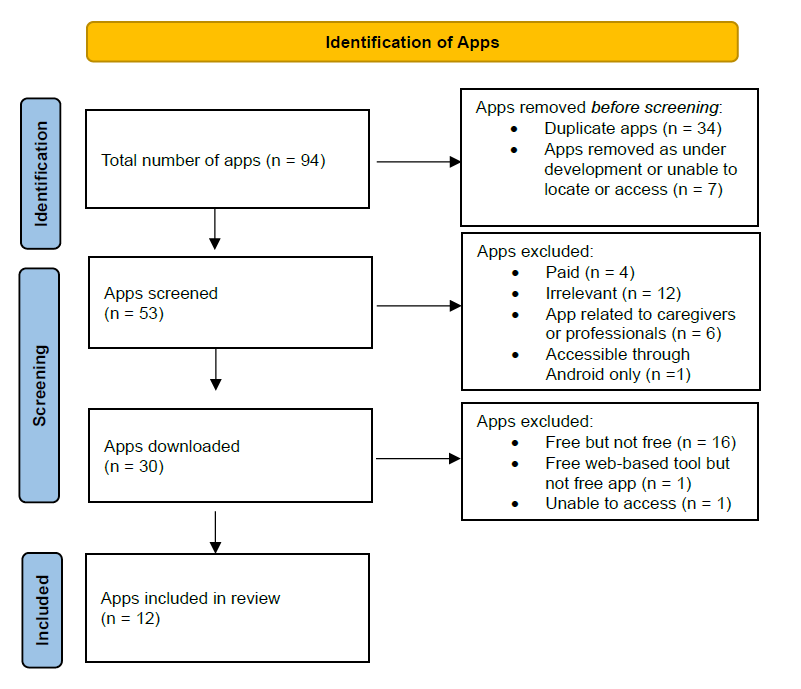
Duplicate apps (n = 34) and apps under development or inaccessible (n = 7) were removed prior to screening. The remaining 53 apps were screened based on app titles and description on the app store page. Exclusions included paid apps (n = 4), irrelevant (n = 12), apps designed for caregivers or professionals (n = 6), or non-iOS-compatible apps (n = 1). Additional exclusions were applied to apps that were free but not fully functional without payment (n = 16), web-based tools rather than mobile apps (n = 1), or apps that could not be downloaded successfully (n = 1).
Ultimately, 12 apps met all eligibility criteria and were included in the final review. Each app was tested by the first author for a minimum of 30 minutes. Figure 1 includes a PRISMA flow diagram illustrating the app selection process.
Figure 1:
PRISMA Flow Diagram
App Evaluation Process
Each of the 12 eligible apps underwent a systematic evaluation to ensure a comprehensive understanding of their characteristics and potential utility for dementia prevention. A preliminary web search was conducted for each app, along with a review of publicly available information, to collect details related to the developer, intended purpose, accessibility, design, online presence, and user experience. This step provided contextual background to inform subsequent hands-on app testing.
To assess functionality and usability, the first author downloaded and tested each app on an iPhone 12 Pro (iOS version 18.6.2) between October 15 and November 5, 2025. Direct engagement with the apps enabled an in-depth evaluation of core features, usability, and overall user experience from an end-user perspective. This practical interaction facilitated assessment of each app’s effectiveness in supporting dementia prevention strategies and its potential integration into daily routines.
Prior to app assessment, both authors engaged in a detailed discussion regarding the application of the Mobile Application Rating Scale (MARS) within the context of dementia prevention tools. This discussion ensured a shared understanding of the MARS items and evaluation procedures. All 12 apps were subsequently assessed using the MARS, which evaluates app quality across engagement, functionality, aesthetics, and information quality domains. Scores were assigned for each individual item, and mean scores were calculated for each subscale and overall app quality to facilitate comparative analysis.
Data synthesis
The following data were extracted for all eligible apps: app name, developer, current version, file size, number of installs, and user star ratings. Functional features were recorded and summarized descriptively.
Results
Characteristics of Included Apps
All apps included in the review were freely available to the public. At the time of evaluation, all apps except the Brain Track app had user ratings ranging from 3.3 to 4.8 stars, with the number of user reviews varying from 7 to approximately 150,000. The Brain Track app did not have enough user reviews to display a rating on the app website at the time of review.
Most apps (n = 9) were affiliated with professional corporations. Two apps were affiliated with hospitals or individual scientists, while the Brain Track app was affiliated with a non-profit dementia organization. All apps (n =12) contained a privacy policy either on the app itself or on the official website. The majority of apps (n = 11) had been updated within the previous year expect the Flower Garden app, which was last updated in 2017.
Both lifestyle modification apps, ASICS RunKeeper and NutritionFacts, were categorized under Health and Fitness. Among stress-relief apps, Happify was categorized under Health and Fitness, Todoist under Productivity, Piano with Songs under Music, and Flower Garden under Family. Among cognitive stimulation apps, Lumosity and Brain Track were categorized under Education; Wordscapes, Words with Friends, and Word Search Colorful under Word; and Jigsaw Puzzle Crown under Puzzle.
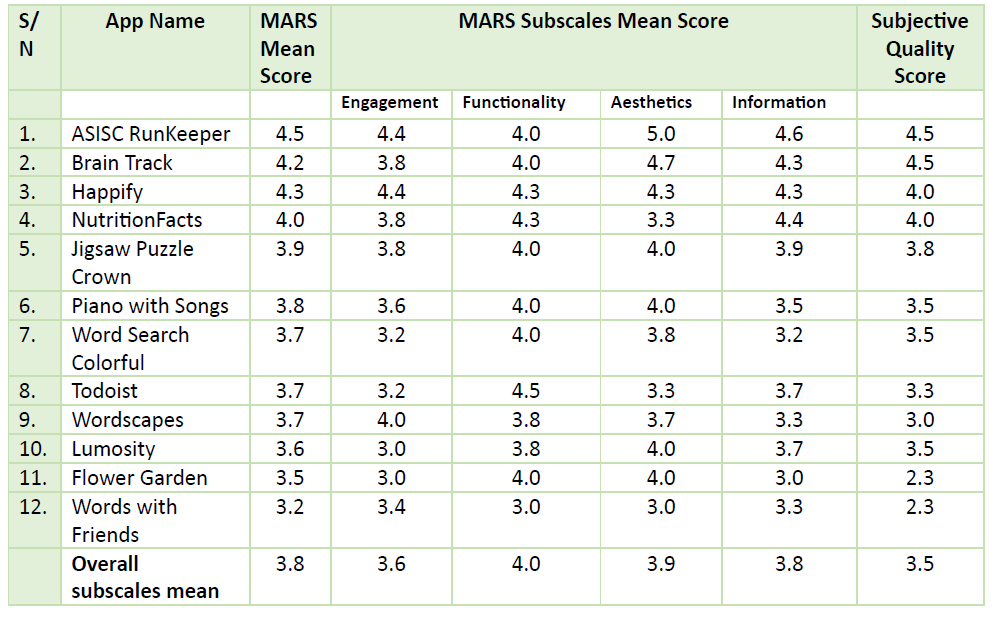
A detailed quality evaluation of the 12 eligible apps was conducted using the MARS. Three apps achieved an overall MARS score between 4.0 and 4.5, while seven apps scored between 3.0 and 3.9. Overall, apps demonstrated strong performance in functionality and ease of use, with a mean functionality score of 4.0 out of 5 (range: 3.8–4.5). The remaining subscales scored between 3.6 and 3.9, with aesthetics receiving the second-highest mean score (mean = 3.9; range: 3.0–5.0). The subjective quality subscale yielded a mean score of 3.5 (range: 2.3–4.5). Table 1 summarizes the overall MARS scores, subscale means, and subjective quality ratings.
Table 1
Overall MARS and Subscale Mean Score
Brief overview of eligible apps
The eligible apps addressed various aspects of dementia prevention and, for reporting purposes, were categorized into three groups: lifestyle modification apps (n = 2), stress-relieving apps (n = 4), and cognition-stimulating apps (n = 6).
Lifestyle modification apps included ASICS RunKeeper and NutritionFacts, which focus on promoting physical activity and healthy dietary habits. These apps provide features such as activity tracking and nutritional guidance, enabling users to make informed lifestyle choices. Stress-relieving apps, Happify, Todoist, Piano with Songs, and Flower Garden, offer mindfulness exercises, task organization tools, and recreational activities aimed at reducing stress and enhancing overall well-being. Cognition-stimulating apps included Brain Track, Jigsaw Puzzle Crown, Wordscapes, Word Search Colorful, Lumosity, and Words with Friends. These apps support cognitive engagement by providing mental challenges and opportunities for social interaction, thereby promoting cognitive stimulation and maintenance.
Collectively, apps across all three categories may support users in adopting healthier behaviours and fostering social connections through digital platforms. In doing so, they have the potential to address several modifiable dementia risk factors, such as hypertension, social isolation, cognitive inactivity, and depression, as identified by the Lancet Commission (Livingston et al., 2024). To support informed app selection, comparison tables in the following sections summarize key features within each category, enabling users to choose apps aligned with their personal preferences and health goals.
Lifestyle modification apps
The Lancet Commission highlighted the importance of addressing modifiable dementia risk factors, including hypertension, elevated low-density lipoprotein cholesterol, physical inactivity, diabetes, and obesity (Livingston et al., 2024). Multidomain interventions targeting health behaviours are emphasized as particularly effective for dementia prevention, especially when personalized and supported by digital tools such as mobile applications (Livingston et al., 2024). Lifestyle modification apps are therefore well positioned to support prevention efforts by promoting physical activity and improved nutrition (The Crim Fitness Foundation, 2023; Greger, 2025). Two eligible apps were identified within this category: ASISC RunKeeper and NutritionFacts.
ASICS RunKeeper received an overall MARS score of 4.5 out of 5 and demonstrated particularly strong performance in aesthetics (5.0/5) and information quality (4.6/5). The app encourages sustained engagement in physical activity through features such as guided workouts, personalized training plans, virtual challenges, and a supportive user community (The Crim Fitness Foundation, 2023). By promoting regular physical activity, ASICS RunKeeper addresses key dementia risk factors associated with physical inactivity and cardiovascular health.
The NutritionFacts app, also known as Dr. Greger’s Daily Dozen app, achieved an overall MARS score of 4.0 out of 5 and is designed to support users in adopting healthier dietary patterns (Greger, 2025). The app allows users to track daily consumption of recommended food groups, plan meals, and access evidence-based educational videos. It incorporates a comprehensive nutrition database derived from the United States Department of Agriculture (USDA), encompassing information on over 8,000 food items (Greger, 2025; NutritionFacts, n.d. b). Users can monitor their intake in relation to Daily Reference Intake (DRI) guidelines based on gender (Google Play, n.d. a). The Daily Dozen feature supports consistent tracking of essential nutrients and food groups, reinforcing healthy eating behaviors (NutritionFacts, n.d. b).
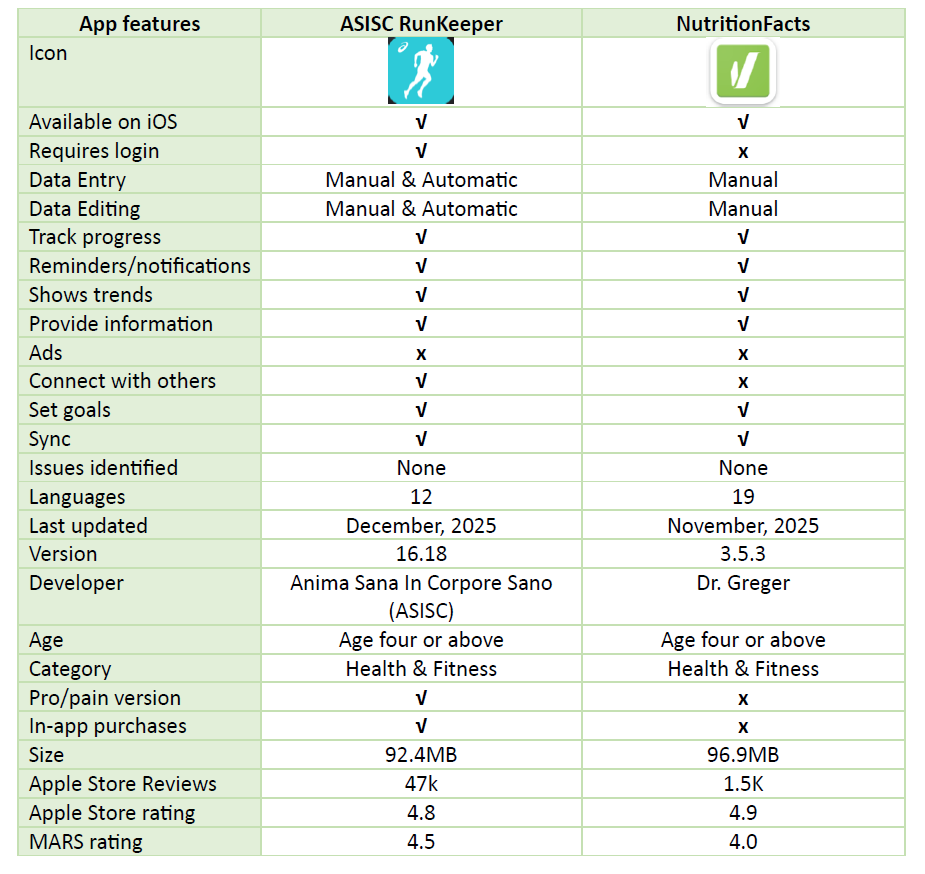
Together, these lifestyle modification apps demonstrate the potential of mobile technologies to support improvements in physical activity and nutrition. By targeting key modifiable risk factors identified in the 2024 Lancet Commission report, these apps may contribute to broader, population-level strategies for dementia prevention. A detailed comparison of the lifestyle modification apps is presented in Table 2.
Table 2
Lifestyle modification apps comparison table
Stress relieving apps
Although stress reduction is not identified as a discrete modifiable risk factor in the Lancet Commission reports (Livingston et al., 2020; Livingston et al., 2024), chronic stress is implicitly addressed through related factors such as depression, social isolation, and sleep disturbance, all of which are recognized contributors to dementia risk. Digital technologies may therefore play an important supportive role in stress reduction by facilitating mindfulness practices, improving organization, and encouraging leisure-based engagement.
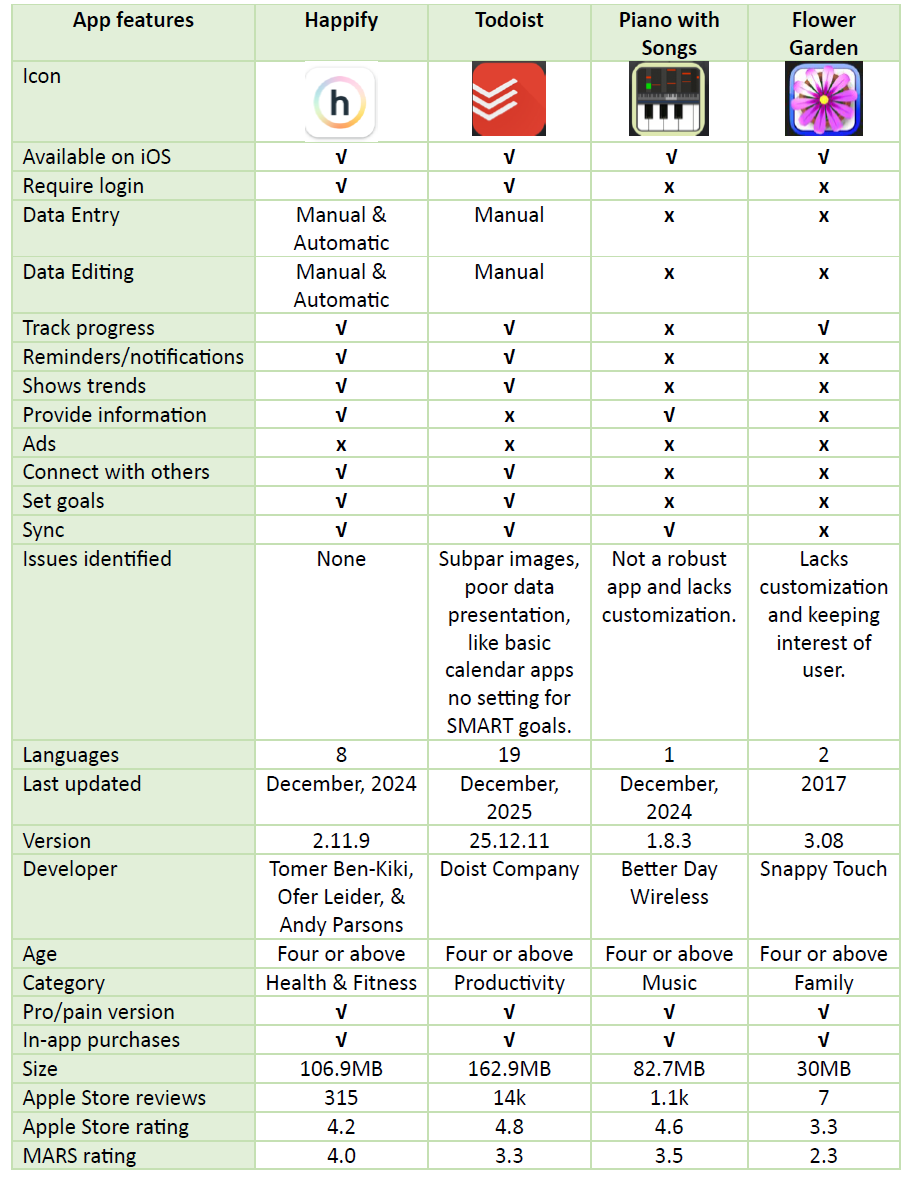
Four eligible apps were identified within this category: Happify, Todoist, Piano with Songs, and Flower Garden (Happify Inc., 2025; Metraux, 2021). Among these, Happify primarily targets mindfulness and emotional well-being, Todoist functions as an organizational and task-management tool, and Piano with Songs and Flower Garden provide entertainment-based activities intended to promote relaxation and stress relief.
The Happify app aims to enhance users’ emotional well-being by applying principles of positive psychology to support individuals in developing resilience and leading more meaningful lives (Happify Inc., 2025). Within this category, Happify achieved the highest overall MARS score (4.3/5), reflecting strong performance across engagement, information quality, and aesthetics. By promoting mindfulness and emotional regulation, the app may indirectly address dementia risk factors associated with depression and psychological distress.
In contrast, Todoist is a productivity-focused app designed to assist users in organizing and managing personal and professional tasks. The app holds a high Apple App Store rating of 4.8 out of 5, based on approximately 14,000 user reviews (Todoist, n.d.), suggesting strong user acceptance and perceived utility. Effective task management may support stress reduction by helping users balance work, social, and personal responsibilities, thereby potentially mitigating chronic stress and related cognitive and emotional strain (Metraux, 2021).
Two entertainment-based apps, Piano with Songs and Flower Garden, were identified as supporting stress-relieving leisure activities. Piano with Songs offers an intuitive interface that allows users to learn and play piano pieces, fostering creativity, skill development, and a sense of accomplishment (Apple Inc., 2025). Similarly, Flower Garden provides a virtual gardening experience in which users plant, nurture, and observe flowers growing in visually appealing clay pots (AcTo Dementia, n.d.). Through calming aesthetics and interactive engagement, Flower Garden promotes relaxation and may contribute to enhanced psychological well-being (AcTo Dementia, n.d.).
Table 3 presents a comparative overview of the stress-relieving apps, highlighting their differing emphasis on mindfulness, organization, and entertainment-based relaxation. Collectively, these apps illustrate the diversity of digital strategies available to support stress reduction and emotional well-being, which may indirectly contribute to dementia prevention by addressing psychosocial risk factors identified in the Lancet Commission reports.
Table 3
Stress relieving apps comparison table
Cognition stimulating apps
The 2024 Lancet Commission report underscores the importance of sustained cognitive activity as a key strategy for reducing dementia risk, emphasizing cognitive stimulation as a core component of dementia prevention (Livingston et al., 2020; Livingston et al., 2024). Six eligible cognition-stimulating apps were identified in this review, each employing game-based or task-oriented approaches to support cognitive engagement.
Among these apps, Brain Track achieved the highest overall MARS score within this category (4.2 out of 5). Developed by Dementia Australia in collaboration with Deakin University, Brain Track is specifically designed to promote brain health, enhance cognitive functioning, and support healthy aging (Dementia Australia, 2025). Despite being downloaded more than 50,000 times, the app did not have enough user reviews to generate a public star rating at the time of evaluation.
Lumosity is another widely recognized cognitive training app that features a range of games targeting cognitive domains such as memory, attention, problem-solving, and processing speed (Google Play, 2025b.). The app is generally perceived as easy to navigate, with a clean layout, well-organized tabs, and visually appealing design, which may support sustained user engagement.
The Jigsaw Puzzle Crown app offers over 10,000 colorful jigsaw puzzles, providing users with a relaxing yet cognitively engaging activity that may help sharpen visuospatial skills and mental acuity (Google Play, n.d. b). While the app’s visually appealing interface supports engagement, limited customization options may constrain the overall user experience.
Several word-based apps, including Wordscapes, Word Search Colorful, and Words with Friends, were also identified as providing effective cognitive stimulation. These apps challenge users to identify hidden words or solve vocabulary-based puzzles, combining elements of crossword and word-search formats to enhance language skills, attention, and problem-solving abilities. Such activities have been associated with cognitive engagement and may contribute to reduced dementia risk (Bernal, 2017; Cyber Infrastructure, n.d.; Google Play, n.d. e). Notably, Words with Friends incorporates a social gaming component that enables users to play with friends, potentially supporting both cognitive and social engagement. However, users have reported occasional technical issues, including slow loading times and frequent advertisements, which may detract from the overall user experience (Google Play, n.d. d).
In summary, Table 4 presents a comparative overview of cognition-stimulating apps included in this review. Collectively, these apps demonstrate a diverse range of game-based approaches to cognitive engagement, catering to different user preferences and needs. By supporting ongoing cognitive activity, these digital tools may play a complementary role in strategies aimed at maintaining brain health and reducing dementia risk.
Table 4
Cognition stimulating apps comparison table
Discussion
This app review identified 12 freely available apps with the potential to support dementia prevention among the public. The apps were categorized into lifestyle modification, cognitive stimulation, and stress-relieving apps, reflecting domains consistently associated with dementia risk reduction. Dementia is a multifactorial condition shaped by multiple modifiable risk factors, and evidence highlights physical fitness, healthy dietary practices, stress management, and cognitive engagement as key protective behaviors (Son et al., 2024; Livingston et al., 2024; Ali et al., 2024). The diversity of app categories identified in this review aligns with these prevention domains and highlights the potential role of accessible digital tools in population-level dementia prevention.
Findings from this review are consistent with prior research. Ali et al. (2024), in a systematic review of 152 dementia-related apps, reported that most apps addressing modifiable lifestyle behaviours focused on a single risk factor rather than adopting a multimodal approach. Similarly, lifestyle modification apps in the present review primarily targeted isolated behaviours such as physical activity or nutrition. Ali et al. (2024) also identified cognitive stimulation apps as the most common category in dementia prevention, a finding mirrored in this study, where half of the reviewed apps addressed cognitive engagement. Together, these findings suggest that while dementia-related apps are increasingly available, most emphasize cognitive stimulation or single-behavior interventions, highlighting the need for more integrated, multi-domain prevention tools.
Previous studies have demonstrated that apps can support health behaviour change, improve health outcomes, and enhance user engagement in managing dementia-related risk factors (Johari et al., 2025; Ye et al., 2023; Maab et al., 2022). However, much of the information available about these apps originates from commercial platforms such as Google Play and the Apple App Store rather than from peer-reviewed research. This reliance on non-academic sources raises concerns regarding the scientific validity of many apps claiming to support dementia prevention and emphasizes the need for rigorous evaluation and improved visibility of evidence-based options. While Charante et al. (2024) suggested that apps may modestly reduce dementia risk, Horath (2023) noted that the overall quality of dementia-related apps remains insufficient due to limited scientific support. This review highlights this challenge, as only 12 of the 94 apps initially screened met the eligibility criteria, and no evidence-based studies were identified for the eligible apps targeting dementia prevention. Future research should prioritize the rigorous evaluation of both free and paid apps and examine their effectiveness across diverse populations, including different cultural and ethnic groups. Qualitative research exploring user engagement, acceptability, and sustained use is also needed.
Although apps show promise, the current evidence base remains limited. Existing research has largely focused on apps designed for dementia care, including non-pharmacological interventions aimed at improving quality of life for individuals living with dementia and their caregivers (Ye et al., 2023; Dhanyamraju, 2024). These studies predominantly reflected reactive approaches rather than proactive prevention strategies (Alzheimer’s Caregiver Network, 2025; Zou et al., 2024). The limited number of eligible apps identified in this review highlights the broader gap in evidence-based mobile health tools for dementia prevention and reinforces the need for a paradigm shift toward preventive, proactive strategies in dementia research and healthcare (Waldman & Terzic, 2020).
Overall, apps are increasingly recognized as accessible tools for promoting health and well-being and may play a meaningful role in supporting brain health and mitigating dementia risk factors (Ali et al., 2024; Piendel et al., 2023). Given projected population aging and the anticipated rise in dementia prevalence, prioritizing dementia prevention research, including the systematic evaluation of apps as scalable and accessible interventions, is essential.
Limitation and Recommendations
This study has some limitations that warrant consideration. First, the exclusion of paid apps may have led to the omission of high-quality tools, thereby limiting the comprehensiveness of the findings. Second, the dynamic nature of the app marketplace poses a challenge, as new apps are continuously introduced and existing ones are frequently updated. Consequently, the findings may become outdated over time. Continued research and periodic reviews will be essential to maintain relevance and accuracy in this rapidly evolving domain. Despite these limitations, the integration of mobile apps into dementia prevention strategies remains highly promising. Such tools offer individuals opportunities to engage in proactive health management and contribute to broader public health objectives.
Conclusion
This review highlights the growing potential of mobile apps as accessible tools for dementia prevention. By systematically evaluating 12 freely available iOS apps using the Mobile Application Rating Scale (MARS), this study identified three primary categories: lifestyle modification, stress relief, and cognitive stimulation, that align with evidence-based dementia prevention strategies. While most apps demonstrated strong functionality and usability, overall quality varied, and few adopted a multidomain approach capable of addressing multiple risk factors simultaneously.
These findings underscore both the promise and the limitations of current app-based dementia prevention tools. Although mobile apps may empower individuals to engage in proactive health behaviors, the lack of rigorous scientific validation and reliance on commercial app-store information remain significant challenges. Future research should prioritize the development, evaluation, and dissemination of integrated, evidence-based apps that address multiple modifiable risk factors and ensure inclusivity across diverse cultural and demographic populations. As dementia prevalence continues to rise globally, leveraging mobile technology represents a scalable and cost-effective opportunity to support brain health and advance public health goals.
References
AcTo Dementia. (n.d.). Flower Garden Review. https://www.actodementia.com/flowergardenreview
Ali, S., Alizai, H., Hagos, D. J., Rubio, S. R., Calabia, D., Serrano Jimenez, P., Senthil, V. A., & Appel, L. (2024). mHealth apps for dementia, Alzheimer Disease, and other neurocognitive disorders: Systematic search and environmental scan. Journal of Medical Internet Research mobile Health and ubiquitous Health, 12, e50186. https://doi.org/10.2196/50186
Alzhemier’s Caregiver Network. (2025). 12 apps designed for people living with Alzheimer’s disease and their caregivers. htps://alzheimerscaregivers.org/2023/12/05/12-apps-designed-for-people-living-with-alzheimers-disease-and-their-caregivers/
Apple Inc. (2025). Piano with Songs on the App store. https://apps.apple.com/us/app/piano-with-songs/id408878018
Apple Inc. (n.d.). Flower Garden – Grow flowers and send bouquets – App store. https://apps.apple.com/us/app/flower-garden-grow-flowers-and-send-bouquets/id311265471
ASICS RunKeeper. (2025). Together, we run. https://runkeeper.com/cms/
ASICS Runner App Incorporation. (2025). ASICS RunKeeper App: The basics. https://runkeeper.com/cms/app/asics-runkeeper-app-the-basics/
Bhattacharya, A. & Florez-Arango, J. F. (2025). Cluster-based predictive modeling of user ratings for physical activity apps using mobile app rating scale (MARS) dimensions: Model development and validation. Journal of Medical Internet Research, 2025 (13), e70987. https://mhealth.jmir.org/2025/1/e70987
Bernal, K. J. (2017). Playing games has it benefits- Wordscapes – A brain challenging fun game by People Fun! Medium. https://medium.com/cictwvsu-online/paying-games-has-its-benefits-wordscapes-a-brain-challenging-fun-game-by-peoplefun-ade671b58a7b
Charante, E. P. M., Hoevenaar-Blom, M. P., Song, M., Andriey, S., Barnes, L., Birck, C., Brooks, R., Coley, N., Eggink, E, Georges, J., Hafdi, M., Gool, W. A., Handels, R., Hou, H., Lyu, J., Niu, Y., Song, L., Wang, W., Wang, Y., Wimo, A., Yu, Y., Zhang, J., Zhang, W., Brayne, C., Wang, W., & Richar, E. (2024). Prevention of dementia using mobile phone applications (PRODEMOS): A multinational, randomised, controlled effectiveness-implementation trial. The Lancet Healthy Longevity, 5(6), e431-442. https://doi.org/10.1016/S2666-7568(24)00068-0
Chaudhuri, S., & Choudhury, A. (2025). Todoist Review: Features, benefits, pricing, and cons. Geek Flare. https://geekflare.com/software/todoist-review/
Choi, J., Chung, C., & Woo, H. (2021). Diet-related mobile apps to promote healthy eating and proper nutrition: A content analysis and quality assessment. International Journal of Environmental Research and Public Health, 18(7), 3496. https://doi.org/10.3390/ijerph18073496
Cyber Infrastructure. (n.d.). Wordscapes- Detailed analysis by experts. https://www.cisin.com/growth-hacks/cost-and-feature-to-develop-software-like-wordscapes/
Dementia Australia. (2025). Brain Track app. Health Direct. https://www.healthdirect.gov.au/braintrack-app
Dhanyamraju, S. (2024). 10 best mobile apps for dementia patients. Lone Star Neurology. https://lonestarneurology.net/blog/mobile-apps-for-dementia-patients/
Doist. (n.d.). At Doist, we do things differently. https://doist.com/about-us
Doist Incorporation. (2025). Clarity, finally. Todoist. https://www.todoist.com
Gibbs, S. (2013). RunKeeper bought by Asics in latest sports brand app acquisition. https://www.theguardian.com/technology/2016/feb/12/runkeeper-asics-sports-brand-app-acquisition
Google Play. (2025a). ASICS RunKeeper – Run Tracker. https://play.google.com/store/apps/details?id=com.fitnesskeeper.runkeeper.pro&hl=en_CA
Google Play. (2025b). Lumosity: Brain training games. https://play.google.com/store/apps/details/Lumosity_Brain_Training_Games?id=com.lumoslabs.lumosity&hl=en_GB
Google Play. (n.d. a). Dr. Greger’s Daily Dozen. https://play.google.com/store/apps/details?id=org.nutritionfacts.dailydozen&hl=en_CA
Google Play. (n.d. b). Jigsaw Puzzle Crown: HD Games. https://play.google.com/store/apps/details?id=tek.games.net.jigsawpuzzle&hl=en_CA
Google Play. (n.d. c). Wordscapes. https://play.google.com/store/apps/details?id=com.peoplefun.wordcross&hl=en_CA
Google Play. (n.d. d). Words with Friends. https://play.google.com/store/apps/details?id=com.zynga.words3&hl=en_CA
Google Play. (n.d. e). Word Seach Colorful. https://play.google.com/store/apps/details?id=com.wixot.wordsearch&hl=en_CA
Greger, M. (2021). Dr. Greger’s daily dozen app [Video]. YouTube. https://www.youtube.com/watch?v=-tOdfgO31RA
Greger, M. (2025). Independent. The Vegan Society. https://www.vegansociety.com/
Happify Inc. (2025). Our Story. https://www.happify.com/public/about/
Horath, I. (2023). The quality of most dementia apps is insufficient. Feirdrich-Alexander University. https://www.fau.eu/2023/03/news/research/the-quality-of-most-dementia-apps-is-insufficient/
Johari, N. F. M., Ali, N. M., Salim, M. H., & Abdullah, N. A. (2025). Factors driving the use of mobile health app: Insights from a survey. Mobile Health, 11, 12. https://doi.org/10.21037/mhealth-24-44
Ki, E.J., Jang, J., & Kang, D.Y. (2025). Evaluating mobile mental health apps using the Mobile Application Rating Scale (MARS) in the U.S. Advances in Mental Health, 23(2), 222–238. https://doi.org/10.1080/18387357.2024.2388680
Lef, H., Swoboda, W., Schobel, J., Hieber, D., & Holl, F. (2024). Insights into the quality of mobile health apps: Preliminary results of an analysis of MARS scores. Studies in Health Technology and Informatics, 316, 420–421. https://doi.org/10.3233/SHTI240438
Livingston, g., Huntley, G., Liu, K. Y., Costafreda, S. G., Alladi, S., Ames, D., Banerjee, S., Burns, A., Brayne, C., Fox, N. C., Cleusa, P. F., Gitlin, L. N., Howard, R., Kales, H. C., Kivimaki, M., Larson, E. B., Nakasujja, N., Rockwood, Samus, Q., Shirai, Q., Singh-Manoux, A., Scheider, L. S., Walsh, S., Yao, Y., Sommerlad, A., & Mukadam, N. (2024). Dementia prevention, intervention, and care: 2024 report of the Lancet standing Commission. The Lancet Commission, 404, 572-628. https://doi.org/10.1016
Livingston, G., Huntley, J., Sommerland, A., Ames, D., Ballard, C., Banerjee, S., Brayne, C., Burns, A., Cohen-Mansfield, J., Cooper, C., Costafreda, S. G., Dias, A., Fox, N., Gitlin, L. N., Howard, R., Kales, H. C., Kivimaki, M., Larson, E. B., Ogunniyi, A., Orgeta, V., Ritchie, K., Rockwood, K., Sampson, E. L., Samus, Q., Schneider, L. S., Selbaek, G., Teri, L., & Mukadam, N. (2020). Dementia prevention, intervention, and care: 2020 report of the Lancet Commission. The Lancet Commission, 396(10248), 413-446. https://doi.org/10.1016/S0140-6736(20)30367-6
Lumosity. (2025). Discover what your mind can do. https://app.lumosity.com/landing
Lumosity. (2024). Purchases & Refunds. https://help.lumosity.com/hc/en-us/articles/202171930-What-is-the-cost-of-a-Lumosity-subscription
Maab, L., Freye, M., Pan, C. C., Dassow, H. H., Niess, J., & Jahnel, T. (2022). The definitions of health apps and medical apps from the perspective of public health and law: Qualitative analysis of an interdisciplinary literature overview. Journal of Medicine Internet Research mHealth and uHealth, 10(10), e37980. https://doi.org/10.2196/37980
Matin, M., Joshi, T., Greger, M., Bin Matin, F., Jó?wik, A., Wierzbicka, A., Horba?czuk, J. O., Willschke, H., & Atanasov, A. G. (2023). Use of #NutritionFacts to promote evidence-based nutrition information: X (formerly Twitter) hashtag analysis study. Frontiers in Public Health, 11, 1255706. https://doi.org/10.3389/fpubh.2023.1255706
Metraux, J. (2021). How this app helps me balance work and grad school. Business Insider. https://www.businessinsider.com/guides/learning/todoist-app-review
Moher, D., Liberati, A., Tetzlaff, J., Altman, D. G., & PRISMA Group (2009). Preferred reporting items for systematic reviews and meta-analyses: the PRISMA statement. PLoS Medicine, 6(7), e1000097. https://doi.org/10.1371/journal.pmed.1000097
NutritionFacts. (n.d. a). What is the healthiest diet? https://nutritionfacts.org
NutritionFacts. (n.d. b). Healthy eating guides and nutrition handouts. https://nutritionfacts.org/healthkit/
Piendel, L., Valis, M., & Hort, J. (2023). An update on mobile applications collecting data among subjects with or at risk of Alzheimer’s disease. Frontiers, 15 (2023). https://doi.org/10.3389/fnagi.2023.1134096
PRISMA Executive. (2025). PRISMA flow diagram. https://www.prisma-statement.org/prisma-2020-flow-diagram
Salihefencdic, A. (n.d.). Systemist. Todoist. https://www.todoist.com/productivity-methods/systemist
Sameer. (2025). From concept to launch: Building your own brain training app like Lumosity. Apptunix. https://www.apptunix.com/blog/build-a-brain-training-app-like-lumosity/
Stoyanov, S. R. (2016). MARS training video. [Video]. YouTube. https://www.youtube.com/watch?v=25vBwJQIOcE
Stoyanov, S. R., Hides, L., Kavanagh, D. J., Zelenko, O., Tjondronegoro, D., & Mani, M. (2015a). Mobile app rating scale: A new tool for assessing the quality of health mobile apps. Journal of Medical Internet Research Mobile Health and Ubiquitous Health, 3(1), e27. https://doi.org/10.2196/mhealth.3422
Stoyanov, S.R., Hides, L., Kavanagh, D.J., Wilson, H. (2016). Development and validation of the user version of the Mobile Application Rating Scale (uMARS). Journal of Medical Internet Research Mobile Health and Ubiquitous Health, 4(2), e72. https://mhealth.jmir.org/2016/2/e72/
Son, S., Speechley, M., Zou, G. Y., Kivipelto, M., Mangialasche, F., Feldman, H. H., Chertkow, H., Belleville, S., Nygaard, H., Hachinski, V., Pieruccini-Faria, F., & Montero-Odasso, M. (2024). Potentially modifiable dementia risk factors in Canada: An analysis of Canadian longitudinal study on aging with a multi-country comparison. The Journal of Prevention of Alzheimer’s disease, 11(5), 1490–1499. https://doi.org/10.14283/jpad.2024.105
Terhorst, Y., Phillipi, P., Sander, L. B., Schultchen, D., Paganini, S., Bardus, M., Santo, K., Knitza, J., Machado, G. C., Schoeppe, S., Bauerei, N., Portenhauser, A., Domhardt, M., Walter, B., Krusche, M., Baumeister, H., & Messner, E. (2020). Validation of the Mobile Application Rating Scale (MARS). PLOS One, 15(11), e0241480. https://doi.org/10.1371/journal.pone.0241480
The Crim Fitness Foundation. (2023). The ASICS RunKeeper app training manual. https://crim.org/wp-content/uploads/2023/03/ASICS_Runkeeper_Training-Manual-min.pdf
Todoist. (n.d. a). On top of it. https://www.todoist.com/features
Todoist. (n.d. b). Help. https://www.todoist.com/help/categories/get-started/guides
Vaghefi, I., & Tulu, B. (2019). The continued use of mobile health apps: Insights from a longitudinal study. Journal of Medicine Internet Research Mobile Health and Ubiquitous Health, 7(8), e12983. https://doi.org/10.2196/12983
Virani, A., Duffett-Leger, L., & Letourneau, N. (2019). Parenting apps review: in search of good quality apps. Mobile Health, 5, 44. https://doi.org/10.21037/mhealth.2019.08.10
Waldman, S. A., & Terzic, A. (2019). Health care evolves from reactive to proactive. Clinical Pharmacology and Therapeutics, 105(1), 10–13. https://doi.org/10.1002/cpt.1295
Watson, B. (2023). Mobile apps for accessibility. Make Things Accessible. https://www.makethingsaccessible.com/guides/mobile-apps-for-accessibility/
Ye, B., Chu, C. H., Bayat, S., Babineau, J., How, T. V., & Mihailidis, A. (2023). Researched apps used in dementia care for people living with dementia and their informal caregivers: systematic review on app features, security, and usability. Journal of Medical Internet Research, 25, e46188. https://doi.org/10.2196/46188
Zou, N., Xie, B., He, D., Hilsabeck, R., & Aguirre, A. (2024). mHealth apps for dementia caregivers: Systematic examination of mobile apps. Journal of Medicine Internet Research, 7, e58517. https://doi.org/10.2196/58517
Zynga. (2025). The world’s most popular social mobile word game. https://www.zynga.com/games/words-with-friends/
Author Bios
Kulvir Moudgil, RN, BScN, MN
Kulvir is a registered nurse at Royal Inland Hospital in Kamloops, British Columbia, and a Master of Nursing graduate student at Thompson Rivers University. Her academic and clinical interests focus on dementia prevention using technology and on enhancing public education and support related to cognitive health. Email:kaurk191@mytru.ca
Anila Virani, PhD, RN, BScN
Dr. Virani is a registered nurse with over 25 years of nursing experience. She is currently an Assistant Professor in the School of Nursing at Thompson Rivers University, Canada. Her scholarship focuses on health informatics, mHealth, stimulation-based learning, AI-enhanced education, and innovative teaching stratetgies to advacnce nursing education and practice. E-mail: avirani@tru.ca
Acknowledgement
The author is grateful for Thompson Rivers University, Kamloops support and generosity through a Ken Lepin Research Award.


Recent articles
- Index of volume 21 number 321 Sep 2026
- Cyber Security Awareness Month in the Age of AI21 Sep 2026
- Are we supporting the next generation of nurses to be AI proficient or AI dependent?21 Sep 2026
- Designing What AI Makes Possible in Healthcare21 Sep 2026
- Cybersecurity Threats to Hospital Information Systems: A Narrative Review of Risks, Patient-Safety Impacts, and Defensive Strategies with Implications for the United States21 Sep 2026