
Nurse Practitioners’ Views and Opinions on Artificial Intelligence Scribe Technology: An Infodemiology Study

by Rebecca Todd, RN, BScN, MN-NP Student
Dr. Anila Virani, PhD, RN, BScN, MN
Dr. Lisa Creelman, DNP, MScN, NP(F)
Thompson Rivers University, Canada
Citation: Todd, R., Virani, A., & Creelman, L. (2026). Nurse practitioners’ views and opinions on Artificial Intelligence Scribe Technology: An infodemiology study. Canadian Journal of Nursing Informatics, 21(1). https://cjni.net/journal/?p=16084

Abstract
Background: AI scribes are an emerging technology with limited research that explores its use, benefits and limitations in the healthcare field. Nurse practitioners are in a favorable position to incorporate AI scribes into their practice.
Objective: This study aims to identify healthcare practitioners’ opinions and views on the usage of AI scribe technology in practice and whether its use may reduce documentation burden, decrease workload, and improve overall job satisfaction among healthcare practitioners, including nurse practitioners.
Methods: Data were collected from publicly available posts on Reddit forums. A total of 108 posts containing 3315 comments were analyzed using Braun and Clarke’s thematic analysis.
Results: Six themes were identified. Users described several benefits of using AI scribe technology, including decreased time spent on documentation, increased efficiency, and improved patient interactions. Limitations included legal or privacy concerns, cost, and accuracy challenges related to AI hallucinations.
Conclusion: While AI scribes showed increased productivity and efficiency for most users, progressing system-level developments regarding ethical, legal, and privacy concerns are cause for hesitation in some users. Further research is needed to develop processes for interoperability, regulations and safeguards, digital literacy and training, and to evaluate patients’ experiences and the integration with the nurse practitioner practice model.
Background
Artificial intelligence (AI) scribes are an emerging technology that healthcare practitioners (HCP) can incorporate into their toolbox to enhance efficiency and improve work-life balance. AI scribes utilize ambient listening technology (ALT), natural language processing (NLP), and machine learning (ML) to analyze and document patient and HCP interactions. ALT uses a microphone to listen and record the patient interaction, then NLP analyzes the data (Biro et al., 2025; Bolaños, 2021). Additionally, some programs also use ML to learn automatically without requiring in-the-moment direction to do so (Bolaños, 2021). It can be adjusted to fit charting templates and is intelligent enough to adapt to the HCP’s writing style. AI Scribes can improve workflow and save time on documentation (Ma et al., 2025; Robeznieks, 2024; Sran, 2024), subsequently improving patients’ experiences and decreasing practitioner burnout and turnover (Evans et al., 2025). HCPs have noted efficiency and workflow optimization, and positive experiences and perceptions of using AI scribes in practice (Shah et al., 2025; Tierney et al., 2024; van Buchem et al., 2024). Though the benefits are fruitful, some practitioners are also wary of using AI scribes due to legal and/or privacy concerns, malpractice risks, costs, and fear of their roles being replaced by technology (Rogers & Baker, 2025).
AI scribes continue to forge their way into the healthcare field, albeit with both benefits and challenges. Sran (2024) noted that HCPs have gained two hours back in their day from decreased time spent on documentation, a main contributor of stress and burnout. This directly impacts their ability to see more patients in a day. Alongside providers having improved work satisfaction, AI scribes have made a positive impact on patients’ experiences due to reduced distractions and improved face-to-face interaction (Sran, 2024, Rogers & Baker, 2025; Tierney et al., 2024). Challenges with AI scribes include errors, bias, and reliability. A small study of two AI Scribe companies completed by Biro et al. (2025) found that there were often frequent errors made within AI-generated notes, including omission, addition, or irrelevant/misplaced text. AI scribes have the potential to form biases when enlisted in environments the data was not initially trained for (British Columbia College of Nurses & Midwives [BCCNM], n.d.-a; Doctors of BC, n.d.). Furthermore, it is not guaranteed to compose reliable information (Bolaños, 2021). For these reasons, the HCP is responsible for thoroughly reviewing and making appropriate adjustments that validate the patient encounter.
Many companies offer AI scribes for medical practice; however, AI scribes use in Canada is in its infancy. Providers in Canada currently have access to approved AI scribe companies through their employer, pay privately for the service, or are taking part in a free, one-year licensing trial by Canada Health Infoway (CHI). The trial began in June 2025 for 10,000 physicians, nurse practitioners (NPs), rural nurses, and community pediatricians to use and provide feedback on a preferred AI scribe (CHI, n.d.-a). The eligible scribe programs were vetted to ensure privacy and cybersecurity standards are met and can be linked to electronic health records. The pilot program is federally funded and requires applicants to provide meaningful feedback that will ultimately contribute to Canada’s national digital health interoperability goals. Early results are positive with many providers acknowledging improved presence during patient interactions, decreased time spent on administration tasks, and decreased cognitive burden (CHI, n.d.-b).
Canada is in the process of developing legislation specific to the use of generative AI, which includes AI scribes in healthcare. Canada’s Office of the Privacy Commissioner created a document that outlines organizations’ responsibility to comply with their provincial health privacy laws or the Personal Information Protection and Electronic Documents Act (PIPEDA). Some provinces, such as British Columbia, Ontario and Alberta are also developing specific guidelines for AI scribe use (Office of the Information and Privacy Commissioner for British Columbia [OIPC], 2026). HCPs are responsible for following the ethical and legal obligations outlined within the PIPEDA, ensuring patients understand data-storage safeguards and are providing informed consent for the use of AI scribes, and accurately documenting it (Office of the Privacy Commissioner of Canada, 2023). Under this document, HCPs must be transparent with how patients’ information is collected, used, and disclosed. Data storage is individualized per company. For example, Heidi AI, an approved AI scribe in Canada, has its own safeguards, and data is stored within Canada (Heidi Health, n.d.).
NPs are HCPs who are responsible for providing safe and effective patient care. Similar to other HCPs, they are liable for the care provided and the accuracy of the documentation that reflects such care. Documentation standards are outlined by BCCNM and do grant the usage of AI when there are appropriate policies and processes in place (BCCNM, n.d.-b). Therefore, NPs in BC can meet the BCCNM documentation standards using PIPEDA-compliant AI scribes (BCCNM, n.d.-b). However, NPs are still responsible for the “…accuracy, objectivity, and completeness of their documentation entry…” (BCCNM, n.d.-b, Standard 16a, p. 1). The documentation standards include NP-specific assessments, clear diagnostic and clinical reasoning, and timely management and follow-up planning. As NP documentation is often thorough, it raises the question whether the use of AI scribes will significantly decrease the documentation burden for NPs? Limited qualitative studies exist for the evaluation of NPs using AI scribes in practice in Canada.
Due to its novelty, there is minimal data available regarding NPs’ views and experiences of AI scribes. The CHI trial is evidence of the growing interest in AI scribes, where practitioners are being provided with a platform to discuss their opinions and attitudes toward AI scribes (CHI, n.d.-a). Notably, this information has not yet reached academic publications, particularly within Canada. For this reason, the authors chose Reddit, a social media platform, to collect public information containing users’ opinions and attitudes regarding the benefits and drawbacks of applying AI scribes in practice. Reddit is composed of numerous forums called ‘subreddits.’ Within these subreddits, users create original ‘posts’ to introduce a topic or subject matter to prompt a discussion. The ‘comments’ are what users contribute to the original post to create dialogue. Some posts contained zero comments, and others contained >50 comments. This study is not specific to NPs in Canada. The subreddits are suggestive that commenters work within healthcare, but their credentials are not verified. Unless otherwise stated, it is assumed the filtered comments came from NPs or physicians within Canada and the United States. Nonetheless, this data can help future AI scribe users make an informed decision about whether to trial or purchase a program for their own practice. This infodemiology study aims to identify HCPs’ opinions and views on the usage of AI scribes in practice and whether its use will reduce documentation burden, workload, and improve overall job satisfaction.
Methodology
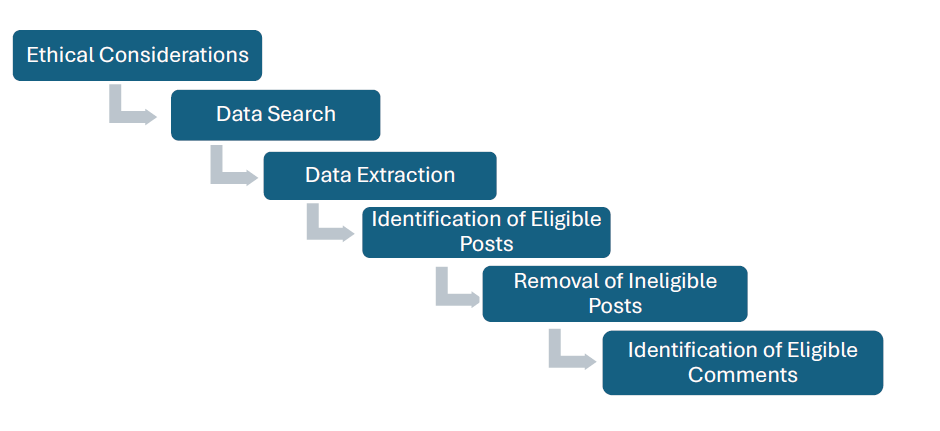
A qualitative, exploratory approach was applied to systemically identify, extract, and analyze publicly available Reddit posts and comments related to AI scribe technology. See Figure 1 for the methodological approach.
Figure 1
Methodological Approach
Ethical considerations
Data was available publicly, non-private, from Reddit subreddits and posts; thus, it did not require formal ethics board approval. Usernames were removed from the data to ensure respect for people and for privacy protection.
Data Search
Reddit was selected due to the anonymous, candid discussions that are publicly available within large asynchronous, profession-specific forums. The primary author searched Reddit forums related to AI scribes using the search terms “nurse practitioner” and “family medicine” and “AI scribe” using the “all time” feature on two separate subreddits: r/familymedicine and r/nursepractitioner. These subreddits were chosen due to their direct relevance to the topic. The author manually reviewed the relevant post titles.
Data Extraction
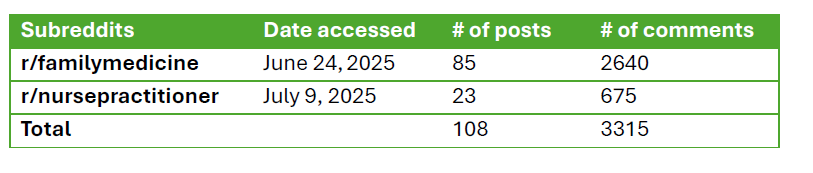
A manual search yielded 108 posts containing 3315 comments. The subreddit r/familymedicine generated 85 posts (2640 comments), and the r/nursepractitioner resulted in 23 posts (675 comments). R/nursepractitioner subreddit data was collected on June 24, 2025, while r/familymedicine subreddit data was collected on July 9, 2025. Posts made after these dates were excluded from the data collection. See Table 1: Subreddits Posts & Comments. The data was copied manually into Microsoft Word documents for organization and review. The number of relevant comments was counted manually. Although no formal file-naming system or spreadsheet structure was used in this small-scale study, the document was organized by subreddit. Notes were added within the document to indicate deleted usernames, excluded material, and comments removed during screening. This approach was selected due to the manageable dataset size and exploratory nature of the study.
Table 1
Subreddit Posts & Comments
Identification of Eligible Posts
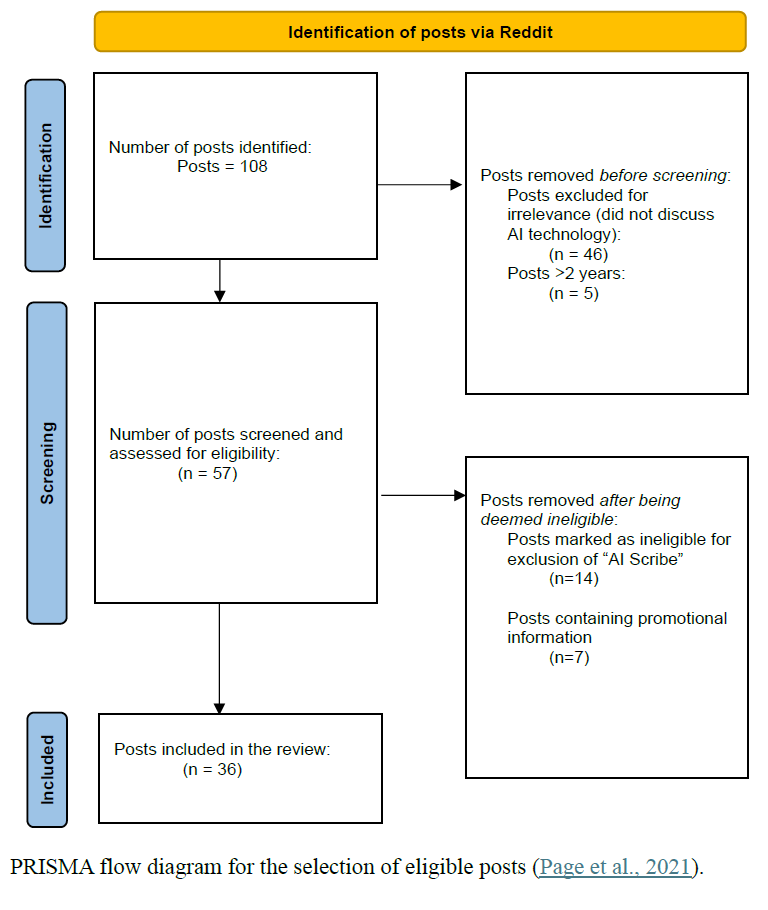
The eligibility criteria included publicly accessible posts in English that were relevant to AI technology. Posts were excluded if they were: 1) older than two years (n=5), and 2) their title did not include ‘AI’ or did not indicate its relevance to AI (n=46). Following the initial title-based screening, the posts were further screened and deemed ineligible if the posts were: 1) discussing AI in general but not AI scribes specifically (n=14) and, 2) containing promotional information (n=7). In total, 72 posts and 3115 comments were excluded from the analysis. In the final stage, a total of 28 posts from r/familymedicine and eight from r/nursepractitioner satisfied the inclusion criteria. Figure 2 showcases a PRISMA-inspired flow diagram to illustrate the screening process.
Figure 2
PRISMA Flow Diagram for Selection of Eligible Reddit Posts
Identification of Eligible Comments
Comments were included if they were: 1) in English, 2) relevant to AI scribe technology, 3) containing users’ experiences and opinions, and 4) sufficient content (e.g. did not simply agree or disagree without providing context). Comments were excluded if they were: 1) Reviews, advertisements or promotional content (e.g. discount codes or reviews of AI scribe companies), 2) written by scribe consultants, 3) irrelevant to AI scribes, 4) duplicates, 5) providing the name of an AI scribe company, 6) less than three words and lacked meaningful content (e.g. “ok thanks”), 7) irrelevant to HCPs’ experiences or opinions regarding AI scribes, and 8) asking for AI scribe recommendations (e.g. Is Dax better than Heidi?). Although the total number of comments removed at each stage of screening was not formally recorded, 200 comments were retained for the thematic analysis (157 comments from r/familymedicine and 43 comments from r/nursepractitioner).
Results
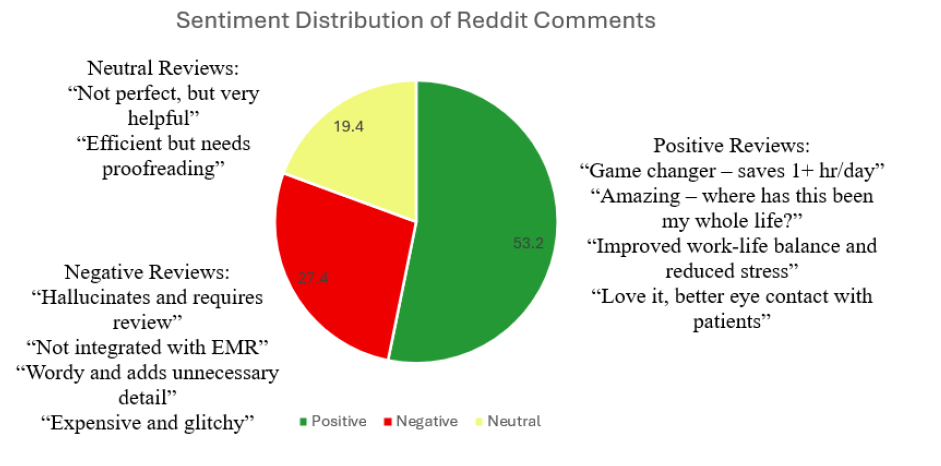
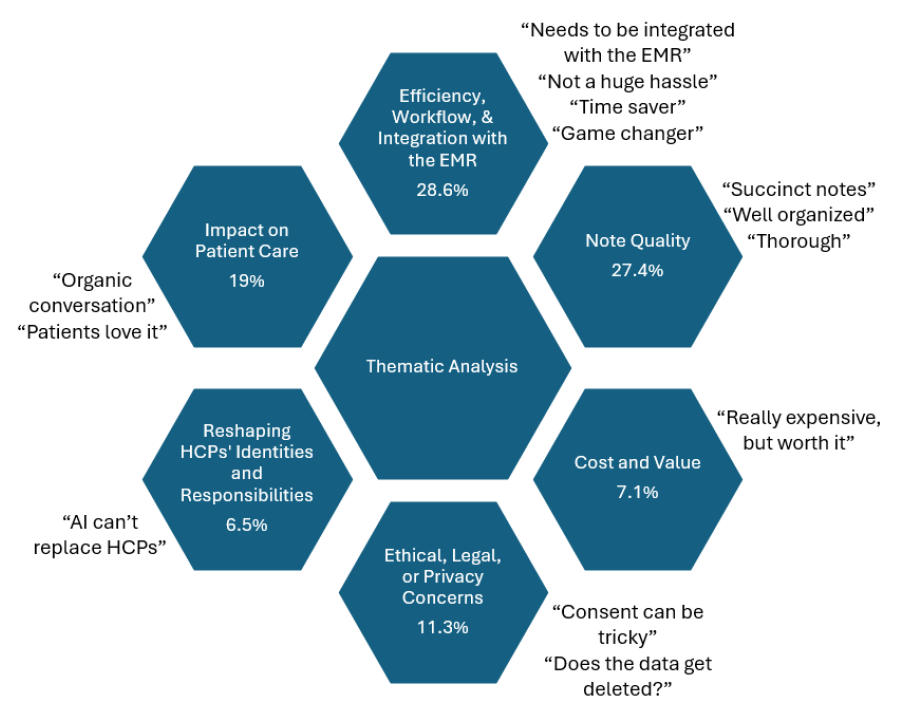
The data extracted from 200 Reddit comments was reviewed and expanded into approximately 310 distinct phrases or segments to facilitate analysis of posts into positive, negative, and neutral. This expansion was necessary as many users expressed both positive and negative experiences with AI scribes in a single comment. Of the 310 phrases, n=165 (53.2%) were positive, n=85 (27.4%) were negative, and n=60 (19.4%) were mixed or neutral. These phrases were then further analyzed and condensed into six overarching themes that reflected the perceived advantages, disadvantages, and neutral observations regarding the use of AI scribes. Of the extracted 310 phrases, the most prominent theme was Efficiency, workflow, and EMR integration n=89 (28.6%), followed by Note quality n=85 (27.4%), and Impact on patient care n=59 (19%). Themes concerning Ethical, legal, and privacy considerations accounted for 11.3% (n=35) of phrases, while Cost and value represented 7.1% (22). The least common theme Reshaping healthcare providers’ identities and responsibilities showed in 6.5% (n=20) of phrases. Figure 3 illustrates the sentiment distribution of Reddit users’ comments about AI scribes and provides examples of the types of statements categorized into each sentiment group.
Figure 3
Sentiment Distribution of Reddit Comments
Thematic Analysis
Braun and Clarke’s (2006) thematic analysis framework was used to identify and organize the data into themes. A thematic analysis of 310 phrases in both r/familymedicine and r/nursepractitioner generated six overarching themes: 1) Efficiency, workflow, and integration with the electronic medical record, 2) Note quality, 3) Impact on patient care, 4) Ethical, legal, or privacy concerns, 5) Cost and value, and 6) Reshaping healthcare providers’ identities and responsibilities.
Efficiency, Workflow, and Integration with the Electronic Medical Record (EMR)
AI scribes had a positive impact on most consumers’ workflows by saving hours of documentation time per week, allowing for lunch breaks, and ending their shifts on time. A user noted, “AI scribe has decreased my documentation time by 75%.” Most commenters found they spent less time looking at screens and were more productive during their shifts. Some mixed comments noted that overall charting burden was improved and, “…adequate fast is better than perfect slow.” Other comments noted that the AI scribe improved with user knowledge, customization of templates, and consistent usage. One commenter described modifying their workflow in response to an AI scribe handling their typed documentation, noting that, “When AI does the documentation, I feel I’ve forgotten the plan when the patient comes back for follow-up.”
Some users found AI scribes easily modifiable, integrating the use of custom templates and adjusting variability settings. Though these programs have adaptability functionalities, they could often be temperamental, glitchy, and cause some computers to freeze. Users did note that their AI scribe was “…cumbersome… and needs to be integrated with the EMR.” Users found that customization and using templates increased AI scribe usability, but some technical issues and lack of EMR integration and interoperability created frustration and added work.
Note Quality
There were differences in note quality depending on which AI scribe users worked with and/or trialed. The positive findings were that AI scribes are thorough, succinct, and catch things that the providers missed during the patient interaction. One commenter stated, “[AI scribe] picked up on the fact that my demented 86-year-old patient’s rambling was ‘paranoid delusions’ even though I didn’t address it as such.” However, others found sifting through the documentation cumbersome due to AI hallucinations and unnecessary information, and therefore, the AI scribe tended to create more work for them. AI hallucinations, in this context, refer to information being placed into the chart note that was not discussed during the interaction (Agarwal et al., 2024; Tierney et al., 2024). Some commenters found that AI scribes successfully captured diagnoses and symptoms in the appropriate context and they rarely found hallucinations. One user noted, “…the pre-charting function is great when reviewing before the patient comes in.” However, the negative findings suggested AI scribes could be too wordy, “over the top,” add weird details, or miss important information. Note quality ranged from excellent to unusable, depending on which program users were using, but all practitioners recommended ongoing review and editing. Hallucinations and errors could result in a poor-quality note and impact the overall time-saving potential of AI scribes.
Impact on Patient Care
This theme addressed the impact of AI scribes on patient interactions, experiences, and care. The positive comments noted an increased ability to remain present during history-taking, “…organic conversation without typing…” during the patients’ interactions, and improved eye contact. Some comments indicated that they have been told “patients love it” and “patients enjoy the attention from [HCPs] since they’re not always typing.” Furthermore, HCPs were required to “document my physical exam findings out loud for AI scribe,” which improved transparency between HCP and patient. However, commenters were hesitant to pledge full acceptance of AI scribes as it could have negative impacts on patient care. Some users felt it would create a negative feedback loop. For example, HCPs may initially experience increased efficiency through the use of AI scribes, which streamline documentation and workflow. This improvement can prompt employers to recognize enhanced productivity and subsequently raise expectations regarding patient load. As a result, HCPs may become busier, which could reintroduce challenges such as increased workload burden, burnout, and stress. Overall, it was found that AI scribes improved the relational aspect of patient care but also raised systemic concerns about productivity pressures from employers.
Ethical, Legal, or Privacy Concerns
Commenters shared concerns regarding safeguards of patient data and gathering informed consent from patients to use AI scribes. This includes appropriate signed or verbal consents that meet the Freedom of Information and Protection of Privacy Act (FOIPPA) in Canada, or the Health Insurance Portability and Accountability Act (HIPAA) in the USA. One commenter stated, “consent can be tricky to get because AI requires a lengthy explanation,” which takes away from the patient’s appointment time. It seemed that commenters were unsure if the data was ever permanently deleted or always existed in the ‘dataverse,’ the digital environment where data is stored but never deleted. This posed further concern around the legalities of subpoenaing the audio-recorded interactions between patient and provider in the event of a malpractice liability case. For instance, some comments noted, “…lawyers would pick apart raw audio,” “just because they say the data or audio is deleted doesn’t mean it really is…” and “they could request the audio transcript for court, and this could pose an issue with tones of voice, clarity of instructions, or health plan.” Collectively, these comments stressed ongoing uncertainty surrounding the privacy and potential legal consequences of using AI scribe technology.
Cost and Value
This theme found that commenters were neutral about the cost, noting it to be reasonable and a fair price to pay when noticing improved time management and workflow. However, other comments felt the cost was either “horribly expensive” or “totally worth the investment.” Tierney et al. (2024) discussed an evaluation that compared note quality between human scribes and AI scribes. AI scribes were found to produce reliable notes, showcasing the benefit-to-cost compared to human scribes. The cost of an AI scribe was found to be more affordable than using a human scribe (Sasseville et al., 2025; Tierney et al., 2024). Duggan et al. (2025) recommended that the healthcare systems invest in this technology at sites that would most likely use and benefit from it. This would eliminate the cost for concerned practitioners who work for a health authority or employer.
Reshaping Healthcare Providers’ Identities and Responsibilities
The final theme saw users discuss fear surrounding AI scribes replacing human scribes or even HCPs. Others reflected that an AI scribe could replace a history-taking interview but would never be able to replace HCP’s ability to use experience, critical thinking, and emotional intelligence to formulate a diagnosis and/or differentials. One commenter stated, “we cannot compete with the learned experience of a computer, but [I] think humans still want humans to care for them.” New graduate HCPs thought that using AI scribes reduced learning opportunities as they developed their practice and skillset. Furthermore, users noted a lack of training or support from health authorities or employers, leaving the onus on HCPs to decipher AI scribes’ role within their practice. Overall, AI scribes contribute to the reshaping of professional roles as HCPs integrate it into practice. For instance, HCP roles evolve by reducing tasks (e.g. documentation responsibilities) and introducing new tasks related to data management and patient communication. Generally, users felt that AI scribes should be viewed as a supplemental complement to practice, rather than replacement of HCPs. See Figure 4 for a visual representation of the percentage of comments by sentiment category.
Figure 4
Percentage of Comments by Sentiment Category
Discussion
The themes indicated that users’ benefits were endorsed by improvements in productivity, patient-provider presence, and work-life balance. Some users noted that AI scribes were the beginning of a new technological era and expressed enthusiasm with their experiences. The strongest theme throughout is that using AI scribes is a practice-altering innovation for improving efficiency, decreasing burnout, and documentation and cognitive burden. These results are aligned with existing studies completed on AI scribes in healthcare. For instance, positive impacts of AI scribes were noted in previous studies and included decreased documentation time and improved productivity (Ma et al., 2025; Sasseville et al., 2025; Shah et al., 2025; Tierney et al., 2024; van Buchem et al., 2024). HCPs’ interactions with patients improved due to the increased ability to engage in conversations without looking at the computer screen (Duggan et al., 2025).
Alongside the positive comments, the study found users were deterred by AI hallucinations, lack of interoperability and training, and concerns about patients’ privacy and recordings being subpoenaed in a court case. Sasseville et al. (2025) also identified themes that included ethical considerations, technical considerations, and the increased need for training and support. Apprehension of using AI scribes due to privacy and storage concerns can be mitigated by understanding how Canada’s privacy laws protect the public, how the program collects, uses, and stores data, and how to gain informed consent (Agarwal et al., 2024).
This research aimed to identify HCP’s opinions and views on the usage of AI scribes in practice and if its use will reduce documentation burden, workload, and improve overall job satisfaction for Nurse Practitioners. The results suggest that documentation time is decreased when not confronted with significant AI hallucinations, errors, or missed information. AI scribes were found to be most beneficial when the user employs templates and adjusts variability settings. Workload and productivity were both enhanced when the AI scribe was properly implemented with training and support from employers. Documentation time was not always improved in the absence of EMR integration. A voluntary survey completed by NP Circle (2025) found that 55% of NPs in Canada are less satisfied with their job due to workload, and 49.6% due to mental health and burnout. The research within this paper provides evidence of perceived improved workload and decreased burnout by HCPs; therefore, an AI scribe could positively impact overall job satisfaction for NPs.
Limitations
The data within this infodemiology study has several limitations that have the potential to affect generalizability. There may be a sampling bias because the Reddit commenters may not represent the general population. The anonymity of Reddit users limits the ability to verify their identity or credibility, potentially limiting the authenticity of the comments. There may be contextual limitations as commenters adjust the tone of their comments to respect Reddit culture. Additionally, social media algorithms and visibility of posts may have impacted what data was observed and subsequently analyzed.
Student and Novice Nurse Practitioner Implications
NP education is offered as two to four-year programs in Canada. Upon graduation, a new NP practices at a novice level for the first three years, slowly increasing their patient panel and decreasing their appointment times (Housden et al., 2024). After practicing for three years, an NP practices within standardized metrics and is no longer considered a novice NP. Novice NPs are provided longer appointment times to account for research and development of the patient’s care plan. Gilchrist & Goldszmidt (2025) discussed the opportune time to initiate AI scribes in physician practice. They suggested experienced physicians adopt AI scribes to remain practice-ready and recommended new graduates wait until they have been practicing for two to three years. It was suggested that documenting with AI scribes removed learning opportunities for students by decreasing active participation in critical thinking and diagnostic and cognitive reasoning. Gilchrist & Goldszmidt (2025) identified that working in “cognitive discomfort” (p. 1) allows for increased learning and improved communication, both of which are important aspects for learners. Based on their commentary, the novice NP may not benefit from using AI scribes in practice until they feel more confident and comfortable in their own practice, which may align with the three-year novice period.
Future Prospects
NPs are in a favorable position to adopt AI scribes into their practice as they provide holistic, patient-centered care that often encompasses multiple patient concerns in one visit, increasing time spent on documentation. AI scribes, in research studies, have been found to decrease documentation time (Ma et al., 2025) and improve patient interactions (Robeznieks, 2024; Sran, 2024). Additionally, Ferrara (2024) suggested that NPs research and learn about AI scribes, adopt one into practice, and subsequently, improve patient care. In doing so, NPs that use AI scribes can participate in future research and collaborate with companies on AI scribe designs that fit the NP practice model. Lastly, NPs can contribute to AI scribe improvement by offering feedback that can improve hallucinations in ML AI scribes.
Future improvements to AI scribes are recommended based on the mixed and/or negative findings within this study and comparable studies. For instance, users would like to see widespread EMR integration. This would further improve the ease of access and improve efficiency. Future research could examine AI scribe interoperability and NP workflow optimization. As Canadian regulations continue to develop, future research could guide policies and procedures that safeguard patient data, including privacy and storage.
Further research regarding where the responsibility lies for digital literacy training may remove user hesitancy. Employers that fund AI scribe programs will have greater uptake of AI scribes in medical practice. With increasing numbers of NP AI scribe users, further research can be conducted on its use in clinical practice, including clinical outcomes, patient safety, and patient satisfaction.
Conclusion
This study explored the experiences of HCP opinions on using the emerging technology of AI scribes. The aim was to examine if this data could be extrapolated to make assumptions specific to NPs. For instance, whether its use reduced documentation burden, workload, and improved overall job satisfaction for NPs. Data were collected from publicly available Reddit forums, and Braun and Clarke’s thematic analysis was used to analyze the data. This resulted in six themes, including positive, negative, and mixed comments and opinions. In this infodemiology study, users’ opinions on the usage of AI scribes showed increased productivity and efficiency for most users, with a strong association for improved work-life balance and patient satisfaction. There were mixed opinions on note quality, hallucinations, and errors negatively impacting users’ fulfillment with the program. However, users expressed contentment with editing a pre-typed document vs typing the entire document. Ethical, legal, and privacy concerns can be mitigated when the HCP familiarizes themselves with the developing provincial and national policies set out to safeguard the public. The results from this research aligned with similar studies and can form a baseline for future research. Further research is needed to address interoperability, regulations and safeguards, digital literacy and training, and to address patients’ experiences with AI scribes and the integration of AI scribe technology within the NP practice model.
References
Agarwal, P., Lall, R., & Girdhari, R. (2024). Artificial intelligence scribes in primary care. CMAJ: Canadian Medical Association Journal, 196(30). https://doi.org/10.1503/cmaj.240363
Biro, J., Handley, J. L., Cobb, N. K., Kottamasu, V., Collins, J., Krevat, S., & Ratwani, R. M. (2025). Accuracy and safety of AI-enabled scribe technology: Instrument validation study. Journal of Medical Internet Research, 27(64993), 1-3. https://doi.org/10.2196/64993
Bolaños, X. (2021, September 29). Natural language processing and machine learning. Encora. https://www.encora.com/insights/natural-language-processing-and-machine-learning
Braun, V., & Clarke, V. (2006). Using thematic analysis in psychology. Qualitative research in psychology, 3(2), 77–101. https://doi.org/10.1191/1478088706qp063oa
British Columbia College of Nurses & Midwives. (n.d.-a) Using artificial intelligence in practice. https://www.bccnm.ca/NP/learning/artificial-intelligence/Pages/Default.aspx
British Columbia College of Nurses & Midwives. (n.d.-b). Documentation practice standard for nurse practitioners. https://www.bccnm.ca/NP/PracticeStandards/Pages/documentation.aspx
Canada Health Infoway. (n.d.-a). AI scribe program. Less paperwork. More time. https://aiscribe.infoway-inforoute.ca/
Canada Health Infoway. (n.d.-b). AI scribe program. Streamlining documentation and reducing administrative burden for primary care clinicians. https://www.infoway-inforoute.ca/en/featured-initiatives/ai-scribe-program
Doctors of BC. [n.d.]. Practical considerations for using AI scribes. https://www.doctorsofbc.ca/advice-support/doctors-technology-office/practical-considerations-using-ai-scribe
Duggan, M. J., Gervase, J., Schoenbaum, A., Hanson, W., Howell, J. T. III, Sheinberg, M., & Johnson, K. B. (2025). Clinician experiences with ambient scribe technology to assist with documentation burden and efficiency. JAMA Network Open, 8(2). https://doi.org/10.1001/jamanetworkopen.2duggan024.60637
Evans, K., Papinniemi, A., Ploderer, B., Nicholson, V., Hindhaugh, T., Vuvan, V., Cowley, N., tariq, A., & Thomson, H. (2025). Impact of using an AI scribe on clinical documentation and clinician-patient interactions in allied health private practice: Perspectives of clinicians and patients. Musculoskeletal Science and Practice, 78. https://doi.org/10.1016/j.msksp.2025.103333
Ferrara, S. A. (2024). Artificial intelligence and nurse practitioners – Part II. The Journal for Nurse Practitioners, 1555-4155(24). https://doi.org/10.1016/j.nurpra.2024.105197
Gilchrist, C., & Goldszmidt, M. (2025). Proceed with caution: Conceptualizing the risk of artificial intelligence scribes in medical education. Medical Teacher, 1-3. https://doi.org/10.1080/0142159X.2025.2497889
Heidi Health. (n.d.). Compliance. https://www.health.com/compliance/canada
Housden, L. M., Tantongco, M., Jiang, E., & Crowe, S. (2024). Optimizing patient care: A novel panel size calculator for primary care nurse practitioners. Canadian Journal of Nurse Practitioners, 4(1). https://doi.org/10.28984/npoj.v1i1.468
Ma, S. P., Liang, A. S., Shah, S. J., Smith, M., Jeong, Y., Devon-Sand, A., Crowell, T., Delahaie, C., Hsia, C., Lin, S., Shanafelt, T., Pfeffer, M. A., Sharp, C., & Garcia, P. (2025). Ambient artificial intelligence scribes: Utilization and impact on documentation time. Journal of the American Medical Informatics Association, 32(2), 381-385. https://doi.org/10.1093/jamia/ocae304
NP Circle. (2025, July). Job satisfaction and work conditions of nurse practitioners in Canada: Insights and challenges from a national community survey [Report]. https://drive.google.com/file/d/1jO0F0qWoPEDqOc4NpqxVWVzgmrSZeoU4/view
Office of the Information and Privacy Commissioner for British Columbia. (2026). PIPA and AI scribes: best practices for healthcare organizations in BC. https://www.oipc.bc.ca/documents/guidance-documents/3082
Office of the Privacy Commissioner of Canada. (2023, December 7). Principles for responsible, trustworthy and privacy-protective generative AI technologies. https://www.priv.gc.ca/en/privacy-topics/technology/artificial-intelligence/gd_principles_ai/
Page, M. J., McKenzie, J. E., Bossuyt, P. M., Boutron, I., Hoffmann, T. C., Mulrow, C. D., Shamseer, L., Tetzlaff, J. M., Akl, E. A., Brennan, S. E., Chou, R., Glanville, J., Grimshaw, J. M., Hróbjartsson, A., Lalu, M. M., Li, T., Loder, E. W., Mayo-Wilson, E., McDonald, S., McGuinness, L. A., … Moher, D. (2021). The PRISMA 2020 statement: an updated guideline for reporting systematic reviews. BMJ (Clinical research ed.), 372, n71. https://doi.org/10.1136/bmj.n71
Robeznieks, A. (2024). AI scribe saves doctors an hour at the keyboard every day. American Medical Association. https://www.ama-assn.org/practice-management/digital-health/ai-scribe-saves-doctors-hour-keyboard-every-day
Rogers, J. L., & Baker, M. (2025). AI in practice: Opportunities, obstacles, and outlook. The Nurse Practitioner, 50(6), 34-38. https://doi.org/10.1097/01.NPR.0000000000000326
Sasseville, M., Yousefi, F., Ouellet, S., Naye, F., Stefan, T., Carnovale, V., Bergeron, F., Ling, L., Gheorghiu, B., Hagens, S., Gareau-Lajoie, S., & LeBlanc, A. (2025). The impact of AI scribes on streamlining clinical documentation: A systematic review. Healthcare, 13, 1447. https://doi.org/10.3390/healthcare13121447
Shah, S. J., Crowell, T., Jeong, Y., Devon-Sand, A., Smith, M., Yang, B., Ma, S. P., Liang, A. S., Delahaie, C., Hsia, C., Shanafelt, T., Pfeffer, M. A., Sharp, C., Lin, S., & Garcia, P. (2025). Physician perspectives on ambient AI scribes. Journal of the American Medical Association, 8(3). https://doi.org/10.1001/jamanetworkopen.2025.1904
Sran, K. (2024). A closer look at AI utilization with electronic health record systems: Ambient listening and transcription make promising impact. Optometry Times, 16(6). https://www.optometrytimes.com/view/a-closer-look-at-ai-utilization-with-electronic-health-record-systems
Tierney, A. A., Gayre, G., Hoberman, B., Mattern, B., Ballesca, M., Kipnis, P., Liu, V., & Lee., K. (2024). Ambient artificial intelligence scribes to alleviate the burden of clinical documentation. The New England Journal of Medicine Catalyst, 5(3), 692-694. https://doi.org/10.1056/CAT.23.0404
van Buchem, M. M., Kant, I. M. J., King, L., Kazmaier, J., Steyerberg, E. W., & Bauer, M. P. (2024). Impact of a digital scribe system on clinical documentation time and quality: Usability study. Journal of Medical Internet Research, 3(60020). https://doi.org/10.2196/60020
Author Biographies
Rebecca Todd, RN, BScN, MN-NP Student
Rebecca Todd is a Registered Nurse (2016) and Nurse Practitioner (NP) student at Thompson Rivers University (TRU) with an anticipated graduation of Spring 2026. She is currently a patient care coordinator and intends to work as an acute care NP and/or in a primary care practice with a focus on prenatal/postnatal care. AI scribes are of interest to Rebecca because she feels the benefits outweigh the potential risks, and Rebecca is always looking for creative ways to increase productivity in her day.
Dr. Anila Virani, PhD RN, BScN, MN
Anila Virani is a Registered Nurse and Assistant Professor in the School of Nursing at Thompson Rivers University. Her research explores the application of emerging technologies and artificial intelligence to enhance healthcare delivery and promote evidence-informed approaches in nursing education and practice.
Dr. Lisa Creelman
Lisa Creelman is an NP practicing in primary care settings and is an assistant professor in the Nurse Practitioner program at Thompson Rivers University. Lisa uses AI scribes in her practice and is passionate about exploring ways to improve health system efficiency, enhance patient care, and reduce provider workload burdens.


Recent articles
- Index of volume 21 number 321 Sep 2026
- Cyber Security Awareness Month in the Age of AI21 Sep 2026
- Are we supporting the next generation of nurses to be AI proficient or AI dependent?21 Sep 2026
- Designing What AI Makes Possible in Healthcare21 Sep 2026
- Cybersecurity Threats to Hospital Information Systems: A Narrative Review of Risks, Patient-Safety Impacts, and Defensive Strategies with Implications for the United States21 Sep 2026